

Fatigue, Stress & Anxiety: Why You Feel Constantly Drained
Feeling exhausted has become so common that many people believe it’s simply…

The human body is remarkably resilient. Short of regenerating new limbs, our bodies can recover from a significant amount of damage, including broken bones, muscle strains, and ligament injuries. Because of this, many people prefer to let nature take its course after an injury, assuming that seeing a physiotherapist will only speed up a process that would happen anyway.
However, the speed of recovery is only one part of proper healing. Even though the body has an incredible capacity to repair itself, the healing process is not always straightforward. Without proper rehabilitation, injuries can lead to long-term stiffness, weakness, or recurring problems.
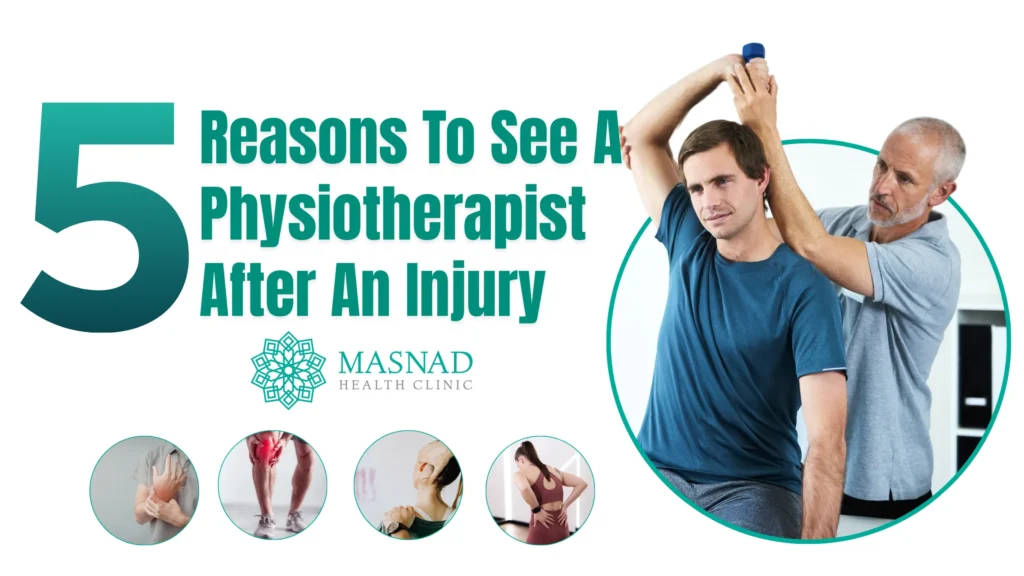
Here are five important reasons why seeing a physiotherapist after an injury can make a significant difference to your recovery.
Scar tissue is a normal part of the healing process. When muscles, ligaments, or skin are damaged, the body forms scar tissue to repair the injured area.
However, too much scar tissue can cause ongoing problems, including:
Physiotherapy can help prevent excessive scar tissue from forming. Through guided movement, soft tissue techniques, and hands-on treatment, physiotherapists help tissues heal in a way that maintains mobility and function.
This allows the injured area to move more naturally once healing is complete.
After an injury, your body’s ability to sense its position and movement — known as proprioception — is often reduced.
This is one reason why people sometimes say:
“My knee still doesn’t feel quite right.”
Impaired proprioception is a major contributor to re-injury, especially in joints such as the ankle, knee, and shoulder.
Physiotherapists use specific exercises to retrain the body’s awareness of movement and position. These may include:
Improving proprioception helps restore confidence in movement and significantly reduces the risk of future injuries.
Even after an injury has technically healed, the body may not return to exactly the same condition as before.
Common changes after injury include:
While pain might disappear, these underlying changes can increase the risk of further problems later on.
Physiotherapy helps restore strength, mobility, and joint stability, ensuring the injured area is capable of handling everyday activities, work, and sport.
When you are in pain, it is natural to adjust the way you move to protect the injured area. For example, you might limp, avoid certain movements, or place more weight on the opposite side of your body.
While these adjustments help reduce pain in the short term, they can create poor movement patterns and muscle imbalances.
Even after the injury has healed, these habits can remain and lead to:
A physiotherapist can assess how you move and help correct these patterns before they cause further problems.
Although most injuries heal well, some may not recover completely without proper care.
In certain cases, healing can be affected by factors such as:
For example, fractures may fail to heal correctly if the bone is not kept stable enough during recovery.
Physiotherapists monitor the healing process and can identify early signs that something is not progressing as expected. Early intervention can prevent minor issues from becoming long-term complications.
At Masnad Health Clinic, our physiotherapy team focuses on helping patients recover safely and effectively after injury. We assess how your body is healing and create personalised treatment plans designed to restore movement, strength, and long-term function.
Our goal is not just to reduce pain, but to ensure you return to your daily activities with confidence while reducing the risk of future injuries.
If you’ve recently experienced an injury or feel that something still isn’t quite right, a physiotherapy assessment can help identify the cause and guide your recovery.
Book your appointment online or call us today at (02) 9793 8840 to speak with our team.
Yes. Even if pain has reduced, physiotherapy can address weakness, stiffness, and movement issues that may lead to reinjury.
Ideally, as early as possible. Early assessment helps guide the healing process and prevents complications.
Yes. Physiotherapy improves strength, flexibility, and movement control, which helps reduce the risk of future injuries.
In most cases, you can book directly with a physiotherapist without needing a referral.
Many people live with pain, stiffness, or movement restrictions for weeks, months, or even years before seeking professional help.
Many people live with pain, stiffness, or movement restrictions for weeks, months, or even years before seeking professional help.

Are you in pain? Not sure if we can help you?
Book your initial appointment and receive 10% off any service!