

Fatigue, Stress & Anxiety: Why You Feel Constantly Drained
Feeling exhausted has become so common that many people believe it’s simply…

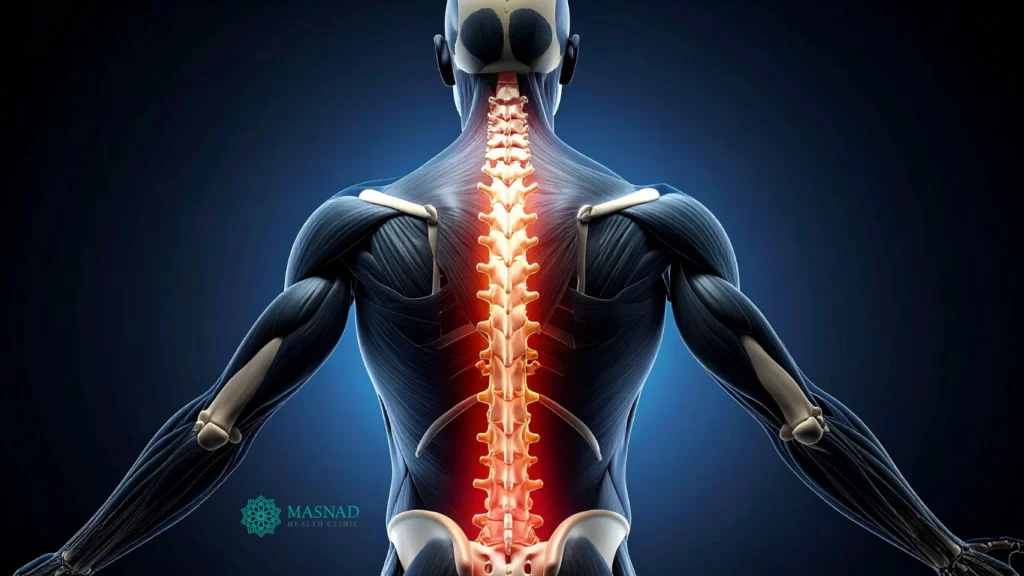
Almost everyone will experience neck or lower back pain at some point in their lives – even if it’s something minor like stiffness after sleeping in an awkward position. Pain in the mid-back, known as the thoracic spine, is less common, but that doesn’t make it any less important. In fact, reduced thoracic mobility is often an overlooked contributor to neck pain, lower back pain, and movement restrictions throughout the body.
Understanding and maintaining thoracic mobility plays a key role in overall spinal health, posture, breathing, and injury prevention.
The thoracic spine refers to the middle section of your spine, located between your neck (cervical spine) and lower back (lumbar spine). It consists of 12 vertebrae, each connected to a rib on either side, forming the rib cage.
Although the rib cage provides stability and protection for vital organs, the thoracic spine is still designed to move – particularly in rotation, extension, and side bending. With multiple joints working together, this region contributes significantly to smooth, efficient movement of the spine and upper body.
If these joints are not regularly moved through their full range, they can gradually stiffen and lose flexibility over time.
Many people don’t notice reduced thoracic movement because the neck and lower back are capable of compensating. While this compensation allows you to continue daily activities, it comes at a cost.
When thoracic movement is limited:
Over time, this can contribute to neck pain, lower back pain, headaches, and recurrent injuries.
Thoracic stiffness can also reduce the movement of the rib cage, leading to less efficient breathing mechanics. In some cases, this may impact exercise tolerance and overall physical performance.
Thoracic stiffness often develops gradually and may be influenced by:
Because symptoms may appear elsewhere in the body, thoracic mobility issues are frequently missed without a proper assessment.
To better understand thoracic mobility and see how it can be safely improved, the following video demonstrates simple and effective thoracic movement exercises that can be performed at home.
A physiotherapist can assess how well your thoracic spine is moving and identify whether stiffness in this area is contributing to pain or dysfunction elsewhere.
Physiotherapy treatment may include:
Improving thoracic movement often reduces strain on surrounding regions and helps restore more balanced, efficient movement patterns.
Thoracic mobility plays a crucial role in spinal health, posture, breathing, and injury prevention. While stiffness in this region may go unnoticed, it can place excessive stress on the neck and lower back, increasing the risk of pain and dysfunction. Addressing thoracic mobility early can make a significant difference in how your body moves and feels.
At Masnad Health Clinic, our physiotherapists assess thoracic mobility as part of a whole-body approach to pain and movement. Whether you’re experiencing neck pain, lower back discomfort, or general stiffness, we develop personalised treatment plans to improve mobility, reduce pain, and support long-term spinal health.
Book an appointment at Masnad Health Clinic today and take the next step toward moving more freely and comfortably.
Many people live with pain, stiffness, or movement restrictions for weeks, months, or even years before seeking professional help.
Many people live with pain, stiffness, or movement restrictions for weeks, months, or even years before seeking professional help.

Are you in pain? Not sure if we can help you?
Book your initial appointment and receive 10% off any service!