

Fatigue, Stress & Anxiety: Why You Feel Constantly Drained
Feeling exhausted has become so common that many people believe it’s simply…

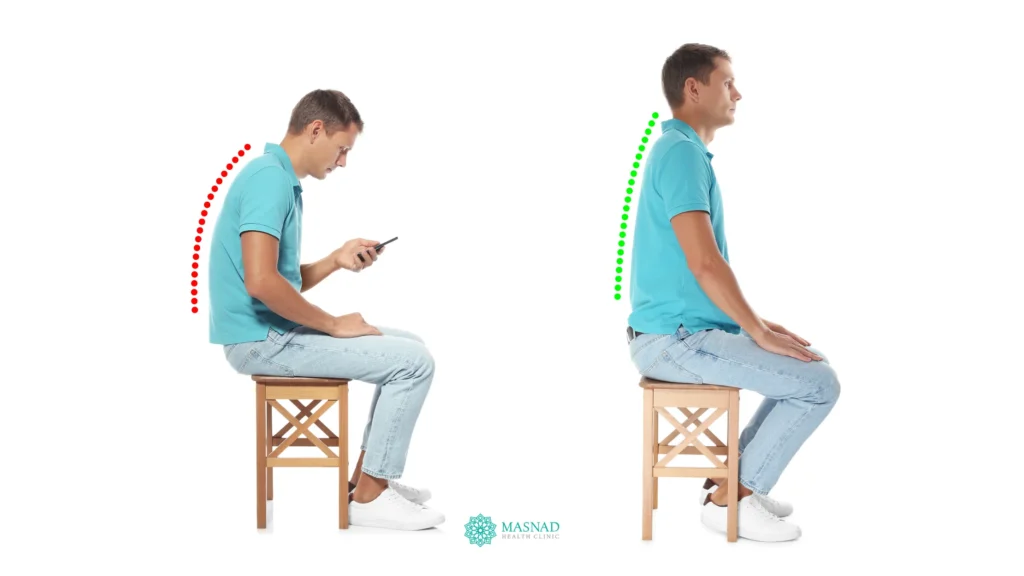
For most people, long hours of sitting and screen time have become a normal part of daily life. Whether it’s working at a desk, commuting, scrolling on a phone or relaxing on the couch, our bodies are spending more time in sustained, often slouched positions than ever before.
Poor posture itself is not usually the main issue – the real problem arises when we stay in the same position for extended periods without movement. Over time, this can lead to stiffness, muscle imbalances, spinal pain, headaches, and shoulder or neck discomfort. The good news is that small, consistent changes can make a significant difference to how your body feels and functions.
Posture refers to how your body is positioned when sitting, standing or moving. When posture is held for long periods, certain muscles become overworked and tight, while others become weak and underused. This imbalance can increase strain on joints, ligaments and nerves.
Common symptoms linked to prolonged poor posture include:
Improving posture is less about forcing yourself to “sit up straight” and more about building movement awareness, strength and flexibility.
Posture is rarely harmful in short bursts. Problems tend to develop when the body is held in one position for too long. When this happens, muscles adapt by shortening, joints stiffen, and it becomes harder to move comfortably.
A simple and effective strategy is to:
These short movement breaks help reduce stiffness, improve circulation, and reduce muscle fatigue. They can also improve concentration and productivity during the workday.
Your environment plays a major role in how your posture develops throughout the day. Poorly positioned screens, chairs or work surfaces can encourage slouching and neck strain.
Helpful setup tips include:
Your physiotherapist can provide personalised ergonomic advice for both home and office setups to help minimise unnecessary strain on your body.
Sitting time can accumulate quickly without being obvious. Time spent driving, working at a desk, eating meals and relaxing on the couch all adds up.
Becoming aware of how much time you spend sitting allows you to identify opportunities to move more. Simple changes such as:
can help reduce overall sedentary time and improve spinal health.
Posture is influenced by both muscle strength and flexibility. Tight muscles in the chest, hips and hamstrings combined with weak upper back, core and glute muscles can make maintaining upright postures more difficult.
A targeted exercise program may include:
These exercises help support your spine and reduce the effort required to maintain good posture throughout the day.
Everyone’s posture habits, work demands and physical history are different. A physiotherapist can assess how your posture is affecting your body and provide:
Early intervention can help prevent minor discomfort from progressing into ongoing pain.
Improving posture is not about perfection – it’s about movement, awareness and balance. By breaking up long periods of sitting, optimising your environment and strengthening your body, you can significantly reduce discomfort and improve how you feel day to day.
If posture-related pain is affecting your work, sleep or daily activities, professional guidance can help.
Call us to book an appointment
Book online today for personalised posture assessment and physiotherapy support.
Many people live with pain, stiffness, or movement restrictions for weeks, months, or even years before seeking professional help.
Many people live with pain, stiffness, or movement restrictions for weeks, months, or even years before seeking professional help.

Are you in pain? Not sure if we can help you?
Book your initial appointment and receive 10% off any service!