Overview
Balance is something most people don’t think about until it starts to fail. Whether it’s feeling unsteady when walking on uneven ground, losing confidence after an injury, or noticing a decline in coordination with age, balance plays a crucial role in how safely and efficiently we move.
At the centre of balance is proprioception – the body’s ability to sense position, movement and force. Together, balance and proprioception help us stay upright, react quickly to changes in our environment and move with confidence. Physiotherapy plays an essential role in assessing and improving both, particularly following injury, surgery or periods of reduced activity.
Balance refers to your body’s ability to keep its centre of gravity over its base of support, allowing you to remain upright without falling. This process happens automatically and continuously throughout the day – while standing, walking, turning, reaching or changing direction.
Balance depends on several systems working together:
- Visual system – provides information about your surroundings
- Vestibular system – located in the inner ear and senses head movement and position
- Proprioceptive system – gathers information from muscles, joints and tendons
- Musculoskeletal system – provides strength, joint stability and coordination
If any of these systems are compromised, balance can become impaired, increasing the risk of falls, injuries and reduced confidence in movement.
Proprioception is your body’s internal awareness of where it is in space, without needing to look. It allows your brain to understand joint position, muscle tension and movement speed.
Proprioception helps you to:
- Walk without watching your feet
- Adjust your posture automatically
- React quickly if you slip or stumble
- Coordinate complex movements in sport and daily life
This information comes from specialised receptors in your muscles, tendons, joints and skin, which constantly send signals to your central nervous system. When proprioception is reduced, movements become less controlled and more effortful.
Proprioception and balance can decline due to a range of factors, including:
- Ankle, knee or hip sprains
- Joint surgery or immobilisation
- Chronic pain or inflammation
- Reduced physical activity
- Age-related changes
- Neurological conditions
- Poor muscle strength or joint control
After injury, proprioceptive feedback is often impaired, even once pain has resolved. This is one of the main reasons people are at higher risk of re-injury if rehabilitation is incomplete.
You may benefit from balance or proprioceptive training if you experience:
- Frequent tripping or near falls
- Feeling unsteady on uneven surfaces
- Difficulty standing on one leg
- Loss of confidence with movement
- Recurrent ankle, knee or hip injuries
- Hesitation when changing direction or speed
These issues can affect both daily activities and sporting performance.
While a physiotherapist can conduct a comprehensive assessment, you can try these simple balance tests at home:
- Stand with feet together and close your eyes.
- Stand on one leg. Once steady with eyes open, try closing your eyes.
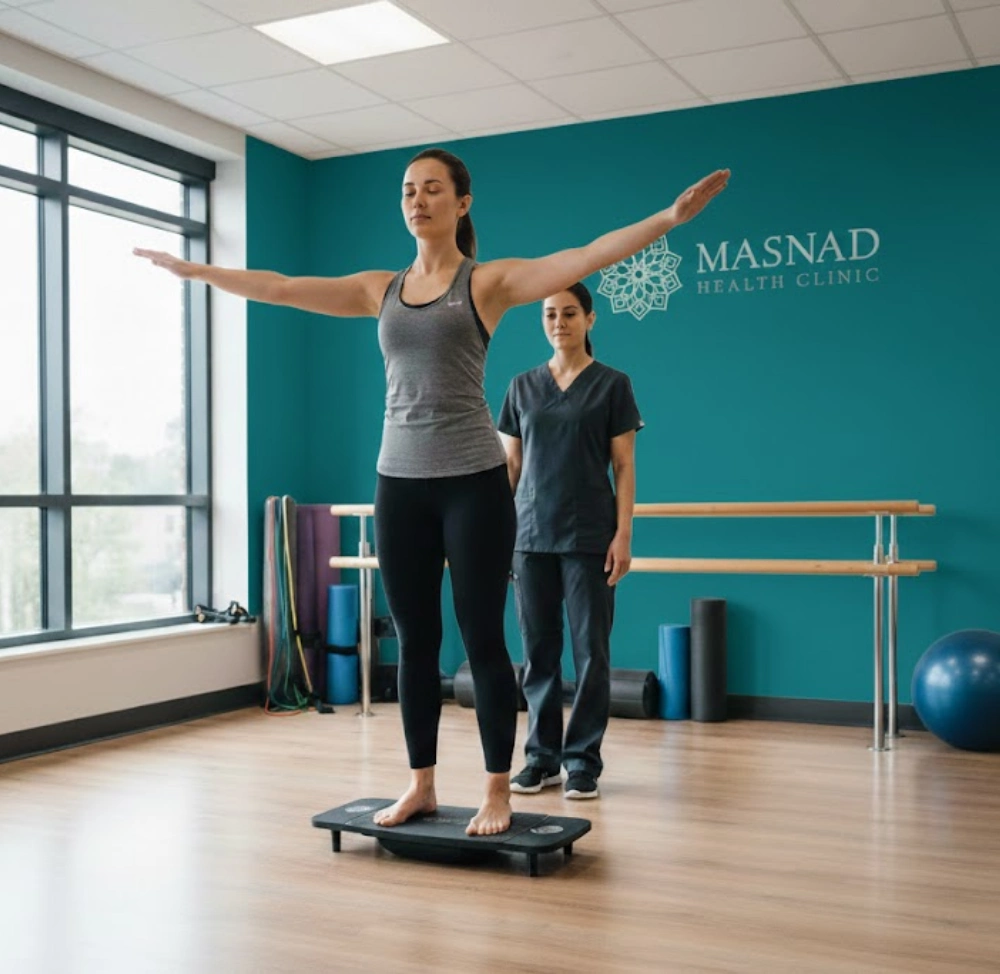
- Stand on an unstable surface, such as a cushion or folded towel.
Aim to hold each position for 30 seconds. If you find this difficult or unsafe, it may indicate reduced balance or proprioception.
Physiotherapists are trained to identify deficits in balance, coordination and joint control. Treatment programs are tailored to your specific needs and may include:
- Static and dynamic balance exercises
- Joint stability and control training
- Strength and endurance exercises
- Functional movement retraining
- Reaction and coordination drills
- Falls prevention strategies
Exercises are progressed gradually to challenge the nervous system safely, helping restore automatic movement responses and confidence.
Balance and proprioceptive training is beneficial for:
- Athletes aiming to improve performance and reduce injury risk
- People recovering from injury or surgery
- Older adults wanting to maintain independence and prevent falls
- Anyone feeling unsteady or lacking confidence with movement
Balance training is not just about avoiding falls – it improves efficiency, coordination and overall movement quality.
Proprioception and balance are essential for safe, confident and efficient movement. When these systems are not challenged regularly, they can decline without you realising. The good news is that balance and proprioception can be improved at any age with the right physiotherapy program.
If you’ve noticed unsteadiness, reduced confidence or are recovering from an injury, our physiotherapists can assess your balance and develop a personalised plan to help you move safely and confidently again.
Call us on 02 9793 8840
Book an appointment online today to start improving your balance and movement control.