
An elbow dislocation can happen suddenly – from a sports injury, a fall, or even daily activities like lifting or catching yourself from a slip. It can be a painful setback affecting work, exercise, and everyday movements.
Elbow Dislocation
Elbow Dislocation: Causes, Symptoms, and How Physiotherapy Helps You Recover Safely
Overview
What Is an Elbow Dislocation?
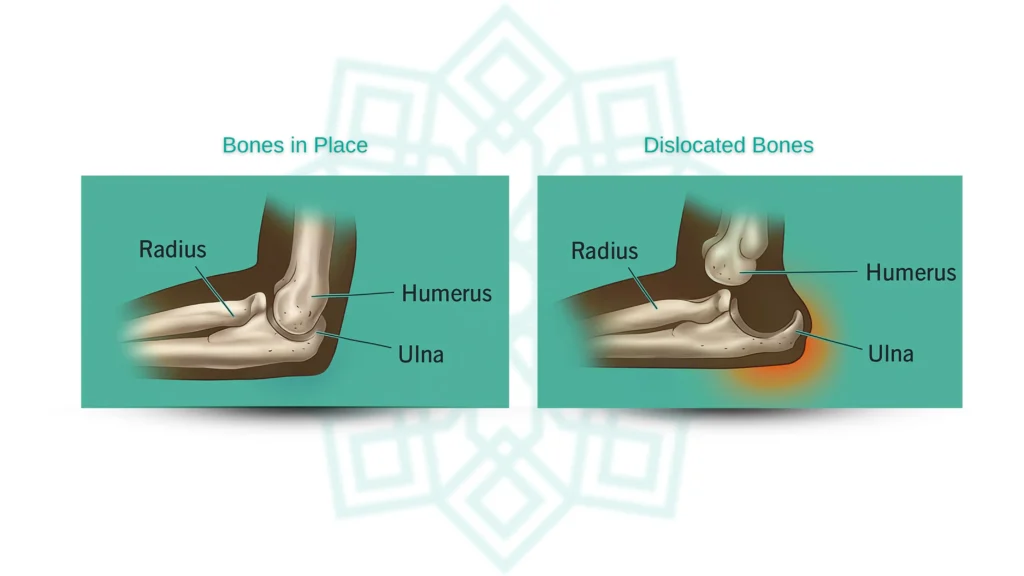
When any of the three bones of the elbow joint – humerus, radius, and ulna – become separated or knocked out of their usual placements, it is called a dislocated elbow.
Dislocation can be incredibly painful, causing the elbow to become unstable and, in some cases, immobile.
Early medical care and structured physiotherapy are crucial to restoring strength, mobility, and confidence in your arm.
Movements like sujud (prostration) can sometimes become painful after trauma, making physiotherapy important for restoring comfort in everyday and spiritual activities.
How to Tell if Your Elbow Is Dislocated?
An elbow dislocation is characterised by:
- Severe pain and swelling
- Inability to bend or move your arm
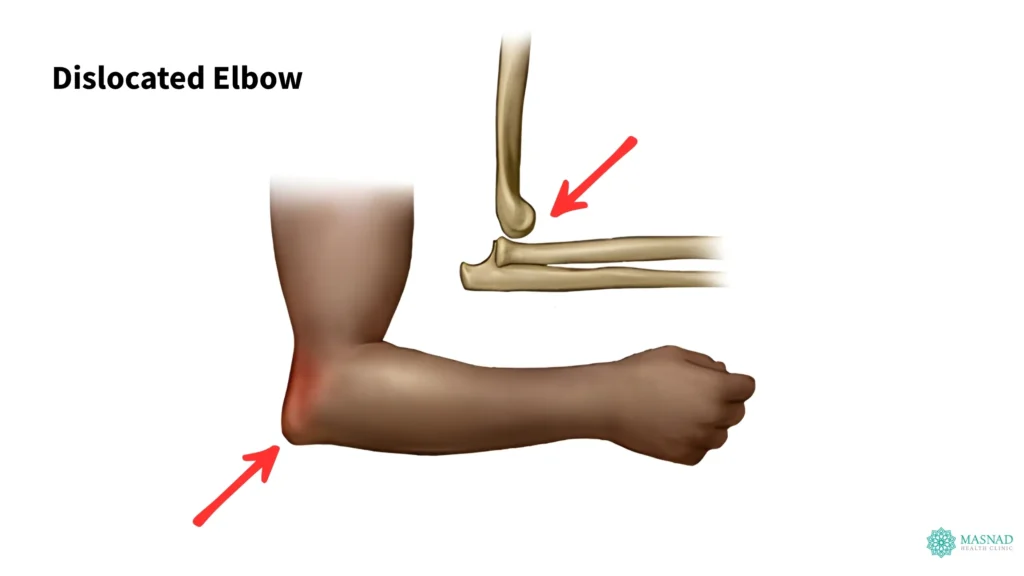
- Visible deformity or abnormal position of the joint
- Numbness or tingling in the hand or fingers
In some cases, you may even lose sensation in your hand or notice that your pulse (heartbeat in the wrist) is missing.
Since arteries and nerves pass through the elbow, they may be damaged during a dislocation – making immediate medical attention critical.
What Happens During an Elbow Dislocation?
When the elbow is dislocated, the joint alignment is disrupted. This may also stretch or tear surrounding tissues, including:
- Ligaments and tendons
- Muscles
- Nerves
- Blood vessels
Attempting to push your elbow back into place without professional help can worsen the injury. Always seek medical attention immediately.
Common Causes of Elbow Dislocation
Most elbow dislocations result from sudden force or trauma.
Some common causes include:
- Falls: Landing on an outstretched hand or directly on the elbow
- Sports injuries: Common in contact or high-impact sports such as basketball, football, or gymnastics
- Accidents: Workplace, household, or vehicle incidents
- Repetitive strain: Overuse from repetitive tasks that place stress on the elbow
Starting physiotherapy soon after medical treatment helps reduce stiffness and encourages a faster recovery.
Symptoms of an Elbow Dislocation
Symptoms usually appear immediately:
- Intense pain around the elbow
- Swelling and bruising
- Limited or no movement
- Visible deformity (elbow out of place)
- Numbness or tingling in the hand/fingers (if nerves are affected)
Seek medical attention immediately. Once the elbow is realigned by a doctor, physiotherapy becomes essential for safe recovery.
Treatment Options & Expected Recovery
How Do You Treat a Dislocated Elbow?
Simple elbow dislocations are treated by keeping the elbow immobile in a splint or sling for 1–3 weeks, followed by early motion exercises.
Even when in a sling, gentle exercises under a physiotherapist’s guidance are encouraged to avoid stiffness and promote healing.
If the dislocation involves fractures, ligament tears, or tendon injuries, surgery may be required. Your orthopaedic surgeon will discuss surgical options.
Recovery Timeline
- Simple dislocations: around 6 weeks for ligaments to heal
- Severe dislocations: up to 3 months for full recovery
Early physiotherapy is key to achieving full range of motion and reducing complications.
How Physiotherapy Helps?
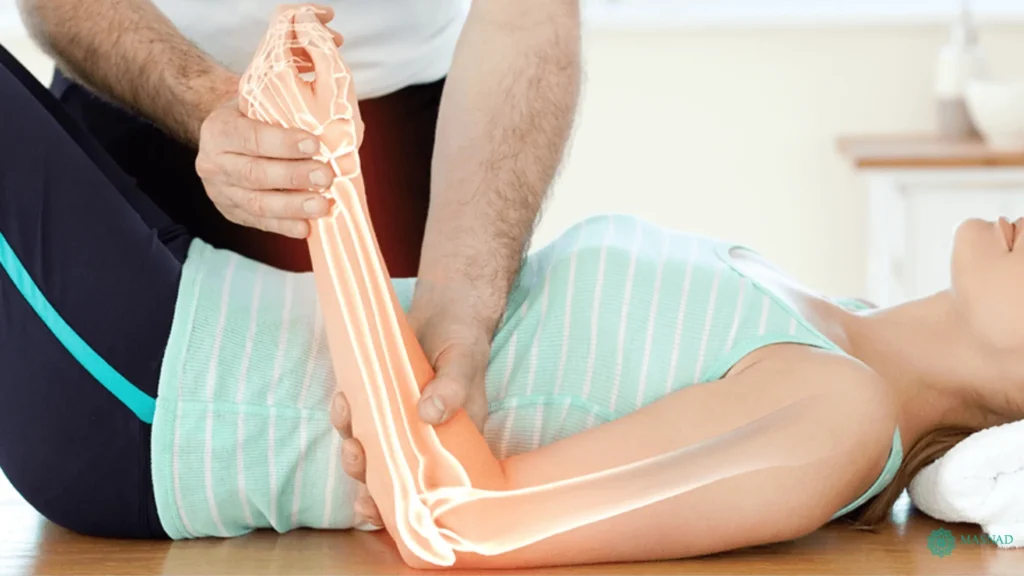
Physiotherapy plays a critical role after an elbow dislocation. Key benefits include:
- Pain and swelling reduction: Gentle mobilisation and soft tissue techniques relieve discomfort.
- Restoring range of motion: Safe, progressive exercises improve flexibility and joint movement.
- Strength rebuilding: Exercises for the elbow, forearm, and shoulder reduce the risk of re-injury.
- Improving coordination and stability: Smooth, controlled movement is regained for everyday tasks.
- Functional guidance: Advice for lifting, pushing, and daily activities while protecting the elbow.
An integrated rehabilitation approach ensures both short-term recovery and long-term joint health.
What Happens If a Dislocated Elbow Goes Untreated?
If left untreated or neglected, it can lead to:
- Stiffness and weakness in the affected elbow
- Damage to ligaments, nerves, or blood vessels
- Long-term complications such as osteoarthritis
That’s why timely diagnosis, realignment, and guided physiotherapy are essential for full recovery.
Prevention Tips / Long-Term Benefits
To help prevent future dislocations and maintain elbow health:
- Strengthen supporting muscles around the shoulder, forearm, and wrist
- Improve joint stability and coordination
- Practice safe lifting and movement techniques
- Maintain flexibility and mobility through regular exercises
Consistent rehabilitation promotes long-term elbow function and reduces the risk of recurring injuries.
Why Choose Masnad Health Clinic?
- Trusted since 2012 – Over a decade of supporting community health
- Multidisciplinary care – Physiotherapy, chiropractic, dietitian, and exercise physiology under one roof
- Holistic approach – Addressing physical, lifestyle, and functional needs
- Personalised treatment plans – Tailored exercises and recovery programs for every client
- Faith-sensitive care – Respectful of cultural and spiritual needs
Conclusion
Elbow dislocation might sound like a severe injury, but with proper treatment and physiotherapy, recovery is absolutely possible. Early care helps reduce pain, restore strength, and bring back full movement to your arm.
Need help recovering from an elbow dislocation? feel free to call us on (02) 9793 8840 or book an appointment online.
FAQ
Recovery typically takes 4–6 weeks for simple cases, while complex dislocations may require up to 3 months.
Yes, once strength, flexibility, and joint stability are restored under physiotherapy guidance.
Most elbow dislocations heal without surgery, but severe cases with fractures or ligament injuries may require specialist intervention.
Some movements may feel uncomfortable early on. Physiotherapists can provide safe modifications.
Strengthening exercises, maintaining flexibility, and using safe movement techniques are key preventive measures.
New Client Offer - 10% OFF
Are you in pain? Not sure if we can help you?
Book your initial appointment and receive 10% off any service!