
Golfers Elbow

Golfer’s Elbow (Medial Epicondyle Tendinopathy): Causes, Symptoms and Diagnosis

Golfer’s elbow is a common overuse injury that affects the tendon on the inside of the elbow. Medically known as medial epicondyle tendinopathy, this condition develops when the tendon that connects the forearm muscles to the inner elbow becomes overloaded.

Although it is frequently associated with golf, it can affect anyone who performs repetitive gripping, lifting or wrist-bending movements.
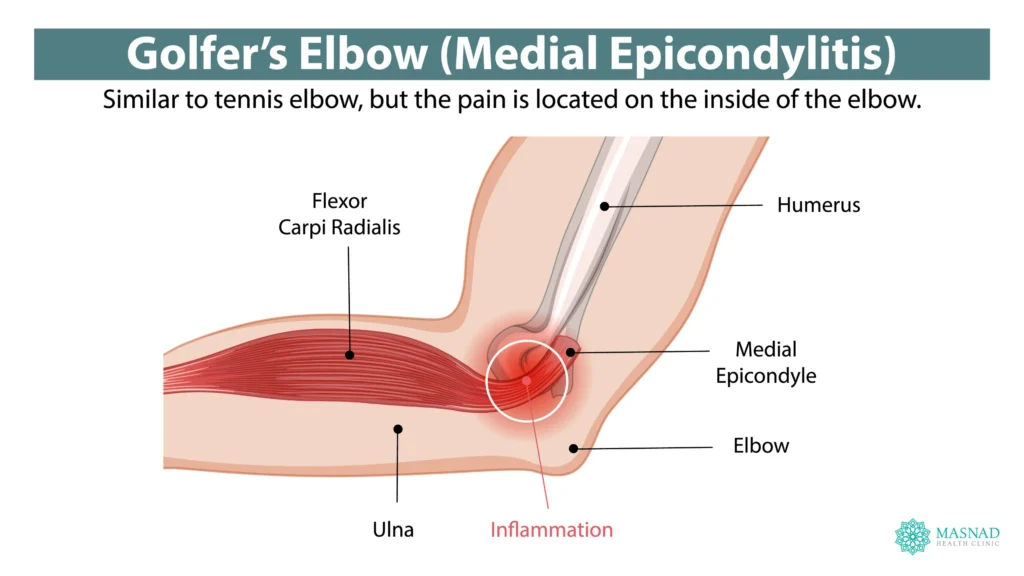
Golfers Elbow

What Is Golfer’s Elbow?

Golfer’s elbow is an overuse injury affecting the tendon on the inner side of the elbow. This tendon attaches the forearm muscles (responsible for wrist bending and gripping) to the bony prominence on the inside of the elbow, called the medial epicondyle.

It is similar to Tennis Elbow, but instead of affecting the outside of the elbow, Golfer’s elbow affects the inside.

The condition develops gradually due to repeated strain on the tendon, leading to irritation, degeneration, and pain.

What Are the Symptoms?

The most common symptoms include:

  • Pain and tenderness on the inside of the elbow
  • Discomfort that may extend down the forearm
  • Pain when gripping, lifting, or twisting
  • Weakness in grip strength
  • Pain with wrist bending

In some cases, people may experience mild pins and needles into the hand, although this is less common.

Symptoms often worsen with repetitive activities such as typing, lifting tools, climbing, racquet sports, or manual labour.

How Does Golfer’s Elbow Develop?

Golfer’s elbow occurs when the tendon is exposed to more load than it can tolerate.

This can happen due to:

Increased Demand on the Tendon

  • Sudden increase in sporting activity
  • Repetitive gripping or lifting
  • Poor technique in golf or other sports
  • Heavy manual work

Reduced Tendon Capacity

  • Age-related tendon changes
  • Reduced blood supply
  • Previous injury
  • Deconditioning or weakness

When tendon tissue becomes overloaded repeatedly without adequate recovery, small micro-damage accumulates. Over time, this leads to pain and reduced function.

Contributing Factors

Several additional factors may increase the risk of developing Golfer’s elbow:

  • Poor posture (particularly rounded shoulders or neck stiffness)
  • Neck or upper back dysfunction
  • Recent change in activity level
  • Inappropriate equipment (e.g. golf clubs or tools)
  • History of trauma, such as falling onto an outstretched hand

Addressing these contributing factors is an important part of long-term recovery.

How Is Golfer’s Elbow Diagnosed?

Accurate diagnosis is essential, as other conditions can mimic medial elbow pain, including:

  • Nerve irritation
  • Ligament injuries
  • Referred pain from the neck

A physiotherapist will assess:

  • Pain location and movement triggers
  • Grip strength
  • Wrist and elbow movement
  • Neck and shoulder function
  • Biomechanics and posture

Imaging is usually not required unless symptoms are severe or not improving.

What Is the Treatment?

Golfer’s elbow often develops slowly, and recovery can take time. However, most cases respond well to conservative treatment.

1. Load Management

Reducing or modifying aggravating activities is essential in early stages. This does not mean complete rest, but rather adjusting load so the tendon can recover.

Bracing or taping may temporarily reduce strain during activity.

2. Targeted Exercise

Specific strengthening exercises are key to recovery. Eccentric exercises (where the muscle lengthens under load) have strong evidence in helping tendon healing and improving load tolerance.

A structured program will gradually:

  • Restore tendon strength
  • Improve grip capacity
  • Increase resilience to load

3. Manual Therapy and Blood Flow Stimulation

Hands-on techniques may help improve mobility and stimulate circulation, supporting tissue healing.

4. Addressing Contributing Factors

Correcting posture, strengthening surrounding muscles, and reviewing technique or equipment reduces recurrence risk.

5. Injections or Surgery

In chronic or severe cases, corticosteroid injections or other medical interventions may be considered. Surgery is rare and usually reserved for cases that do not respond to conservative management.

How Long Does Recovery Take?

Tendon injuries require patience. Mild cases may improve within 6–8 weeks, while persistent cases can take several months.

Consistency with rehabilitation exercises is one of the most important factors in successful recovery.

Returning to full activity too quickly can delay healing.

Practical Tips to Support Recovery

  • Avoid repetitive gripping during flare-ups
  • Use proper technique in sport and work tasks
  • Strengthen forearm, shoulder, and upper back muscles
  • Take regular breaks during repetitive activities
  • Maintain good posture during desk work

Early management leads to better outcomes and shorter recovery time.

How Masnad Health Clinic Can Help

At Masnad Health Clinic, we provide evidence-based treatment for Golfer’s elbow.

Our approach includes:

  • Comprehensive assessment
  • Personalised strengthening programs
  • Biomechanical analysis
  • Activity modification guidance
  • Long-term injury prevention strategies

Our goal is not just pain relief, but restoring strength and preventing recurrence.

Book an Appointment

If you’re experiencing persistent inner elbow pain:

Book your appointment online today
Or call us on (02) 9793 8840

Early intervention improves recovery time and reduces long-term tendon damage.

FAQs

No. It commonly affects anyone performing repetitive gripping tasks.

They are similar tendon conditions, but Golfer’s elbow affects the inside of the elbow, while Tennis Elbow affects the outside.

Complete rest is usually not necessary. Controlled, progressive loading is important for recovery.

Mild cases may improve in weeks; chronic cases can take several months.

Yes. Strengthening and correcting contributing factors significantly reduce recurrence risk.