
Tennis elbow, also known as lateral epicondylitis, is a common condition that causes pain and tenderness on the outer side of the elbow. It usually develops due to overuse of the forearm muscles and tendons that attach to the bony area outside the elbow. Although the name suggests a sports injury, this condition can affect anyone who performs repetitive arm or wrist movements in daily activities or work.
Tennis Elbow
Tennis Elbow: Causes, Symptoms, and Physiotherapy Management
Overview
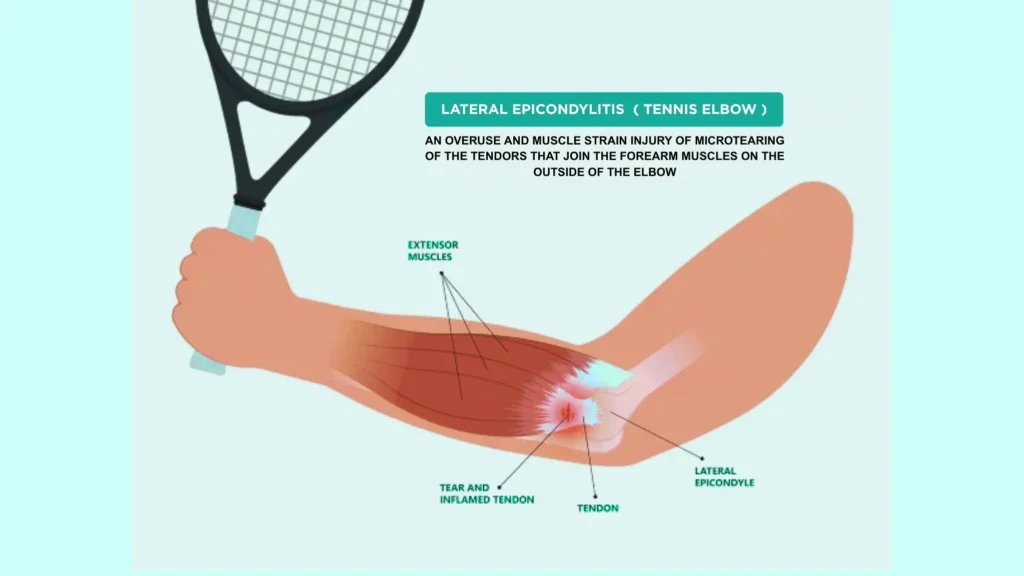
What is Tennis Elbow?
The lateral epicondyle is the bony bump on the outer side of your elbow where forearm tendons attach. When these tendons are overworked or strained, tiny tears can develop, resulting in pain and inflammation. Over time, this can lead to chronic discomfort, weakness, and stiffness.
You might notice that simple activities – like shaking hands, turning a doorknob, lifting a mug, or typing – become painful.
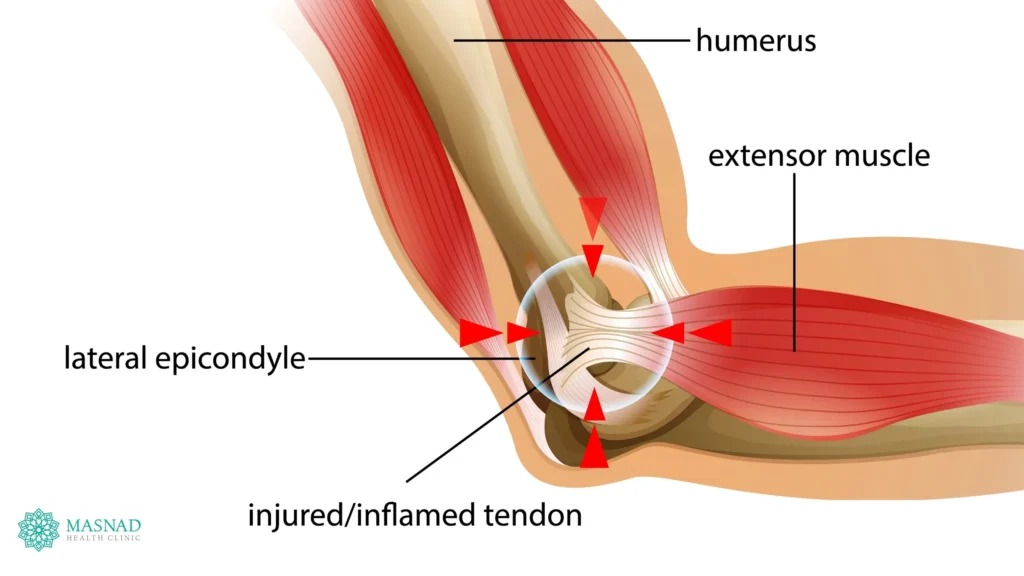
Main Causes of Tennis Elbow
Tennis elbow typically develops from overuse or repeated stress placed on the tendons that extend the wrist and fingers.
Common causes include:
- Repetitive wrist or forearm movements
- Gripping or lifting heavy objects with a straight arm
- Sudden impact or trauma to the elbow
- Poor posture or technique during sports or work
- Weak shoulder or forearm muscles increasing tendon strain
Everyday activities that may trigger tennis elbow:
- Tree cutting
- Painting or carpentry
- Playing musical instruments
- Weightlifting
- Racket sports (tennis, squash, badminton)
These repetitive actions can strain the tendons, leading to inflammation and pain over time.
Symptoms of Tennis Elbow
Pain in your elbow, especially when using the wrist or holding something, is the most common symptom. Symptoms can appear suddenly or gradually, depending on the level of strain.
Typical signs include:
- Pain or burning on the outer side of the elbow
- Weak grip strength
- Discomfort while lifting, twisting, or gripping
- Pain that worsens when extending the wrist or forearm
- Tenderness to touch
In early stages, pain may come and go with activity. Over time, it can become constant, even during rest.
How is Tennis Elbow Diagnosed?
A physiotherapist can diagnose tennis elbow through a physical examination and a discussion of your symptoms and daily activities.
Common diagnostic steps include:
- Assessing elbow strength and movement
- Checking tenderness and swelling
- Performing resistance tests for pain response
- In some cases, imaging such as ultrasound or MRI may be used to rule out other conditions
Best Ways to Relieve Tennis Elbow Pain
Physiotherapy remains one of the most effective short- and long-term treatments for tennis elbow. A typical treatment plan includes:
- Joint mobilisation to improve movement and reduce stiffness
- Remedial or soft tissue massage to relax tight muscles
- Electrotherapy to promote healing
- Prescribed tennis elbow brace to reduce tendon strain
- Stretching and strengthening exercises for long-term recovery
In more stubborn or severe cases, corticosteroid injections combined with physiotherapy can help reduce inflammation and pain.
Will Tennis Elbow Heal on Its Own?
Tennis elbow can improve naturally over time, especially with rest and reduced activity. However, in many cases, the pain becomes chronic if untreated.
- Mild cases may improve in 2 to 6 weeks with rest and physiotherapy.
- Chronic cases (lasting more than 3 months) require targeted rehabilitation.
- The longer the issue persists, the longer recovery may take.
Because the hands and arms are constantly in use, professional guidance from a physiotherapist can help ensure proper healing and prevent recurrence.
Physiotherapy for Tennis Elbow
Physiotherapy focuses on relieving pain, restoring movement, and preventing future flare-ups. Treatment may include:
- Manual therapy to release tension
- Exercise programs to strengthen forearm and shoulder muscles
- Dry needling or shockwave therapy for chronic cases
- Education on posture and activity modification
- Gradual reloading exercises to rebuild tendon resilience
A consistent and well-planned program not only speeds up recovery but also reduces the chance of recurrence.
Prevention Tips for Tennis Elbow
To prevent tennis elbow or future flare-ups, keep these habits in mind:
- Warm up before sports or repetitive tasks
- Stretch and strengthen your forearm regularly
- Maintain proper posture and lifting technique
- Use ergonomic tools at work
- Wear an elbow brace if performing repetitive motions
- Take breaks from repetitive activities
Recovery Time
Most people recover from mild to moderate tennis elbow within 4 to 8 weeks, depending on activity level and treatment consistency. Severe or chronic cases may take longer. Early physiotherapy significantly reduces recovery time and long-term complications.
When to Seek Help
If your elbow pain is not improving with rest, becomes severe, or affects your daily activities, it’s time to seek professional advice.
A physiotherapist can provide a personalised plan to help you recover safely and effectively.
Conclusion
Tennis elbow can limit your ability to work, play, and live comfortably, but it is highly treatable. Early diagnosis, proper physiotherapy, and smart activity modifications can make a lasting difference.
If you’re experiencing elbow pain or difficulty gripping objects, take the first step toward recovery today.
For all your Tennis Elbow needs, feel free to give us a call at (02) 9793 8840 or Book Online.
FAQ
Yes. Physiotherapy helps restore mobility, reduce inflammation, and strengthen muscles to prevent recurrence.
Most people notice improvement within 4-8 weeks, though chronic cases can take longer depending on severity.
Yes, especially if repetitive strain continues. Regular strengthening and ergonomic changes help prevent recurrence.
Surgery is rarely required. Most people recover with conservative care, rest, and physiotherapy.
If your elbow pain lasts longer than two weeks or interferes with daily tasks, early physiotherapy assessment is recommended.

New Client Offer - 10% OFF
Are you in pain? Not sure if we can help you?
Book your initial appointment and receive 10% off any service!