
Achilles Tendon Tears

Achilles Tendon Tears: Causes, Symptoms, and Diagnosis

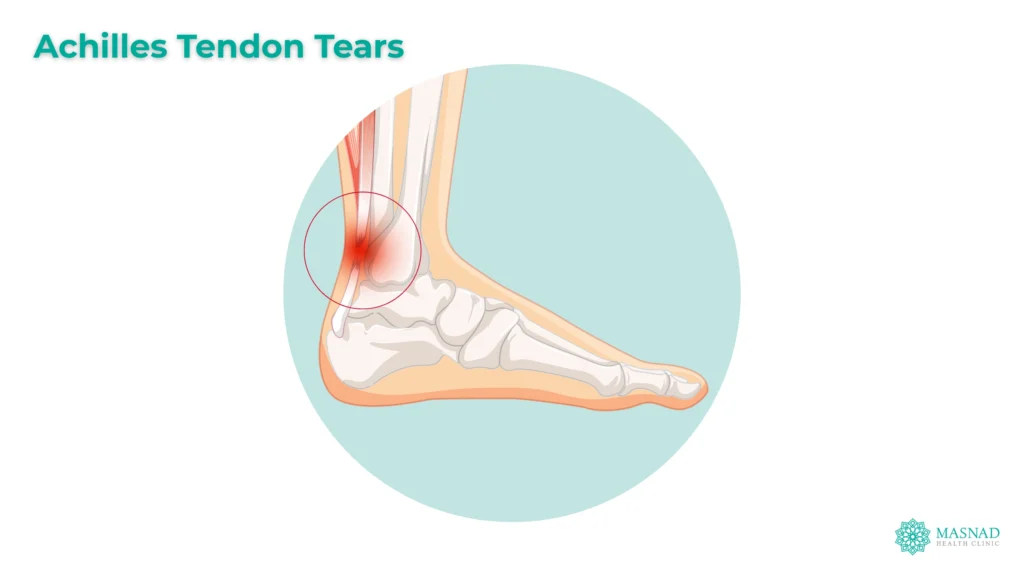
The Achilles tendon is the largest tendon in the body, connecting the calf muscles to the heel bone. It plays a crucial role in walking, running, jumping, and standing on tiptoe by transmitting force from the calf muscles to the foot. Unfortunately, this tendon is also prone to injury, and tears-partial or complete-can significantly impact mobility.
Achilles Tendon Tears

What Is an Achilles Tendon Tear?

An Achilles tendon tear occurs when the tendon fibers partially or completely rupture. Complete tears are actually more common than partial ones. Most tears occur about 6 cm above the tendon’s attachment to the heel, an area with limited blood supply, which makes it vulnerable to injury and slows healing.

This injury is especially common in athletes, but it can occur in anyone, particularly those with weakened tendons.

Causes of Achilles Tendon Tears

Achilles tendon tears generally occur due to excessive force or sudden stretching of the tendon. Several factors can increase the risk:

1. Age and Tendon Degeneration

As we age, tendons naturally weaken and lose elasticity, making them more prone to tears even with normal activity.

2. Overuse and Activity

Sudden increases in running, jumping, or high-impact activities can overload the tendon. Pre-existing conditions such as Achilles tendinitis also increase susceptibility.

3. Medical Factors

Certain medications, like fluoroquinolone antibiotics and long-term corticosteroids, may weaken tendons. Conditions such as diabetes or arthritis can also contribute to tendon fragility.

4. Obesity

Excess body weight puts additional strain on the tendon, increasing the risk of rupture.

5. Poor Conditioning or Previous Injury

Tendons that are not regularly exercised may be weaker, making them more susceptible to tear during high-intensity movements.

Symptoms of an Achilles Tendon Tear

Recognising a tear quickly is essential to prevent long-term complications. Typical symptoms include:

  • A sudden, sharp pain at the back of the ankle or calf
  • Hearing or feeling a “pop” or snap in the tendon
  • Swelling, bruising, and stiffness in the lower leg
  • Weakness in the calf and difficulty walking, running, or jumping
  • Difficulty standing on tiptoe
  • A visible gap in the tendon, typically around 2 inches above the heel

Patients often describe the sensation as if they were “kicked in the calf.”

How Is an Achilles Tendon Tear Diagnosed?

Diagnosis begins with a clinical assessment by a physiotherapist or doctor. They may perform specific tests, such as:

  • Thompson test: Squeezing the calf to observe foot movement; lack of movement may indicate a rupture
  • Palpation: Feeling for a gap or tenderness along the tendon
  • Range of motion assessment: Testing ankle flexibility and calf strength

Imaging may also be used for confirmation:

  • Ultrasound: Can detect partial or complete tears
  • MRI: Provides detailed visualization of tendon damage and surrounding structures

Early diagnosis is essential, as delayed treatment can make healing more complicated and increase the risk of long-term weakness.

How Can Physiotherapy Help?

Treatment depends on the severity of the tear, patient age, and activity level.

Non-Surgical Rehabilitation

For older patients or less severe tears, physiotherapy may include:

  • Strengthening exercises for the calf and Achilles tendon
  • Balance and stability training
  • Functional rehabilitation to restore coordination and gait
  • Gradual progression to weight-bearing and sport-specific activities

Recovery typically takes 4-6 months, depending on the severity of the injury.

Post-Surgical Rehabilitation

Younger or highly active patients may undergo surgical repair, followed by physiotherapy to:

  • Restore tendon strength
  • Improve range of motion
  • Rebuild functional movement patterns
  • Safely return to high-level performance

Physiotherapy plays a key role in ensuring optimal recovery and reducing the risk of re-injury.

Prevention and Recovery Tips

Preventing Achilles tendon tears involves a combination of strengthening, stretching, and lifestyle strategies:

  • Warm up before running or jumping exercises
  • Include eccentric calf exercises to strengthen the tendon
  • Avoid sudden increases in activity intensity or volume
  • Wear supportive footwear appropriate for your activity
  • Maintain a healthy weight to reduce stress on the tendon
  • Address any pre-existing tendon pain early with physiotherapy

Why Choose Masnad Health Clinic

At Masnad Health Clinic, our team in Bankstown and Lakemba provides a community-centred approach to physiotherapy. We focus on personalised care, helping clients from Punchbowl, Greenacre, Chullora, and Yagoona recover safely and effectively.

Our services include:

  • Physiotherapy for injury recovery
  • Pain management physiotherapy
  • Multidisciplinary physiotherapy treatment
  • Access to Chiropractic Care, Hijama / Cupping Therapy, Exercise Physiology, and Women’s Health Physiotherapy

We combine clinical expertise with a warm, professional approach, ensuring every client feels supported throughout recovery.

Book an Appointment

Need a trusted physiotherapist near Bankstown or Lakemba?
Our team at Masnad Health Clinic offers personalised, multidisciplinary care to help you recover from Achilles tendon tears safely and effectively.
Book your appointment online or call us today at (02) 9793 8840.

FAQs

Most clients recover within 4–6 months with structured physiotherapy and guided exercises.

Your physiotherapist will provide safe alternatives and gradual progression to avoid re-injury.

Surgery is recommended for young, active clients, but some older adults recover with conservative physiotherapy.

Regular calf strengthening, stretching, supportive footwear, and gradual activity progression are key.

Yes, physiotherapy is essential to restore strength, flexibility, and functional movement after surgical repair.