
Ankle Impingement

Anterior Ankle Impingement: Causes, Symptoms, and Physiotherapy Management

Overview

Anterior Ankle Impingement, also known as Anterior Impingement Syndrome, is a musculoskeletal condition that occurs when repetitive forces compress and irritate the soft tissues at the front of the ankle joint. This leads to pain, swelling, and reduced mobility.

It is a common issue seen in athletes – especially runners, footballers, and dancers – who perform repetitive or forceful upward ankle movements, such as sprinting, jumping, or running uphill and downhill. However, it can also affect non-athletes due to previous injuries or wear and tear over time.
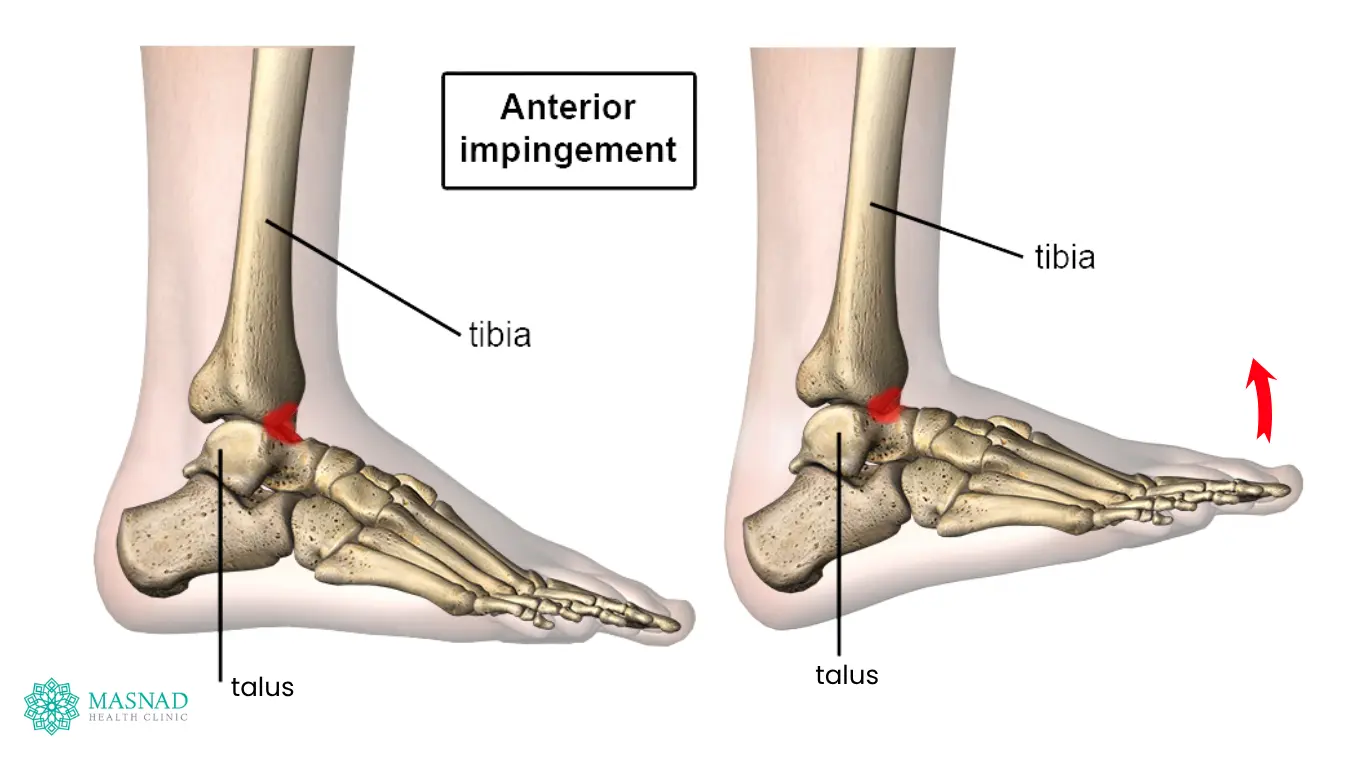
Diagram showing front ankle impingement area

What is Anterior Ankle Impingement?

The condition develops when the tibia (shinbone) and talus (ankle bone) repeatedly press together during ankle movement. This compression damages the tissues at the front of the joint, resulting in inflammation, stiffness, and pain.

Over time, this irritation can cause swelling and even the formation of bony spurs (osteophytes), further restricting movement and worsening discomfort.

People often describe the pain as a sharp or pinching sensation at the front of the ankle, especially during walking, running, or squatting.

Anatomy illustration of ankle impingement

Common Causes

Anterior Ankle Impingement can occur due to several factors, including:

  • Repetitive stress or overuse during running and jumping activities
  • Previous ankle sprains that were not properly rehabilitated
  • Bony growths (osteophytes) caused by arthritis or repetitive trauma
  • Poor biomechanics or foot posture (flat feet or hypermobility)
  • Inadequate footwear or training errors
  • Tight calf muscles reducing ankle mobility

Athletes who play sports that demand frequent ankle dorsiflexion (upward foot motion) are at higher risk of developing this condition.

Symptoms of Ankle Impingement

The primary symptom is pain at the front of the ankle joint. Depending on severity, pain may appear as:

  • Sharp or pinching pain during ankle movement
  • A dull ache after physical activity
  • Pain when standing, walking, or running
  • Night-time aching or stiffness
  • Visible swelling around the ankle
  • Reduced ankle flexibility and range of motion

Symptoms often worsen during activities that bend the ankle upwards (like landing from a jump or running uphill).

How Physiotherapy Helps

Physiotherapy plays a vital role in both relieving pain and addressing the underlying causes of ankle impingement. Depending on the severity, recovery time can vary from 1-6 weeks with conservative care.

Your physiotherapist will assess your ankle to identify contributing factors such as stiffness, weakness, or postural misalignment. Treatment may include:

  • Manual therapy and mobilisation to restore ankle movement
  • Soft tissue release to reduce muscle tension and inflammation
  • Targeted strengthening of surrounding muscles for joint support
  • Balance and proprioception training to prevent re-injury
  • Gait and running technique correction to avoid recurrence
  • Tailored home exercise program for long-term improvement

In some chronic or severe cases, if bony spurs are involved, surgical removal may be necessary. Post-surgical physiotherapy is essential to restore movement, build strength, and return to full activity safely.

Prevention & Long-Term Care

To prevent anterior ankle impingement and maintain ankle health:

  • Warm up properly before physical activity
  • Wear supportive, well-fitted footwear
  • Gradually increase training intensity
  • Stretch and strengthen calf and ankle muscles regularly
  • Avoid running on uneven or hard surfaces
  • Seek early physiotherapy after ankle sprains to ensure full recovery

Why Choose Masnad Health Clinic?

At Masnad Health Clinic, our physiotherapists specialise in diagnosing and treating complex ankle conditions like anterior ankle impingement. We combine advanced manual therapy, evidence-based exercise programs, and a holistic approach to ensure long-term recovery.

Our focus is on helping you move confidently, restore full ankle function, and prevent future injuries through tailored care and education.

For all your Ankle Impingement needs, call us on 02 9793 8840 or Book Online today.

FAQs

Yes, most cases improve with physiotherapy, rest, and gradual return to activity. Surgery is only considered when conservative care fails.

Mild cases may resolve within 1–2 weeks, while more severe cases can take up to 6 weeks or longer with structured rehabilitation.

No. An ankle sprain involves ligament injury, while impingement results from repetitive compression and inflammation at the front of the ankle.

It’s best to rest and modify activities that cause pain. Your physiotherapist can guide you through safe exercises during recovery.

If ankle pain or stiffness persists for more than a week or affects your mobility, seek professional assessment promptly.