
Metatarsalgia

Metatarsalgia: Why the Ball of Your Foot Hurts and How Physiotherapy Can Help

Feeling pain in the ball of your foot when walking, standing, or even wearing certain shoes can be frustrating and limiting. It may feel like you are stepping on a small pebble, or as though the front of your foot is bruised.

For many people, this discomfort is caused by a condition known as metatarsalgia.

Although forefoot pain can feel concerning, the reassuring news is that metatarsalgia is common and highly manageable. With accurate assessment and targeted physiotherapy, symptoms often improve significantly.
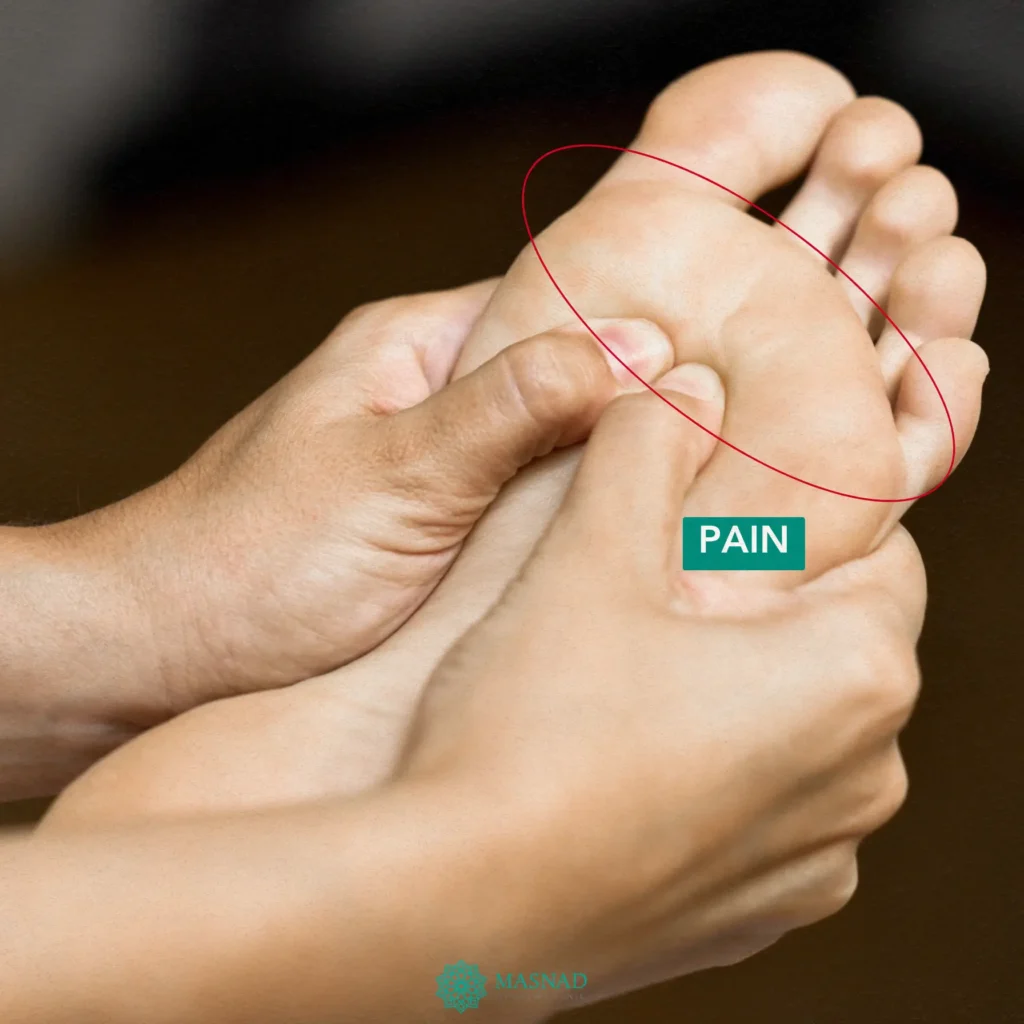

Metatarsalgia

What Is Metatarsalgia?

Metatarsalgia is a term used to describe pain and inflammation in the ball of the foot – the area just before the toes.

This region contains five long bones called the metatarsals. These bones play a critical role in weight distribution when you stand, walk, or run. When excessive pressure builds in this area, the surrounding tissues can become irritated and inflamed.

As inflammation develops, small nerves that run between the toes may also become compressed. This combination of tissue irritation and nerve sensitivity leads to the pain people experience.

Metatarsalgia is not a single injury, but rather a description of forefoot pain caused by increased load or altered foot mechanics.

Why Does the Ball of the Foot Become Painful?

The foot is part of a larger kinetic chain. When movement patterns change anywhere in the body, pressure distribution through the feet can also change.

Common contributing factors include:

  • Changes in posture affecting how weight is transferred
  • Arthritis in the hips, knees, or pelvis altering walking mechanics
  • Tight calf muscles increasing forefoot pressure
  • Structural foot differences such as high arches
  • A longer second toe
  • Bunions or toe alignment issues

Age-related changes can also play a role. As ligaments gradually lose strength over time, the metatarsal bones may move differently, increasing stress on the ball of the foot.

Common Symptoms of Metatarsalgia

Metatarsalgia typically causes discomfort during weight-bearing activities.

Symptoms may include:

  • Sharp, aching, or burning pain in the ball of the foot
  • A feeling of stepping on a stone
  • Tingling or numbness in the toes
  • Increased pain when standing or walking
  • Symptoms that worsen in tight footwear
  • Relief when resting or removing shoes

Pain often develops gradually and may worsen over time if the underlying cause is not addressed.

How Is Metatarsalgia Diagnosed?

Accurate assessment is essential, as other conditions can also cause forefoot pain.

A physiotherapist will:

  • Ask detailed questions about when symptoms occur
  • Assess walking and standing posture
  • Examine foot alignment and mobility
  • Evaluate muscle strength and flexibility
  • Identify areas of increased pressure

This thorough evaluation allows treatment to be tailored precisely to your presentation.

Treatment: How Physiotherapy Can Help

The good news is that metatarsalgia usually responds well to structured physiotherapy.

Reducing Inflammation

Early treatment focuses on calming irritated tissues. This may involve:

  • Manual therapy
  • Gentle joint mobilisation
  • Taping techniques to offload pressure
  • Ice therapy
  • Electrotherapy such as ultrasound

These approaches aim to reduce pain and allow healing to begin.

Correcting Load Distribution

Once symptoms settle, attention shifts to the root cause.

Treatment may include:

  • Strengthening intrinsic foot muscles
  • Calf strengthening and flexibility work
  • Gait retraining
  • Gradual return to activity planning

For clients requiring guided conditioning, Exercise Physiology programs may be incorporated to rebuild strength safely.

If spinal or pelvic alignment contributes to abnormal foot loading, Chiropractic Care may form part of a multidisciplinary plan.

In selected cases, complementary therapies such as Hijama (Cupping Therapy) may assist circulation and tissue recovery within a holistic care framework.

What to Expect During Recovery

Recovery time depends on how long symptoms have been present and the degree of inflammation.

After beginning treatment:

  • Pain usually reduces gradually over several weeks
  • Activity levels are adjusted temporarily
  • Strength and mobility exercises are progressed step-by-step
  • Long-term prevention strategies are introduced

Mild cases may improve within a few weeks. Longer-standing cases may require more structured rehabilitation.

With appropriate management, most people return to normal activities comfortably.

When to Seek Medical Attention

Although metatarsalgia itself is not dangerous, seek urgent medical review if foot pain is accompanied by:

  • Significant swelling or redness
  • Fever
  • Sudden severe pain after trauma
  • Inability to bear weight

These symptoms require immediate medical assessment.

Living Confidently After Forefoot Pain

Foot pain can change how you move, which can affect balance, posture, and confidence.

Treating metatarsalgia is not just about reducing pain – it is about restoring:

  • Natural walking patterns
  • Even weight distribution
  • Strength and stability
  • Confidence in daily movement

Early intervention prevents chronic discomfort and compensatory injuries elsewhere in the body.

How Masnad Health Clinic Can Support You

At Masnad Health Clinic, our physiotherapists provide comprehensive assessment and evidence-based treatment for forefoot pain.

We focus on:

  • Identifying the underlying mechanical cause
  • Reducing inflammation safely
  • Correcting load distribution
  • Strengthening for long-term prevention
  • Providing clear guidance throughout recovery

Our multidisciplinary approach ensures that the entire movement system is considered – not just the foot.

Book an Appointment

If you are experiencing persistent pain in the ball of your foot:

Book your appointment online today
Or call us on (02) 9793 8840

Early treatment can prevent symptoms from becoming long-term.

We proudly support the communities of Bankstown, Lakemba, Punchbowl, Greenacre, Chullora and Yagoona with personalised, professional physiotherapy care.

FAQs

Symptoms can persist until the underlying mechanical cause is addressed. With treatment, many cases improve within several weeks.

Mild cases may settle with rest, but targeted treatment significantly speeds recovery and reduces recurrence risk.

Not everyone requires orthotics. They are recommended only when clinically appropriate following assessment.

Modified exercise is often encouraged. Your physiotherapist will guide you on safe activity levels during recovery.

Recurrence is possible if contributing factors remain unaddressed. Prevention strategies are part of treatment.