Plantar Fasciopathy

Plantar Fasciopathy: Understanding, Causes, and Professional Treatment

What Is Plantar Fasciopathy?

The plantar fascia is a thick, fibrous band of tissue that runs along the bottom of your foot – connecting your heel bone to your toes. Its main role is to support your foot’s arch and absorb shock as you walk, run, or stand.

Over time, repeated stress or overuse can cause tiny tears in this tissue. When these stresses exceed the fascia’s ability to repair itself, degeneration occurs, leading to pain when pressure is placed on the heel – especially with your first few steps in the morning.

This condition is called Plantar Fasciopathy – also commonly known as Plantar Fasciitis. While the term “fasciitis” implies inflammation, Plantar Fasciopathy is actually more of a degenerative condition.

It can be progressive, and although it sometimes resolves on its own, without treatment it may take up to two years to go away – and can be extremely painful during that time.
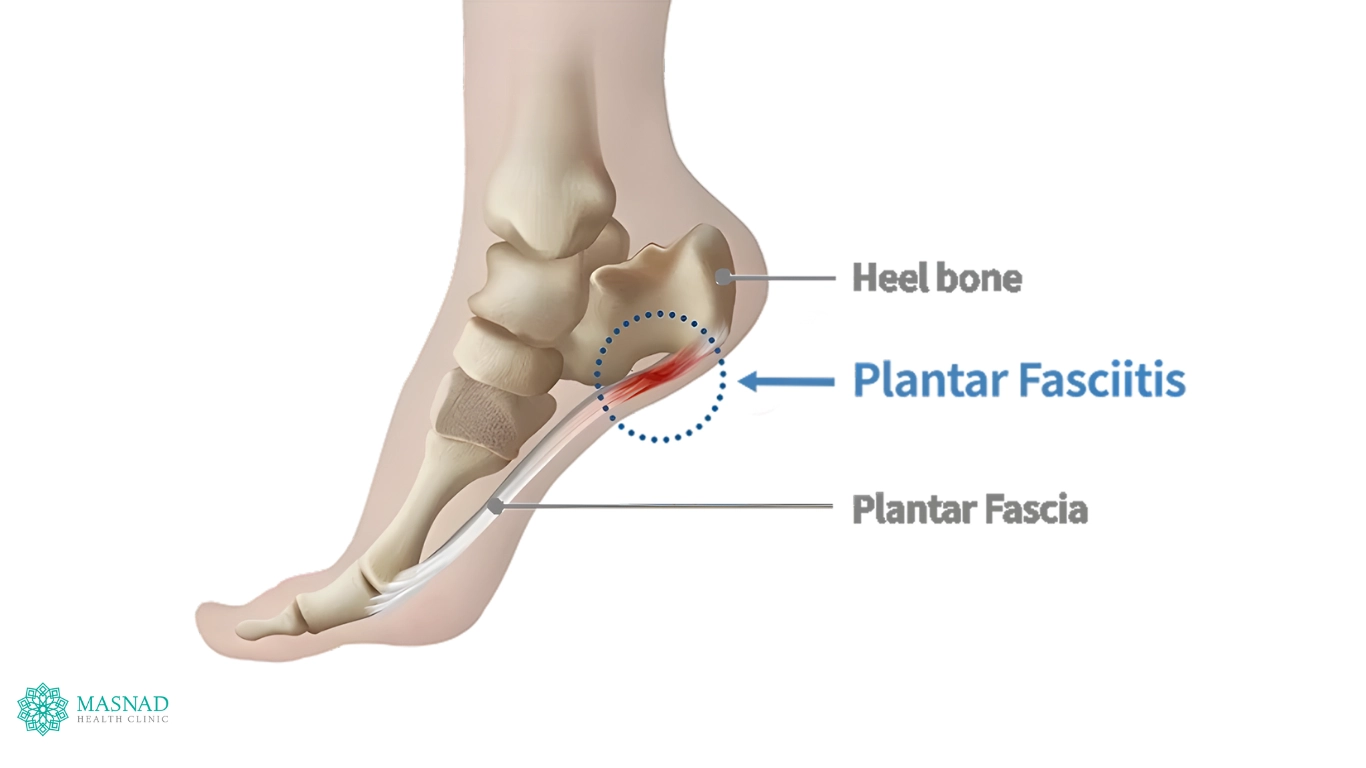
plantar fascia

Common Symptoms

The hallmark symptom of plantar fasciopathy is pain on the inside of the heel, especially noticeable:

  • During the first few steps in the morning, or after long periods of rest.
  • After standing or walking for extended periods.
  • Following intense physical activity, such as running or jumping.

As the condition progresses, pain can become constant, even at rest. Many people also experience tightness in the calves, stiffness in the foot, or mild swelling around the heel.

What Causes Plantar Fasciopathy?

The causes can differ based on your activity level and lifestyle:

For Athletes

  • Overtraining or sudden increase in mileage
  • Poor running form or biomechanics
  • Tight calf muscles or Achilles tendon
  • Inadequate footwear or worn-out shoes

For Non-Athletes

  • Standing for long hours on hard floors
  • Flat feet or high arches causing uneven load
  • Age-related wear and tear
  • Poor footwear with little cushioning
  • Being overweight, which increases stress on the fascia

Tip: Replacing old shoes and including daily foot stretches can go a long way in preventing recurrence.

How is Plantar Fasciopathy Diagnosed?

Diagnosis is typically made through a comprehensive physical assessment by a physiotherapist or healthcare professional.

Your physiotherapist will:

  • Evaluate the location of your pain, muscle flexibility, and walking pattern.
  • Check for biomechanical issues that may be contributing.
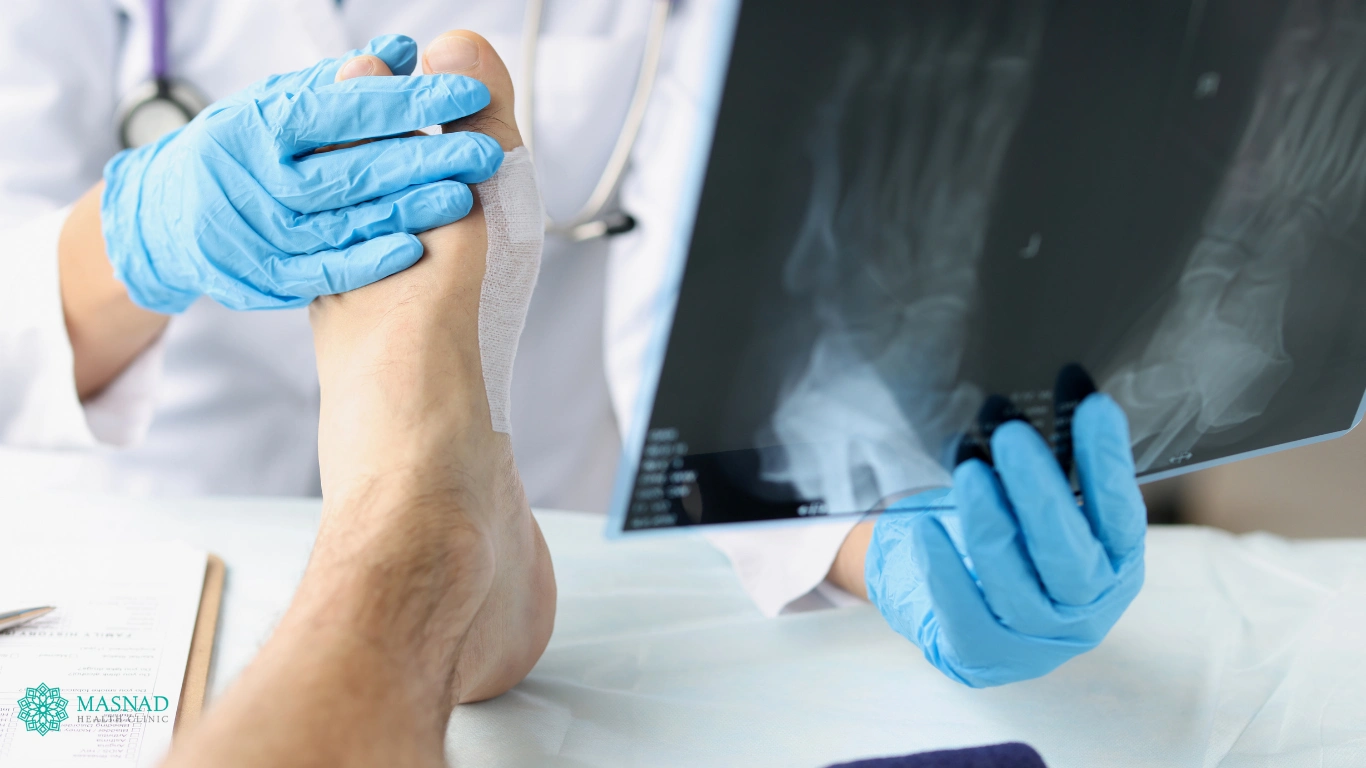
  • Recommend ultrasound imaging if necessary, to confirm the diagnosis or rule out other conditions like stress fractures or nerve entrapments.
examining a patient’s foot

Treatment and Management

1. Conservative Treatment

Early-stage management focuses on reducing pain and stress on the fascia while promoting gradual healing.

  • Rest and activity modification: Reduce weight-bearing activities to avoid further strain.
  • Ice therapy: Applying ice to the heel 2-3 times daily helps manage inflammation.
  • Footwear correction: Supportive shoes with proper heel cushioning and arch support are crucial.
  • Orthotics and heel cups: These help distribute pressure more evenly.
  • Night splints: Keep the calf muscles lengthened overnight, reducing morning pain.
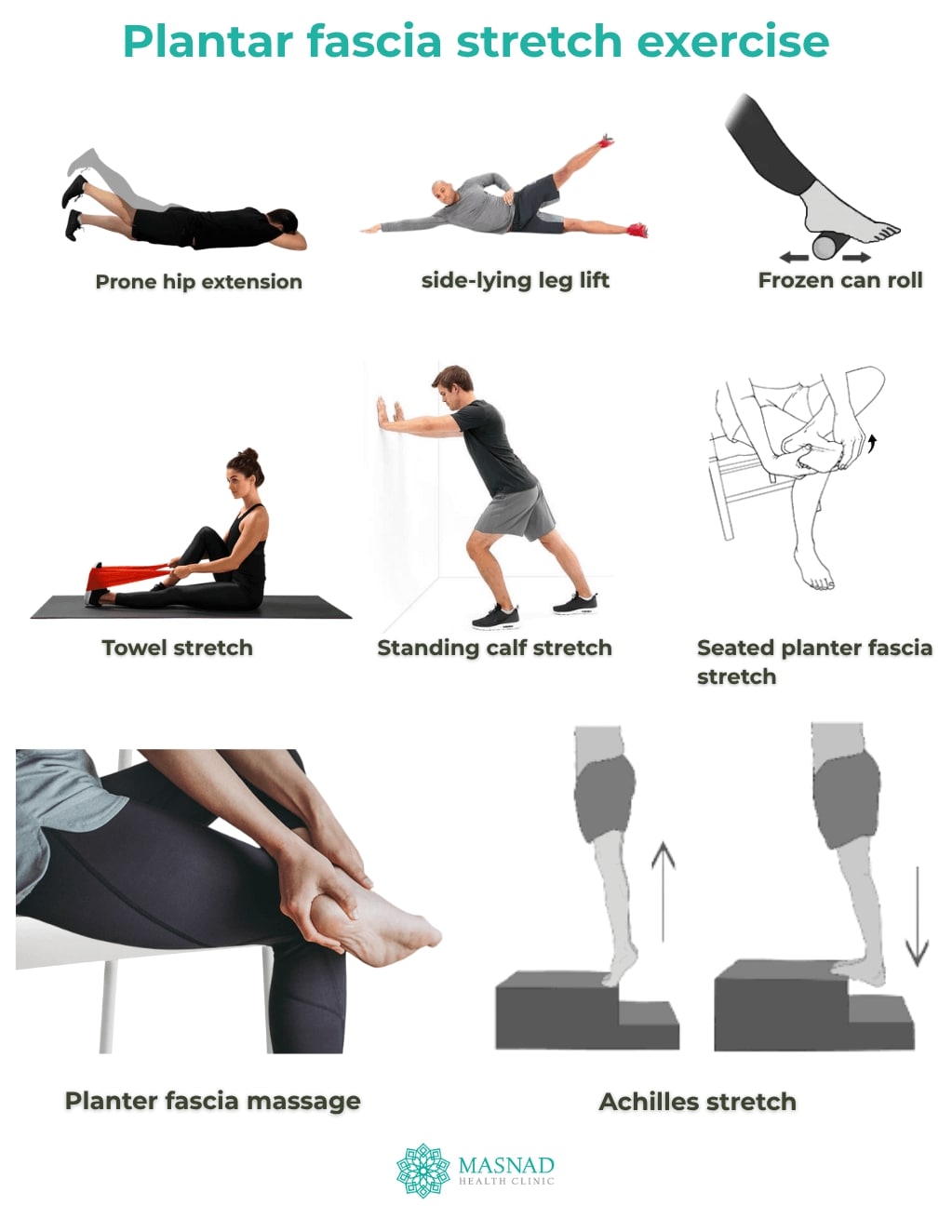
  • Gentle stretching: Calf and plantar fascia stretches to restore flexibility.
plantar fascia stretch exercise

2. Physiotherapy for Recovery

At Masnad Health Clinic, our physiotherapists use an evidence-based, personalised approach to help you heal safely and effectively.

Treatment may include:

  • Taping and manual therapy to unload the fascia and ease discomfort.
  • Targeted exercise programs to strengthen the calf, foot, and intrinsic muscles.
  • Shockwave therapy for chronic or resistant cases (shown to promote tissue healing).
  • Gait retraining and posture correction to address biomechanical imbalances.

3. Advanced Interventions (if pain persists)

If conservative management doesn’t bring sufficient relief, advanced medical options may be considered:

  • Ultrasound-guided corticosteroid injections – to temporarily reduce pain and inflammation (usually limited to 1–2 injections).
  • Platelet-Rich Plasma (PRP) injections – use your body’s own platelets to promote long-term healing.
  • Percutaneous ultrasonic tenotomy/fasciotomy – a minimally invasive procedure that removes degenerated tissue and stimulates repair.

According to Mayo Clinic findings, PRP and tenotomy have shown longer-lasting benefits compared to steroids when followed by structured physiotherapy and protected weight-bearing.

Recovery Time

With early diagnosis and consistent physiotherapy, most people experience significant improvement within 6 to 12 weeks. However, chronic or severe cases may take several months to fully resolve. The key is to address the root cause, not just the symptoms.

Tips for Prevention

  • Choose supportive shoes with good arch and heel cushioning.
  • Maintain a healthy weight to reduce stress on the feet.
  • Perform calf and plantar fascia stretches regularly.
  • Avoid sudden increases in running or training intensity.
  • Replace worn-out shoes promptly.

Why Choose Masnad Health Clinic?

At Masnad Health Clinic, we believe in treating the cause, not just the pain. Our experienced physiotherapists combine hands-on care with advanced rehabilitation techniques to help you:

  • Relieve pain naturally and effectively.
  • Restore strength, flexibility, and mobility.
  • Prevent recurrence through personalised exercise and footwear advice.

We also collaborate closely with podiatrists and sports medicine professionals, ensuring every patient receives comprehensive, multidisciplinary care.

For all your Plantar Fasciopathy needs, feel free to call us at (02) 9793 8840 or book your appointment online to begin your journey toward pain-free steps and lasting foot relief.

FAQs

They refer to the same condition. “Fasciopathy” is a more accurate term, describing degeneration of the fascia rather than pure inflammation.

In some mild cases, yes. However, recovery can take up to two years without treatment, so professional care helps shorten the healing time.

It’s best to modify activities that cause pain. Low-impact exercises like swimming or cycling can be safe alternatives during recovery.

Regular stretching, supportive shoes, and maintaining a healthy body weight are key preventive strategies.

If heel pain persists for more than 2 weeks or interferes with your normal activities, book an assessment with a physiotherapist for proper diagnosis and treatment.