
Carpal Tunnel Syndrome

Carpal Tunnel Syndrome: Causes, Symptoms

What Is Carpal Tunnel Syndrome?

Carpal Tunnel Syndrome is a condition that affects the wrist and hand when the median nerve gets pinched inside a narrow space known as the carpal tunnel. When that space becomes crowded or irritated, the nerve struggles – and your hand starts to complain with tingling, numbness, or weakness.

Many people notice symptoms while typing, gripping the steering wheel, or even while sleeping. If ignored for too long, the problem can gradually interfere with simple tasks like lifting a cup, buttoning clothes, or holding a phone.

Carpal Tunnel Syndrome is usually progressive, meaning it gets worse without treatment.
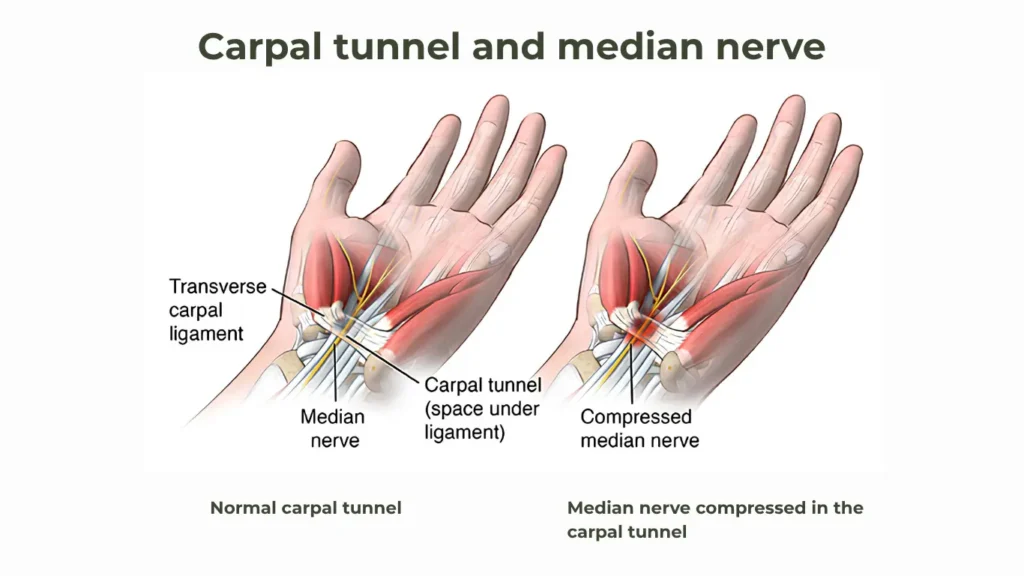
Carpal Tunnel Syndrome

What Causes Carpal Tunnel Syndrome?

Several factors can contribute to the development of CTS. These include:

  • Repetitive hand movements: Tasks involving prolonged typing, mouse use, or assembly line work can irritate the tendons and compress the median nerve.
  • Arthritis or joint conditions: Inflammation from arthritis can reduce the tunnel space, increasing nerve pressure.
  • Growths or cysts: Ganglion cysts or other growths can physically crowd the carpal tunnel.
  • Fluid retention: Conditions like pregnancy or diabetes can cause swelling around the wrist.
  • Injury: Wrist fractures or trauma can alter tunnel alignment.
  • Poor posture and biomechanics: Incorrect positioning of the wrist during work or sport can exacerbate pressure on the median nerve.

In many cases, CTS develops gradually. Early symptoms may be mild, such as occasional tingling, and progress to persistent pain and weakness if left untreated.

Symptoms of Carpal Tunnel Syndrome

People experience CTS differently, but the most frequent symptoms include:

  • Tingling or “pins and needles” in the thumb, index, and middle fingers
  • Numbness that comes and goes
  • Electric-shock–like sensations when bending the wrist
  • Hand pain that may travel up the forearm
  • Weak grip or dropping objects unexpectedly
  • Fingers feeling swollen, even when they look normal
  • Night-time symptoms that disturb sleep

As the condition progresses, everyday activities like typing, lifting, or gripping may become more challenging.

How Physiotherapy Helps

Physiotherapy is often the first line of treatment for CTS and can be highly effective for non-surgical cases. Physiotherapists at Masnad Health Clinic use a holistic approach to reduce pressure on the median nerve, restore mobility, and improve strength.

Physiotherapy Approaches Include:

  • Nerve gliding exercises: Gentle movements that mobilise the median nerve and reduce compression
  • Wrist and hand stretching: Improving flexibility in tendons and surrounding muscles
  • Strengthening exercises: Targeting the forearm, wrist, and hand muscles to stabilise the carpal tunnel
  • Postural education: Correcting wrist and arm positioning during daily activities to prevent recurrence
  • Ergonomic advice: Recommending suitable workstation setup or supportive devices to reduce strain

Physiotherapy may also include splinting, soft tissue release, and modifications to daily activities to support healing.

Treatment Options and Expected Recovery

Treatment for CTS depends on the severity and underlying cause. Options include:

  1. Conservative Management:

    • Physiotherapy exercises
    • Wrist splints, especially at night
    • Activity modification
    • Anti-inflammatory interventions such as cortisone or PRP injections
  2. Surgical Intervention:

    • Carpal tunnel release surgery is recommended when conservative methods fail or nerve damage is significant
    • Surgery involves widening the carpal tunnel to relieve median nerve compression
    • Recovery may take several weeks and requires temporary adjustments to daily activities

Most non-surgical cases respond well to physiotherapy, with noticeable improvement in 6-12 weeks. Recovery times vary depending on the cause, age, and overall health of the patient.

Prevention and Long-Term Benefits

Preventing CTS or reducing its recurrence involves:

  • Regular hand and wrist stretching and strengthening
  • Avoiding prolonged repetitive hand movements or taking frequent breaks
  • Maintaining proper posture and ergonomics during work or hobbies
  • Using supportive equipment such as wrist rests or splints
  • Early intervention at the first sign of tingling, numbness, or weakness

Long-term benefits of physiotherapy and lifestyle adjustments include improved hand function, reduced pain, and decreased risk of permanent nerve damage.

Why Choose Masnad Health Clinic?

  • Trusted local team with extensive clinical experience
  • Personalised physiotherapy plans tailored to your wrist and hand needs
  • Hands-on care backed by the latest evidence
  • A supportive approach that focuses on long-term recovery
  • Collaborative care with other healthcare providers when needed

Conclusion

Carpal Tunnel Syndrome is common but highly treatable when managed early. With the right physiotherapy guidance, ergonomic changes, and strengthening exercises, you can restore wrist function, reduce pain, and return to your daily activities with confidence.

For all your Carpal Tunnel Syndrome needs, feel free to call us on 02 9793 8840 or book your appointment online to begin your journey toward pain-free movement and lasting comfort.

FAQ

Yes. Physiotherapy can reduce nerve irritation, restore wrist mobility, strengthen the hand, and prevent future flare-ups.

Most people notice improvements within 2-6 weeks with consistent physiotherapy.

Yes. Long-term compression can cause permanent nerve damage.

Only in severe or persistent cases where conservative care doesn’t help. Many people recover without surgery.

Yes, especially if repetitive wrist strain continues. Ergonomic corrections and strengthening help prevent recurrence.