
Scaphoid Fractures

Scaphoid Fractures - What You Need to Know

Scaphoid fractures are one of those wrist injuries that seem deceptively small but can turn into big problems if not picked up early. Because the pain is often mild and the swelling subtle, many people assume they’ve only “sprained” their wrist – when in reality, a tiny bone near the base of the thumb might be fractured and struggling to heal.

This guide breaks down what the scaphoid is, how these fractures happen, what symptoms to look for, and how physiotherapy supports recovery.
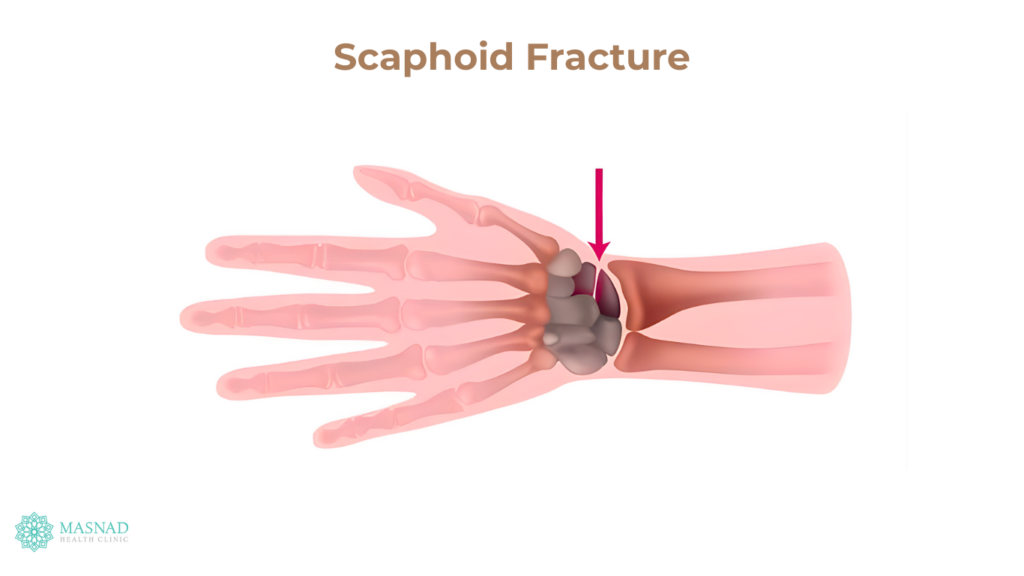
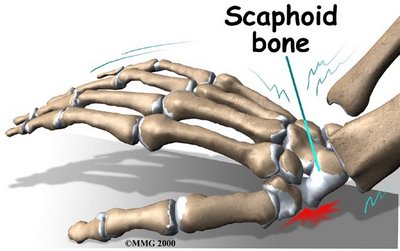
Scaphoid Fracture

What Is the Scaphoid?

Scaphoid Fractures

The scaphoid is a small, boat-shaped bone located just below the thumb, forming a crucial link between the forearm (radius) and the hand.
Despite its size, it carries a significant amount of load with everyday wrist movements, especially gripping, pushing, and weight-bearing activities.

What makes this bone particularly vulnerable is its limited blood supply, especially to the upper portion of the bone. When a fracture occurs, this reduced circulation makes healing slower and increases the risk of complications if not diagnosed and managed properly.

How Do Scaphoid Fractures Happen?

Most scaphoid fractures occur during a fall onto an outstretched hand – the classic reaction when you try to break a fall. The wrist bends backward sharply, compressing the scaphoid between the forearm bones and the hand.

They’re more commonly seen in:

  • Young adults
  • Sports involving falls (soccer, skating, basketball)
  • High-impact activities (skateboarding, cycling, snow sports)

Older adults usually fracture the radius instead, and children often sprain rather than break this bone – making scaphoid fractures most common in the 15-35 age group.

Symptoms of a Scaphoid Fracture

A scaphoid fracture can be difficult to recognise because swelling may be mild and movement may only be slightly uncomfortable. However, some classic signs include:

  • Pain on the thumb-side of the wrist
  • Tenderness in the “anatomical snuffbox” (the small hollow at the base of the thumb)
  • Reduced grip strength
  • Wrist stiffness, especially with lifting or twisting
  • Pain when pushing up from a chair or doing push-ups
  • Subtle swelling or bruising
  • Deep, dull ache that persists even after rest

As the initial swelling settles, pain often becomes more noticeable during gripping activities like opening jars or carrying bags.

How Are Scaphoid Fractures Diagnosed?

Because these fractures are subtle, correct diagnosis involves a careful step-by-step approach.

A physiotherapist or GP will begin with:

1. Clinical Assessment

  • Checking for tenderness in specific areas
  • Assessing movement and functional pain
  • Reviewing the mechanism of injury

If a scaphoid fracture is suspected, imaging is essential.

2. Imaging

  • X-ray is the first step-but up to 20% of fractures don’t show up immediately.
  • If the X-ray is inconclusive but symptoms strongly suggest a fracture, your clinician may:
  • Re-X-ray after 7–10 days
  • Order a CT scan for detailed bone imaging

Request an MRI, which can detect fractures earlier and show associated soft-tissue injuries

Why so much caution?

Because a missed scaphoid fracture can lead to:

  • Delayed union
  • Non-union
  • Wrist arthritis
  • Long-term weakness and pain

Early diagnosis prevents long-term complications.

Treatment Options

1. Immobilisation

Most scaphoid fractures heal with strict immobilisation using:

  • A cast
  • A splint
  • A thumb spica brace

Depending on the fracture location:

  • The distal (far) end heals faster
  • The proximal (near the forearm) end takes longer due to poorer blood supply

Immobilisation often lasts 6-12 weeks, sometimes longer.

2. Surgical Intervention

Surgery may be recommended if:

  • The fracture is displaced
  • Blood supply is compromised
  • There’s a risk of non-union
  • The fracture is in the proximal pole

Screws or pins may be used to stabilise the bone and encourage proper healing.

How Physiotherapy Helps After a Scaphoid Fracture

Once the cast or splint is removed, the wrist is often weak, stiff, and sensitive. Physiotherapy is essential to restore normal function, prevent long-term issues, and safely guide your return to daily activity.

A physiotherapy program may include:

  • Gentle Mobility Exercises

             To restore wrist movement, reduce stiffness, and improve joint flexibility.

  •  Strengthening Therapy

            Focusing on wrist, forearm, grip, and thumb muscles that weaken during immobilisation.

  •  Manual Therapy Techniques

            To improve joint glide, relieve stiffness, and restore natural wrist biomechanics.

  • Swelling & Pain Management

         Through soft tissue techniques, heat/ice, or taping strategies.

  •  Functional Retraining

          Helping you return safely to lifting, typing, sports, or manual work.

  •  Education on Safe Movement

             Preventing re-injury while encouraging gradual, confident loading.

Physiotherapists also address secondary issues such as shoulder tightness, neck strain, or headaches that can result from compensating during the healing period.

Recovery Time

Healing varies depending on:

  • Fracture location
  • Blood supply
  • Whether surgery was required
  • Your general health and bone quality

On average:

  • Stable fractures: 6-12 weeks
  • Proximal pole fractures: 12-20 weeks
  • After surgery: 8-14 weeks

Physiotherapy ensures you regain strength, mobility, and confidence throughout each stage of recovery.

Tips to Prevent Wrist Re-Injury

  • Strengthen your forearm and wrist muscles
  • Use wrist guards during sports such as skating or snowboarding
  • Avoid using your hand to break a fall whenever possible
  • Improve balance and core stability
  • Follow gradual return-to-sport guidelines

When to Seek Help

If you experience wrist pain after a fall – even mild pain – it’s important not to ignore it. Early diagnosis prevents long-term complications like arthritis, reduced grip strength, or chronic stiffness.

Why Choose Masnad Health Clinic?

  • Experienced physiotherapists with advanced musculoskeletal expertise
  • Hands-on, personalised care tailored to your lifestyle
  • Modern rehabilitation methods and evidence-based management
  • Friendly team supporting you through every step of recovery

Conclusion

Scaphoid fractures may be small in size, but they carry big consequences if left untreated. Early assessment, proper immobilisation, and targeted physiotherapy are key to ensuring full healing and long-term wrist health.

For all your Scaphoid Fracture needs, feel free to call us on 02 9793 8840 or book your appointment online to start your journey toward pain-free movement and lasting recovery.

FAQ

Because swelling can be mild and the pain may not feel severe, especially in the first few hours after injury.

Pain on the thumb side of the wrist, especially when pressing into the small hollow near the thumb, is a key sign.

Not always – many heal well with immobilisation, depending on the fracture type.

Yes. If the bone does not heal properly, long-term wrist arthritis and pain can occur.

Once your physiotherapist confirms that strength, mobility, and stability have returned – typically several weeks after immobilisation ends.