Gluteal Tendinopathy

What is Gluteal Tendinopathy?

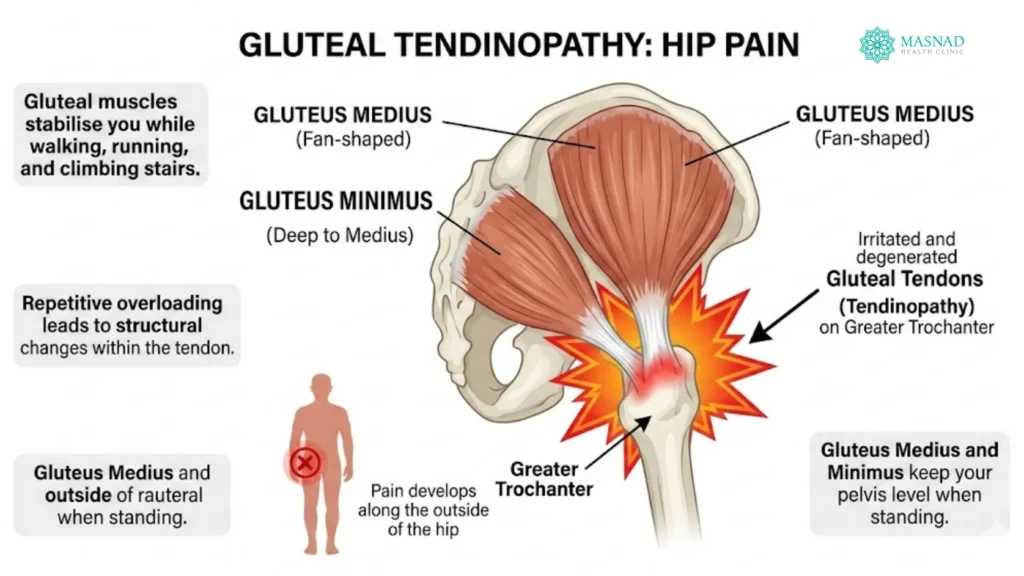
Gluteal Tendinopathy is a condition involving irritation and degeneration of the gluteal tendons on the outer side of the hip.

Tendons connect muscles to bone. When they are repeatedly placed under more load than they can tolerate, they may fail to heal properly. This leads to structural changes within the tendon – known as a tendinopathy.

In this condition, the affected tendons are usually those of the gluteus medius and gluteus minimus muscles. These muscles attach from the pelvis and connect to the outer part of the upper thigh bone, called the greater trochanter.

The gluteal muscles:

  • Keep your pelvis level when standing
  • Control hip movement
  • Stabilise you while walking and running
  • Help with stairs and single-leg activities

When these tendons become irritated, pain develops along the outside of the hip.
What Causes Gluteal Tendinopathy?

Tendons are living tissue. Their strength and resilience are influenced by:

  • Age
  • Hormonal changes
  • Activity levels
  • Load exposure
  • Recovery time

Gluteal tendinopathy often develops due to:

  • Sudden increases in activity
  • Repetitive movements without adequate rest
  • Prolonged standing on one leg
  • Increased running or walking distances
  • Climbing stairs frequently

Recent research has also shown that compressive forces can aggravate gluteal tendons. These include:

  • Crossing your legs
  • Standing with your hip pushed out to one side
  • Sleeping on your side without adequate support
  • Sitting for long periods

Over time, repeated tensile and compressive stress can overload the tendon and trigger pain.

What Are the Symptoms?

The most common symptom is pain on the outside of the hip.

This pain may:

  • Feel sharp or aching
  • Worsen with walking or running
  • Increase when climbing stairs
  • Flare up when lying on the affected side
  • Occur during single-leg movements
  • Radiate slightly down the outer thigh

In more persistent cases, everyday activities such as getting out of a car, standing from a chair, or prolonged walking may become uncomfortable.

Pain is often worse at night when lying on the affected side.

How is It Diagnosed?

Gluteal Tendinopathy is diagnosed clinically through a detailed physiotherapy assessment.

Your physiotherapist will:

  • Assess your hip strength
  • Examine walking mechanics
  • Check pelvic control
  • Review your activity levels
  • Identify aggravating postures

Imaging is not always required, as clinical assessment is usually sufficient to confirm the diagnosis.

How Can Physiotherapy Help?

Management of gluteal tendinopathy focuses on reducing irritation while gradually improving tendon capacity.

Treatment may include:

Load Modification

  • Adjusting walking or running volumes
  • Avoiding aggravating postures
  • Modifying sleep positions
  • Reducing prolonged single-leg loading

Specific Strengthening Exercises

Research shows that carefully prescribed loading exercises can stimulate tendon healing and improve collagen structure.

Your program may include:

  • Hip stability exercises
  • Glute strengthening
  • Controlled single-leg work
  • Progressive loading drills

These exercises are introduced gradually to ensure the tendon adapts safely.

Movement Retraining

Poor pelvic control or hip mechanics may increase tendon stress. Addressing these patterns reduces recurrence risk.

Your physiotherapist will assess and correct any contributing movement habits.

Recovery Expectations

Tendon conditions require patience.

Unlike muscle strains, tendons adapt more slowly. With consistent, structured rehabilitation, most people see steady improvement over several weeks to months.

Ignoring symptoms or continuing aggravating activities without modification may delay recovery.

How Masnad Health Clinic Can Support You

At Masnad Health Clinic, our physiotherapists provide comprehensive assessment and evidence-based treatment for hip pain, including Gluteal Tendinopathy.

We focus on:

  • Identifying the underlying load-related cause
  • Reducing tendon compression and irritation
  • Improving hip and pelvic biomechanics
  • Prescribing progressive strengthening programs
  • Providing clear guidance throughout recovery

Our multidisciplinary approach ensures the entire movement system is assessed – not just the hip.

Book an Appointment

If you are experiencing persistent pain on the outside of your hip:

Book your appointment online today
Or call us on (02) 9793 8840

Early treatment can prevent symptoms from becoming long-term.

We proudly support the communities of Bankstown, Lakemba, Punchbowl, Greenacre, Chullora and Yagoona with personalised, professional physiotherapy care.

FAQs

They can present similarly. Many cases previously labelled as “hip bursitis” are now understood to involve the gluteal tendons.

Most cases improve over several weeks with appropriate rehabilitation. Long-standing cases may take longer.

Not necessarily. Modified exercise is often recommended. Your physiotherapist will guide safe activity levels.

Yes, if contributing factors are not addressed. Prevention strategies are part of your rehabilitation plan.

Surgery is rarely required. Most cases respond well to conservative physiotherapy management.