
Trochanteric Bursitis

Trochanteric Bursitis: Symptoms & Treatment

Overview

Trochanteric Bursitis is a common cause of pain on the outer side of the hip. It often affects people who lead active lifestyles, stand for long periods, or have underlying muscle imbalances. Although the condition can be frustrating, understanding what is happening inside your hip is the first step toward effective treatment and long-term relief.
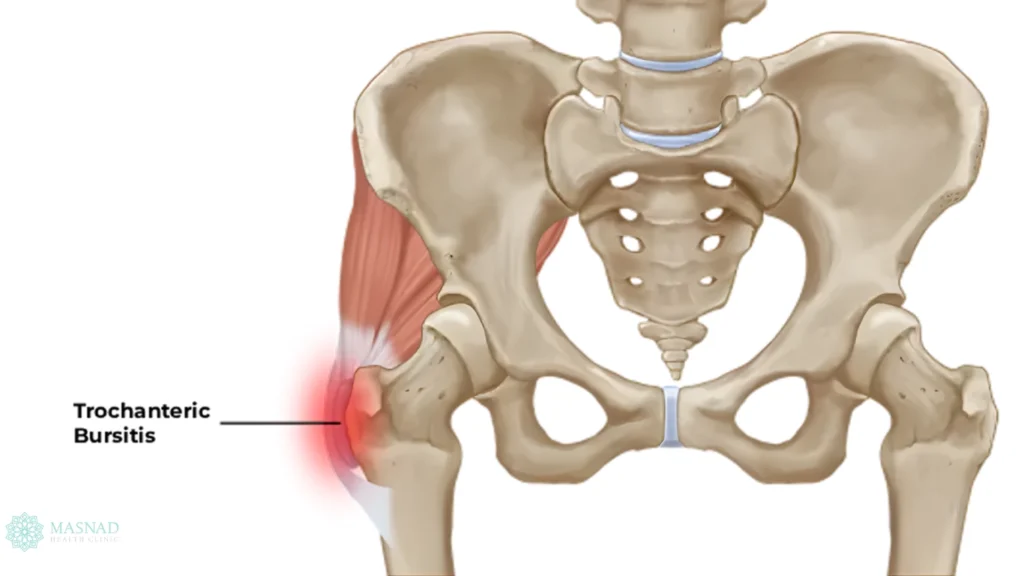

Trochanteric Bursitis

What Is Trochanteric Bursitis ?

The hip joint is supported by multiple layers of muscles that work together to stabilise the pelvis and control movement. Between these layers are small, fluid-filled sacs called bursae. Their role is to reduce friction and allow muscles and tendons to glide smoothly.

Under normal conditions, bursae work silently behind the scenes. However, when surrounding tissues become tight, overloaded, or irritated, the bursa over the greater trochanter (the prominent bone on the outer hip) can become inflamed. This condition is known as Trochanteric Bursitis.

Symptoms of Trochanteric Bursitis

People with this condition often experience:

  • Sharp or burning pain on the outside of the hip
  • Pain radiating down the thigh toward the knee
  • Discomfort while walking, jogging, climbing stairs, or cycling
  • Difficulty sleeping on the affected side
  • Tenderness to touch on the outer hip area

These symptoms may worsen over time if untreated.

How Does It Happen?

Trochanteric Bursitis commonly develops due to a combination of altered biomechanics and repetitive stress on the hip. When the hip and pelvis are not moving efficiently, surrounding tissues may become tight or overactive, creating friction over the bursa.

Factors that may contribute include:

  • Weak or poorly coordinated hip and pelvic muscles
  • Tight structures such as the iliotibial (IT) band
  • Flat feet or poor footwear
  • Leg length differences
  • Scoliosis affecting hip alignment
  • Running or cycling technique issues
  • Incorrect exercise technique or equipment setup

These issues increase pressure on the bursa, eventually leading to irritation and inflammation.

How Can Physiotherapy Help?

Because several conditions can mimic outer hip pain, a thorough physiotherapy assessment is crucial. Once Trochanteric Bursitis is confirmed, physiotherapy aims to reduce pain, correct movement patterns, and restore normal function.

Phase 1: Reduce Pain and Irritation

Your physiotherapist may use:

  • Soft tissue release techniques
  • Ice therapy
  • Activity modification
  • Advice on sleeping and resting positions
  • Orthotic recommendations for foot support
  • Education about daily movement patterns

Phase 2: Improve Hip Mechanics

This stage focuses on addressing the underlying cause through:

  • Strengthening of the gluteal and hip stabilising muscles
  • Stretching tight structures (only as appropriate)
  • Pelvic control and alignment training
  • Posture and gait retraining
  • Gradual reintroduction of functional activities

Phase 3: Return to Full Activity

The final phase involves:

  • Building tolerance to walking, stairs, running, and exercise
  • Preventing flare-ups
  • Improving overall hip strength and flexibility

Most people fully recover within four to six weeks with consistent physiotherapy.

When are Medical Interventions Needed?

If symptoms persist despite conservative treatment, a doctor may consider cortisone injections or further investigations. However, most cases resolve well with physiotherapy alone.

Why Choose Masnad Health Clinic?

At Masnad Health Clinic, we take a comprehensive approach to hip pain. Our physiotherapists:

  • Provide accurate assessment and diagnosis
  • Offer hands-on treatment to reduce pain quickly
  • Create personalised exercise programs
  • Address posture, walking patterns, and muscle imbalances
  • Guide you through every step of recovery
  • Focus on long-term prevention, not just short-term relief

Our goal is to help you return to comfortable movement and prevent future flare-ups.

Conclusion

Trochanteric Bursitis can make daily activities and even sleep uncomfortable, but with the right treatment plan, you can regain mobility, reduce pain, and get back to your normal routine. Physiotherapy plays a central role in improving hip mechanics and preventing future issues.

For all your Trochanteric Bursitis needs, feel free to call us on 02 9793 8840 or book your appointment online to begin your journey toward long-lasting comfort and improved function.

Book Your Appointment

Ready to start your recovery?
Book your session today and let our team guide you toward better hip health.

FAQ

Mild cases may improve with rest, but most require physiotherapy to address the underlying movement issues.

Short, gentle walks can be helpful, but long walks or fast-paced activity may worsen symptoms.

Most people recover in four to six weeks with proper physiotherapy.

Yes, especially if underlying biomechanical issues are not corrected. A personalised rehab plan reduces the risk of recurrence.

Yes. Lying on the affected side increases pressure on the bursa and can worsen pain.