Cauda Equina Syndrome: What It Is, Symptoms, Causes, and When to Seek Urgent Care
What Is Cauda Equina Syndrome?
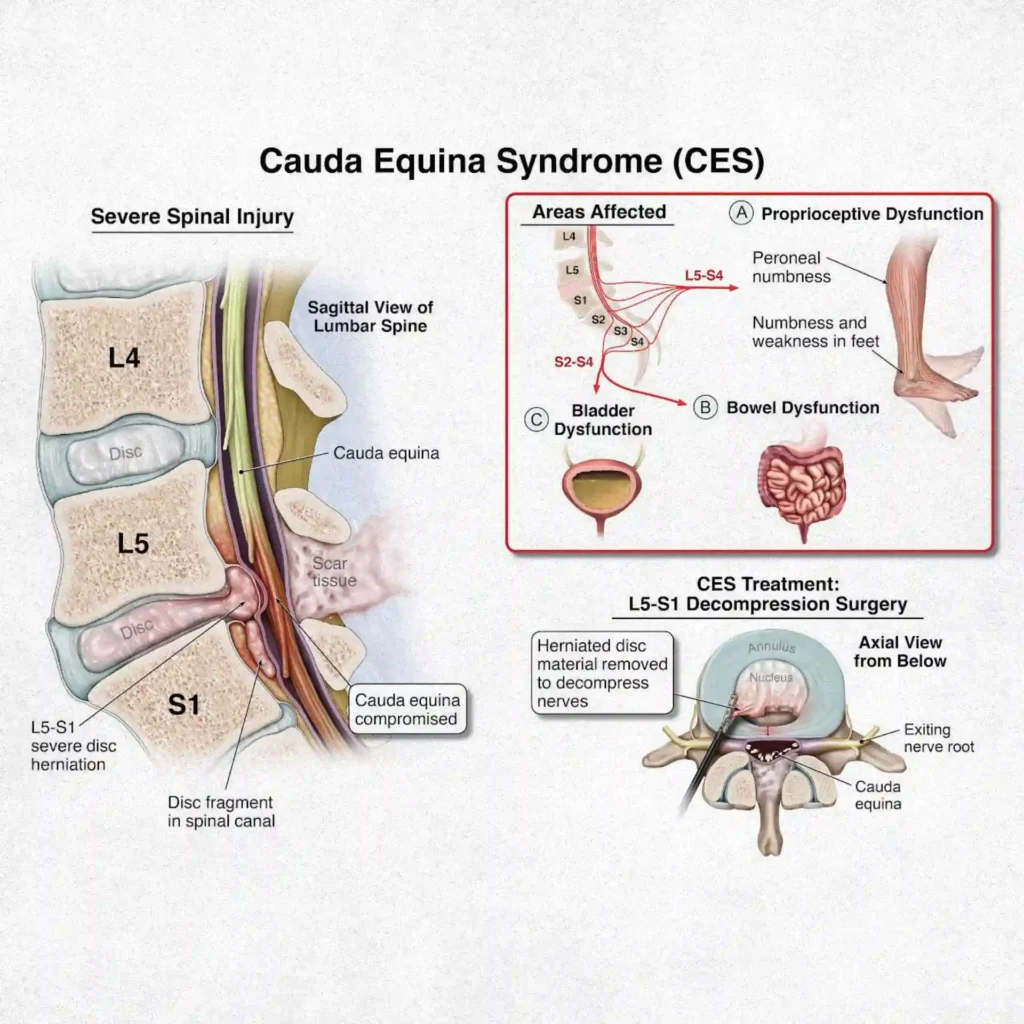
Cauda Equina Syndrome (CES) is a rare but serious neurological condition that requires immediate medical attention. It occurs when the bundle of nerves at the lower end of the spinal cord becomes compressed, disrupting communication between the brain and the lower body.
The term “cauda equina” comes from Latin and means “horse’s tail.” This name refers to the appearance of the group of spinal nerves at the base of the spine, which resemble a horse’s tail as they branch out from the spinal cord.
These nerves play a crucial role in controlling:
- Movement and sensation in the legs and feet
- Bladder and bowel function
- Sexual function
- Sensation in the groin and inner thighs
When these nerves are compressed or damaged, normal nerve signals cannot travel properly. As a result, people may experience severe lower back pain, weakness in the legs, loss of sensation, and bladder or bowel problems.
Although Cauda Equina Syndrome is uncommon, it is considered one of the few true medical emergencies related to back pain. If it is not recognised and treated quickly, it can lead to permanent nerve damage, paralysis, or loss of bladder and bowel control.