
Hamstring tears are one of the most common muscle injuries seen in active Australians, particularly in sports that demand sprinting, sudden acceleration, kicking or change of direction. Whether you’re a weekend runner, a football player, or someone who simply over-stretched during daily activity, a hamstring tear can be painful, frustrating and often slow to heal without proper care.
Hamstring Tears
Hamstring Tears: Symptoms, Causes, Diagnosis and Treatment
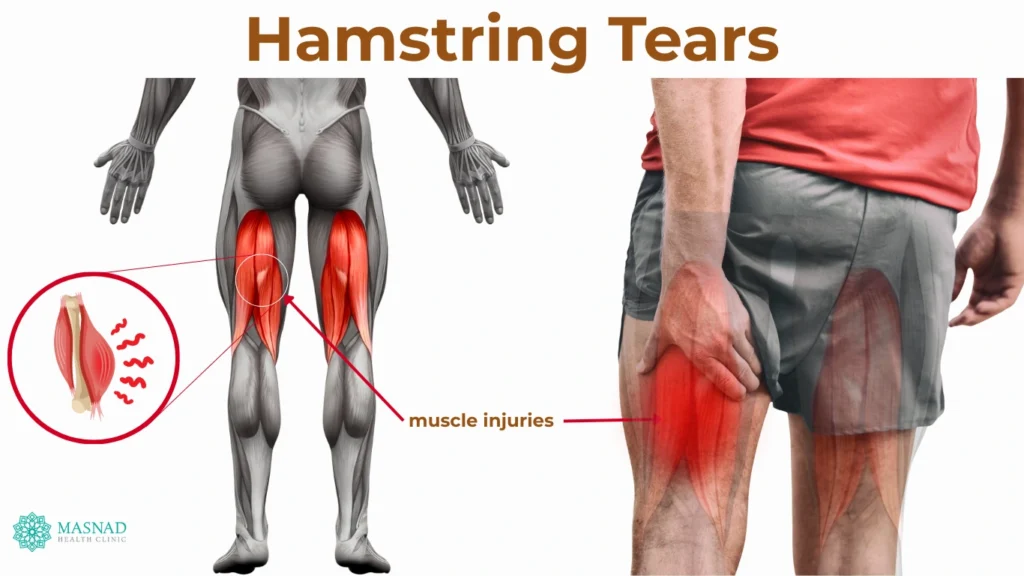
What Are Hamstring Tears?
The hamstrings are a group of three powerful muscles located at the back of your thigh. They play a crucial role in bending the knee, extending the hip and stabilising the lower limb during movement. Despite their strength, they’re surprisingly vulnerable, particularly at the point where the muscle meets the tendon – the area most likely to tear.
Hamstring injuries range from mild overstretching to complete ruptures and are classified into three grades:
Grade 1 (Mild)
- Minor strain involving a small number of muscle fibres
- Mild discomfort
- Little or no loss of function
- Pain often appears the next day rather than immediately
Grade 2 (Moderate)
- Partial tear involving a significant portion of muscle fibres
- Sharp pain at the time of injury
- Swelling, tenderness and bruising
- Difficulty walking or bending the knee
Grade 3 (Severe)
- A complete tear or rupture
- Severe pain and immediate functional loss
- Significant swelling and bruising
- In some cases, a palpable gap in the muscle
Correctly identifying the grade of injury is important, as it guides treatment decisions and expected recovery time.
Common Symptoms of a Hamstring Tear
Symptoms vary depending on the severity of the injury, but generally include:
- Sharp or sudden pain at the back of the thigh
- Pain during walking, bending the knee or stretching
- Swelling or bruising within the first 24–48 hours
- Stiffness, especially in the morning
- Weakness in the affected leg
- Difficulty running, sprinting or kicking
- Muscle spasms
- In rare cases, tingling or numbness below the knee
It is worth noting that pain referred from the lower back or gluteal nerves can mimic a hamstring tear. A proper physiotherapy assessment is essential to confirm the diagnosis and rule out other causes.
What Causes Hamstring Tears?
Hamstring tears occur when the muscle is overstretched or forced to contract suddenly under high load. However, they are usually the result of several contributing factors:
1. Muscle Imbalance
If the quadriceps (front thigh muscles) overpower the hamstrings, the hamstrings become more vulnerable during sudden speed changes.
2. Poor Flexibility and Neural Mobility
Tight muscles or restricted nerve movement places excessive strain on the hamstrings during activity.
3. Fatigue
Tired muscles lose the capacity to absorb force, increasing injury risk.
4. Weak Eccentric Strength
The hamstrings must contract while lengthening during running. Poor eccentric strength is one of the biggest predictors of injury.
5. Poor Warm-Up
Insufficient preparation before high-speed or high-impact activity increases the likelihood of overstretching.
6. Previous Hamstring Injury
The strongest predictor of future hamstring tears is having had one before.
7. Biomechanical Factors
Flat feet, pelvic instability, and poor core control alter movement patterns and increase stress on the hamstrings.
Diagnosis: How We Assess Hamstring Tears
A thorough physiotherapy assessment typically includes:
- Detailed discussion of how the injury occurred
- Strength and flexibility testing
- Palpation of the hamstring to locate the tear
- Functional tests such as walking, lunging or bending
- Neural tension assessments
- Differential diagnosis to rule out lumbar referral
Imaging such as MRI or ultrasound may be recommended for severe tears, suspected complete ruptures, or if surgery is being considered. However, most tears are diagnosed clinically without the need for scans.
Treatment for Hamstring Tears
1. Early Management (First 48–72 Hours)
Following the RICE protocol helps minimise swelling and pain:
- Rest from aggravating activities
- Ice for 20 minutes every 1–2 hours
- Compression to reduce swelling
- Elevation to support drainage
Avoid stretching in the early phase, as this can worsen the tear.
2. Physiotherapy Treatment
Physiotherapy is essential to promote healing, prevent scar tissue restriction and restore normal function.
At Masnad Health Clinic, we use a range of evidence-based techniques, such as:
- Manual therapy
- Ultrasound therapy
- Shockwave therapy (for chronic cases)
- Laser therapy
- Dry needling
- Soft tissue release
- TENS for pain relief
3. Exercise Rehabilitation
Rehabilitation is the most important part of recovery. We tailor all exercise programs individually, but commonly include:
Phase A: Pain Reduction and Mobility
- Gentle range-of-motion exercises
- Isometric hamstring strengthening
- Activation of glutes and core muscles
Phase B: Strengthening
- Progressive hamstring strengthening (concentric + eccentric)
- Single-leg balance and stability training
- Hip and pelvic control exercises
Phase C: Advanced Strength and Eccentric Loading
- Nordic hamstring curls
- Deadlifts
- Romanian deadlifts
- Hip hinge training
Phase D: Return to Sport
- Sprint progressions
- Agility drills
- Sport-specific movements
- Plyometrics
A full rehabilitation program typically takes 6–12 weeks, depending on the grade of the tear. Skipping rehab or returning too early significantly increases the risk of re-injury.
4. Surgery (Rare Cases)
Surgery is only considered for:
- Complete hamstring ruptures
- Tendon avulsions
- Severe grade 3 tears that fail to improve
Prevention of Hamstring Tears
Prevention is always better than cure, especially because recurrence rates are high. Evidence consistently shows that eccentric hamstring strengthening is the most effective prevention strategy.
To reduce your risk:
- Warm up properly before sport
- Strengthen both hamstrings and glutes
- Improve core and pelvic stability
- Maintain good flexibility
- Address muscle imbalances
- Progress training gradually
- Allow appropriate recovery between sessions
Why Choose Masnad Health Clinic?
- Expert physiotherapists experienced in treating sports injuries
- Individualised rehabilitation programs
- Advanced therapeutic equipment for faster recovery
- Focus on long-term prevention, not just short-term relief
- Holistic, patient-centred care in a supportive environment
Conclusion
Hamstring tears can significantly disrupt mobility, limit performance, and increase the risk of repeated injury if not managed properly. Early diagnosis, targeted physiotherapy, and a structured rehabilitation program are essential for a safe and complete recovery.
For all your Hamstring Tear concerns, feel free to call us at 02 9793 8840 or Book Online today.
FAQ
Mild tears heal in 2–3 weeks, while severe tears may take 6–12 weeks or longer.
Walking may be painful in moderate or severe tears. Rest is recommended initially.
Avoid stretching during the first few days. Your physiotherapist will guide you on safe stretching timing.
Yes — physiotherapy significantly reduces recovery time and the risk of re-injury.
Return to sport depends on strength, flexibility, and sport-specific testing. Most people return safely within 6–12 weeks.
Yes — recurrence rates are high without proper rehabilitation.

New Client Offer - 10% OFF
Are you in pain? Not sure if we can help you?
Book your initial appointment and receive 10% off any service!