
Patella Dislocations

Patella Dislocations: Causes, Symptoms, and Treatment

What is a Patella Dislocation?

The knee joint is made up of three bones: the thigh bone (femur), the shin bone (tibia), and the small floating bone at the front called the kneecap (patella). The patella slides smoothly within a groove at the front of the knee (the trochlear groove), helping the knee bend and straighten efficiently while protecting the joint.

A patella dislocation occurs when the kneecap moves out of this groove. If it moves slightly out of place, it’s called a subluxation. If it moves completely out of the groove, it’s a dislocation. Most commonly, the kneecap dislocates laterally (towards the outside of the knee). First-time dislocations are usually the most painful and traumatic.
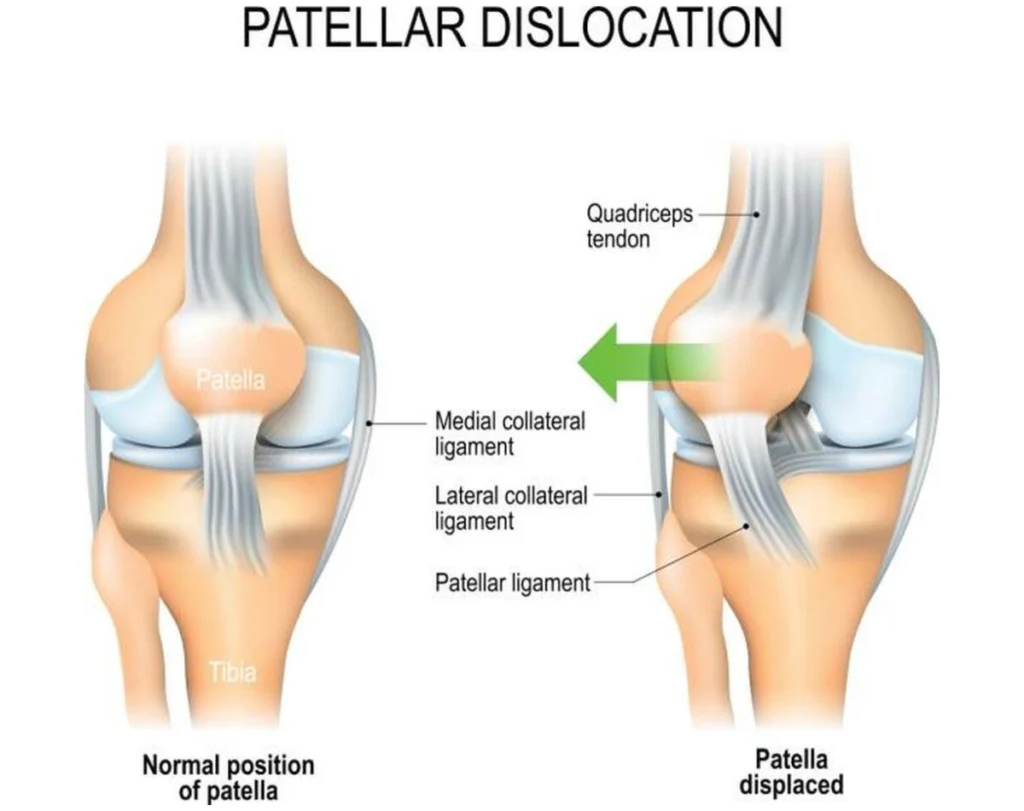

Patella Dislocation

What Are the Symptoms?

Symptoms of a patella dislocation can include:

  • Sudden, intense knee pain
  • Audible pop at the time of injury
  • Visible displacement of the kneecap
  • Swelling, bruising, and bleeding within the joint (haemarthrosis)
  • Instability or “giving way” of the knee
  • Difficulty walking or bearing weight
  • Locking or catching of the knee

Recurring dislocations may occur from minor movements if the knee has underlying instability or ligament damage.

Understanding Patella Dislocation Variations

Patella dislocations can be broadly classified into two main types:

  1. Acute Patella Dislocation
    • A sudden injury caused by force, often during sports or a fall. The kneecap is pushed out of the groove, causing immediate pain and swelling.
  2. Congenital Patella Dislocation
    • A developmental condition, also known as trochlear dysplasia. The patella does not form correctly within the groove, making dislocations more likely. This is rare and may be associated with genetic or developmental conditions.

What Causes a Patella Dislocation?

Patella dislocations can occur due to:

  • Traumatic events: Non-contact injuries such as twisting the leg while the foot is planted, or direct impacts like falls or collisions.
  • Instability: Loose tendons or ligaments around the knee can predispose the patella to dislocate more easily.
  • Congenital factors: Rarely, a patella develops outside the groove due to developmental issues (trochlear dysplasia).
  • Risk factors: Athletes, dancers, teenagers (looser ligaments), women (wider hips and ligament laxity), and tall or large men (higher joint stress).

Long-term, dislocations can lead to less stable knees, cartilage damage, and increased risk of osteoarthritis.

How Can Physiotherapy Help?

After a patella dislocation, the first step is medical assessment to reduce pain, check for fractures, and ensure proper relocation of the kneecap. Your physiotherapist will then:

  • Assess and address stiffness, weakness, or instability around the knee
  • Develop a personalised exercise program to restore strength, flexibility, and stability
  • Work on balance and proprioception to prevent future dislocations
  • Educate on bracing, taping, or safe movement strategies
  • In severe or recurrent cases, surgery may be recommended, followed by guided rehabilitation

Rehabilitation is crucial to restore normal knee function and reduce the risk of recurrence.

Diagnosis and Tests

Healthcare providers may use the following to confirm a dislocated patella:

  • Physical examination and injury history
  • Imaging tests like X-rays, MRI, or CT scans to detect fractures, ligament injuries, or cartilage damage
  • Assessment even if the kneecap has self-corrected (“transient” dislocation)

Recovery and Outlook

  • First-time dislocation without major damage: Most people recover within 6–8 weeks and return to daily activities. Sports participation may resume after 3–4 months.
  • Recurring dislocations or major damage requiring surgery: Recovery may take over a year.

Proper rehabilitation and adherence to physiotherapy programs significantly improve outcomes.

Prevention

To reduce the risk of future dislocations:

  • Complete rehabilitation after a dislocation
  • Strengthen and stretch all muscles stabilising the knee
  • Ensure correct technique during sports or physical activities
  • Consider reconstructive surgery if knee ligaments or tendons are excessively loose

Why Choose Masnad Health Clinic?

At Masnad Health Clinic, we provide expert care for patella dislocations and other knee injuries. Our experienced physiotherapists offer personalised, evidence-based treatment plans, using modern techniques to restore strength, mobility, and stability. With a patient-centred approach, we help you recover safely and return to your favourite activities.

Conclusion

Patella dislocations can be painful and debilitating, with a risk of recurrence and long-term knee instability if not properly treated. Early assessment, personalised physiotherapy, and preventive strategies are key to a full recovery.

For all your Patella Dislocation concerns, feel free to call us at 02 9793 8840 or Book Online today.

FAQ

It’s usually very painful, with the knee often unable to bear weight until corrected.

Sometimes, yes. But medical evaluation is necessary to check for fractures or ligament/cartilage damage.

Walking is usually difficult or impossible until the patella is relocated. Temporary subluxation may allow some movement.