
Patella Tendinopathy

Patella Tendinopathy: Symptoms, Causes & Treatment

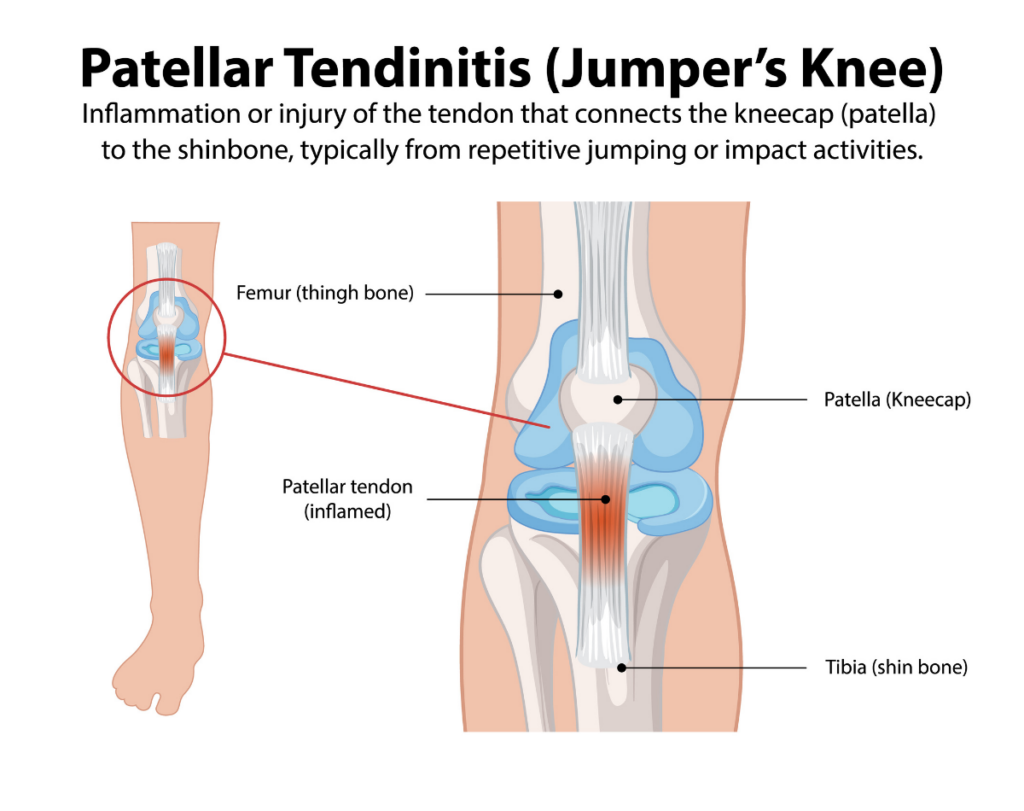
Patella tendinopathy – commonly known as jumper’s knee – is a painful overuse condition affecting the tendon that connects the kneecap (patella) to the shinbone. This tendon plays a crucial role in powerful movements like jumping, sprinting, landing, and sudden changes of direction. When repeatedly overloaded, the tendon can gradually become irritated, painful, and less capable of absorbing force.

This condition is especially common in athletes who participate in sports requiring explosive leg movements – basketball, volleyball, football, netball, athletics, and tennis—but it can affect anyone experiencing repeated stress through the quadriceps and patella tendon. Early management is essential, as patella tendinopathy can become a chronic and debilitating condition if ignored.

Patella Tendinopathy

What Is Patella Tendinopathy?

Patella tendinopathy is a degenerative and inflammatory condition that develops when the patella tendon is exposed to excessive or repetitive load without adequate recovery. While it’s often referred to as “jumper’s knee,” this condition can occur in people who don’t participate in high-impact sports. Even activities like frequent stair climbing, heavy lifting, or long periods of squatting can aggravate the tendon.

Unlike acute injuries such as a sprain or tear, patella tendinopathy develops over time. The tendon attempts to adapt to the increasing load; however, when the stress exceeds its ability to repair, micro-damage builds up, leading to pain, stiffness, and reduced function.

During jumping and landing, the patella tendon can absorb forces several times greater than your body weight. Over time, this repeated stress can cause structural changes in the tendon, making it less resilient and more sensitive to load.

Common Symptoms

The hallmark sign of patella tendinopathy is sharp, localised pain just below the kneecap, where the tendon attaches to the inferior pole of the patella. The symptoms often appear gradually and worsen with increased activity.

You may experience:

Pain that increases with load

  • Squatting
  • Jumping and landing
  • Running, particularly downhill
  • Going up or down stairs
  • Sitting or standing after long periods

Morning stiffness

It’s common to feel discomfort and tightness in the tendon when first getting out of bed.

Activity-related pain

Pain often starts as a mild ache and progressively worsens over weeks or months.

Tenderness and thickening

The tendon may feel thickened and sensitive when touched.

Reduced knee function

Activities requiring explosive power—such as sprinting or jumping—may feel weak, unstable, or painful.

In more chronic cases, the tendon becomes less able to withstand load, and activities that were once easy can become increasingly difficult.

What Causes Patella Tendinopathy?

Patella tendinopathy is primarily caused by excessive or repetitive strain placed on the tendon. This overload can be due to training errors, biomechanical issues, or external factors.

1. Training-related factors

  • Sudden increase in training volume or intensity
  • High-impact sports involving frequent jumping
  • Inadequate rest between sessions
  • Training on hard surfaces
  • Poor warm-up or cool-down routines

2. Biomechanical or structural factors

  • Tight quadriceps or hamstring muscles
  • Weak glutes or quadriceps
  • Poor landing technique
  • Flat feet or altered foot mechanics
  • Hip or ankle mobility restrictions

These factors can increase strain on the patella tendon, making it more prone to injury.

3. Intrinsic risk factors

  • Age
  • Poor tendon blood supply
  • Body composition
  • Fatigue
  • Previous knee or lower-limb injuries
  • Reduced core stability
  • Poor nutrition or overall health

Men tend to experience patella tendinopathy slightly more often than women, likely due to sport-specific loading patterns and participation.

How Physiotherapy Helps

A correct diagnosis is the first step toward effective treatment. Your physiotherapist will assess your movement patterns, strength, flexibility, and training habits to determine the cause and stage of your tendinopathy.

1. Load management

Reducing tendon irritation is essential. Your physio will help you:

  • Modify training intensity
  • Adjust jumping, landing, and squatting loads
  • Identify aggravating activities
  • Prevent complete rest (which weakens the tendon further)

The goal is optimal loading-not too much, not too little.

2. Isometric exercises for early pain relief

Isometric quadriceps contractions can significantly reduce tendon pain. Your physio may prescribe exercises such as:

  • Wall sits
  • Heavy isometric leg press holds
  • Straight leg raises

These exercises load the tendon without causing excessive strain.

3. Progressive loading program

As the pain settles, your physio will introduce:

  • Eccentric exercises (lengthening contractions)
  • Slow, heavy resistance training
  • Functional strengthening
  • Sport-specific drills

Eccentric loading is the gold standard for tendon rehabilitation because it helps stimulate healthy collagen production and improve tendon resilience.

4. Biomechanical correction

Your physiotherapist may work on:

  • Improving hip and ankle mobility
  • Strengthening glutes and core
  • Correcting landing mechanics
  • Addressing foot posture issues

5. Manual therapy & adjunct treatments

Depending on your condition, treatment may include:

  • Soft tissue mobilisation
  • Ultrasound
  • Shockwave therapy (where appropriate)
  • Taping to offload the tendon
  • Dry needling

6. Return-to-sport planning

A successful return to sport requires a structured plan that gradually increases tendon load while avoiding re-irritation. Your physio will guide you through each stage to ensure a safe and confident return to activity.

Recovery Timeline

Patella tendinopathy is not a quick-fix condition. Tendons heal slowly, and commitment to rehabilitation is essential.

Most individuals recover within:

  • 8–12 weeks for mild cases
  • 3–6 months for moderate to chronic cases

Consistency-not intensity-is the key.

Conclusion

Patella tendinopathy can start as a mild niggle but can quickly progress into a chronic, debilitating condition if ignored. With early physiotherapy intervention, structured load management, and a targeted strengthening program, most people can make a full recovery and get back to pain-free movement, work, and sport.

For all your Patella Tendinopathy concerns, feel free to call us at 02 9793 8840 or Book Online today.

FAQ

It’s an overuse injury causing pain at the base of the kneecap, common in jumping sports.

Mild cases: 8–12 weeks. Chronic cases: 3–6 months with physiotherapy.

Yes, but high-load activities like jumping may need modification until pain settles.

Targeted physiotherapy, isometric and eccentric exercises, and load management.

Athletes, those with tight muscles, previous knee injuries, or sudden increases in training.