
Patellofemoral Pain Syndrome (Runner’s Knee)
What Is Patellofemoral Pain Syndrome?
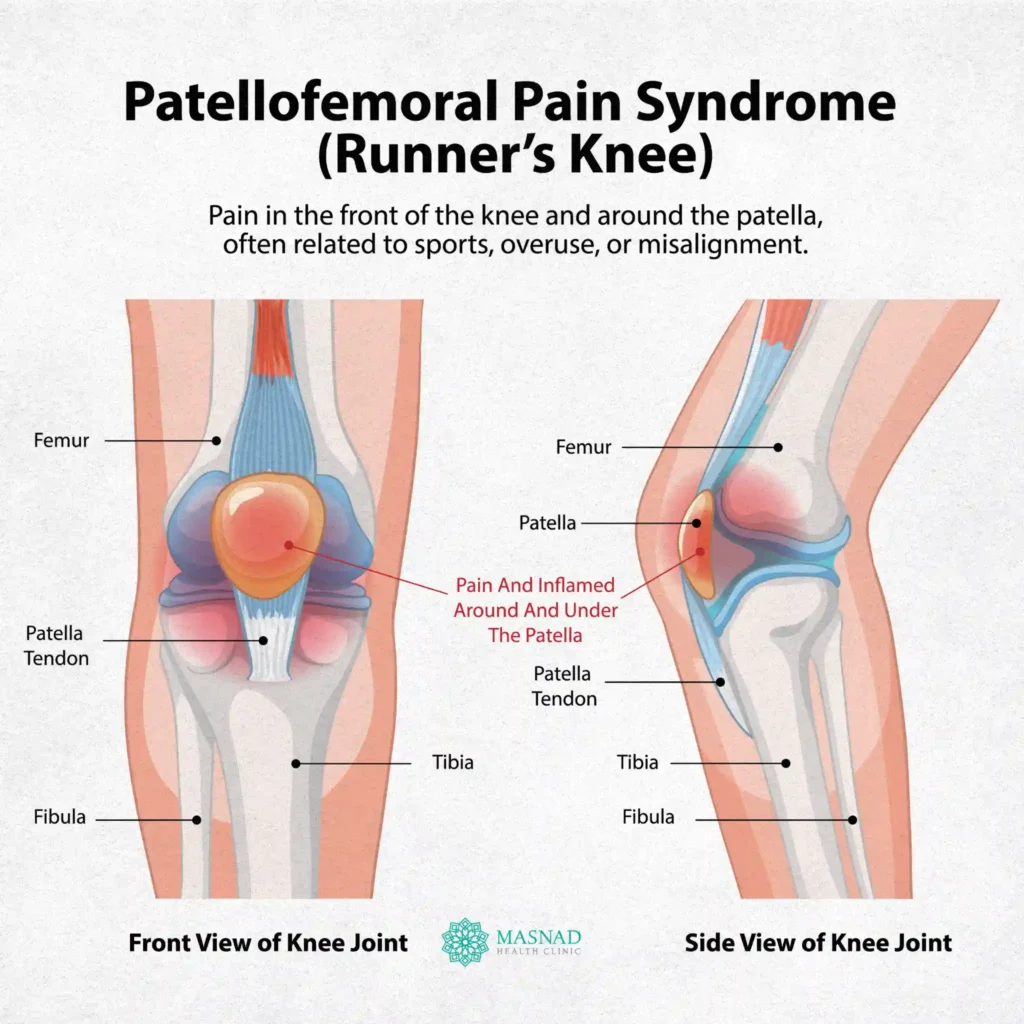
Patellofemoral Pain Syndrome (PFPS) is one of the most common causes of pain at the front of the knee, particularly around or behind the kneecap (patella). It is sometimes referred to as runner’s knee because it frequently affects runners and physically active individuals. However, PFPS can occur in anyone, including people who sit for long periods, work physically demanding jobs, or suddenly increase their activity levels.
The knee joint functions like a hinge, allowing the leg to bend and straighten smoothly during everyday movements such as walking, climbing stairs, squatting, and running. The kneecap (patella) sits at the front of the knee and moves within a shallow groove at the end of the thigh bone.
The patella has several important roles:
- Guiding the quadriceps muscles during knee extension
- Protecting the knee joint
- Absorbing and distributing forces when the knee bends
When the kneecap does not move smoothly within its groove, the surrounding soft tissues can become irritated and inflamed. Over time, this irritation leads to the persistent knee pain known as patellofemoral pain syndrome.
Common Symptoms of Patellofemoral Pain Syndrome
Patellofemoral pain syndrome typically causes pain around the front of the knee, particularly near the kneecap.
The symptoms may develop gradually and worsen over time if left untreated.
Common symptoms include:
- Dull, aching pain around or behind the kneecap
- Pain when running, squatting, kneeling, or jumping
- Discomfort when walking up or down stairs
- Pain after sitting for long periods with bent knees
- A grinding or clicking sensation when bending the knee
- Knee stiffness or mild swelling
Many people first notice PFPS during everyday activities such as:
- Getting up from a chair
- Driving for long periods
- Using stairs
- Squatting during exercise
If the condition progresses without treatment, even simple daily movements can become uncomfortable.
What Causes Patellofemoral Pain Syndrome?
Patellofemoral pain syndrome usually develops due to improper movement of the kneecap within the femoral groove.
The kneecap is controlled by the quadriceps muscles at the front of the thigh. When these muscles contract, they pull on the patella and help straighten the knee.
However, if there is muscle imbalance or poor biomechanics, the kneecap may be pulled slightly to one side. Over time, this abnormal movement irritates the surrounding tissues and causes pain.
Common contributing factors include:
- Muscle Imbalance
The outer thigh muscles are often stronger and tighter than the inner thigh muscles. This imbalance can cause the kneecap to track incorrectly.
- Weak Hip Muscles
Weak hip stabilising muscles can cause the knee to collapse inward during movement, placing additional stress on the kneecap.
- Poor Foot Mechanics
Flat feet or lack of arch support can alter how forces travel through the leg, affecting knee alignment.
- Overuse or Sudden Activity Increase
Rapid increases in running, training, or physical activity can overload the knee joint.
- Poor Posture or Movement Patterns
Incorrect running technique, poor squat form, or prolonged sitting can all contribute to PFPS.
- Structural Differences
Some individuals naturally have variations in knee alignment that can make them more prone to this condition.
How Patellofemoral Pain Syndrome Is Diagnosed
Accurate diagnosis is important because front-of-knee pain can also be caused by several other knee conditions.
These may include:
- Ligament injuries
- Knee dislocation
- Tendon inflammation
- Meniscus injuries
- Arthritis
A physiotherapist will conduct a thorough assessment to confirm whether PFPS is the cause of the pain.
The assessment usually includes:
Medical history
Discussing when the pain began, what activities trigger it, and whether there have been previous injuries.
Physical examination
Evaluating knee alignment, muscle strength, flexibility, and joint movement.
Movement assessment
Observing movements such as squatting, walking, or climbing stairs to identify biomechanical issues.
In some cases, imaging such as X-rays or MRI scans may be recommended to rule out other conditions.
How Physiotherapy Helps Treat Patellofemoral Pain Syndrome
Physiotherapy is widely considered one of the most effective treatments for patellofemoral pain syndrome.
Treatment focuses on correcting the underlying causes of the problem rather than simply reducing pain.
Personalised rehabilitation programs
A physiotherapist will design a treatment plan tailored to the individual’s condition, activity level, and goals.
Treatment may include:
Strengthening exercises
Targeting the quadriceps, glutes, and hip stabilising muscles to improve knee alignment.
Stretching programs
Improving flexibility in tight muscles such as the quadriceps, hamstrings, and calves.
Movement retraining
Correcting poor movement patterns during activities like squatting, running, and climbing stairs.
Patella taping
Taping techniques can help guide the kneecap into a better position and reduce pain during activity.
Manual therapy
Techniques such as soft tissue therapy, joint mobilisation, or dry needling may help reduce muscle tension and improve movement.
Activity modification
Temporary adjustments to daily activities allow the knee to recover while maintaining overall fitness.
Additional Treatment Options
While physiotherapy is often the main treatment, additional strategies may support recovery.
Footwear and orthotics
Proper footwear with good arch support can help improve lower limb alignment.
Strength and conditioning
Structured strengthening programs help restore muscle balance and joint stability.
Chiropratic care
Spinal and pelvic alignment can influence lower limb mechanics, which may affect knee function.
Surgery (rare cases)
Surgery is rarely required and is usually only considered if conservative treatments do not relieve symptoms.
Prevention Tips for Long-Term Knee Health
Maintaining strong muscles and healthy movement patterns can significantly reduce the risk of knee pain.
Helpful prevention tips include:
- Warm up before exercise
- Increase training intensity gradually
- Strengthen hip and thigh muscles
- Stretch regularly to maintain flexibility
- Wear supportive footwear
- Improve posture and running technique
- Avoid sitting for long periods with bent knees
These habits can help keep the knee joint healthy and functioning efficiently.
Why Choose Masnad Health Clinic?
Masnad Health Clinic has been serving the Bankstown and Lakemba communities since 2012, offering a multidisciplinary approach to health and rehabilitation.
Our services include:
- Physiotherapy
- Chiropractic care
- Exercise physiology
- Hijama (cupping therapy)
- Dietitian services
- Women’s health physiotherapy
Our purpose is simple:
“We deliver optimal health and happiness for the community.”
Our experienced team provides evidence-based treatment plans tailored to each individual, helping patients recover from injury, improve mobility, and maintain long-term health.
Book an Appointment
Looking for a trusted physiotherapist near Bankstown or Lakemba?
The team at Masnad Health Clinic provides personalised physiotherapy programs to help relieve knee pain, restore movement, and prevent future injuries.
FAQs
Recovery time varies depending on the severity and underlying causes. With consistent physiotherapy, many people see improvement within 4–8 weeks.
In many cases, yes. Your physiotherapist will guide you on safe exercises and activity modifications during recovery.
No. Most cases improve significantly with proper rehabilitation and strengthening exercises.
For individuals with poor foot mechanics or flat feet, orthotics can improve alignment and reduce stress on the knee.
You should seek assessment if knee pain lasts more than a few days, worsens with activity, or interferes with daily tasks.

New Client Offer
10% Off Your First Appointment
Are you in pain? Not sure if we can help you?
Book your initial appointment and receive 10% off any service!