
Lumbar Disc Degeneration

Lumbar Disc Degeneration: Causes, Symptoms & Effective Treatment

Lumbar Disc Degeneration is a common age-related condition where the discs in your lower spine gradually lose hydration, height, and flexibility. While this process is a normal part of aging, for some people it can lead to stiffness, pain, or nerve-related symptoms that affect daily life.

Understanding how and why this happens can help you take control of your symptoms and get back to comfortable movement.
Lumbar Disc Degeneration

What Is Lumbar Disc Degeneration?

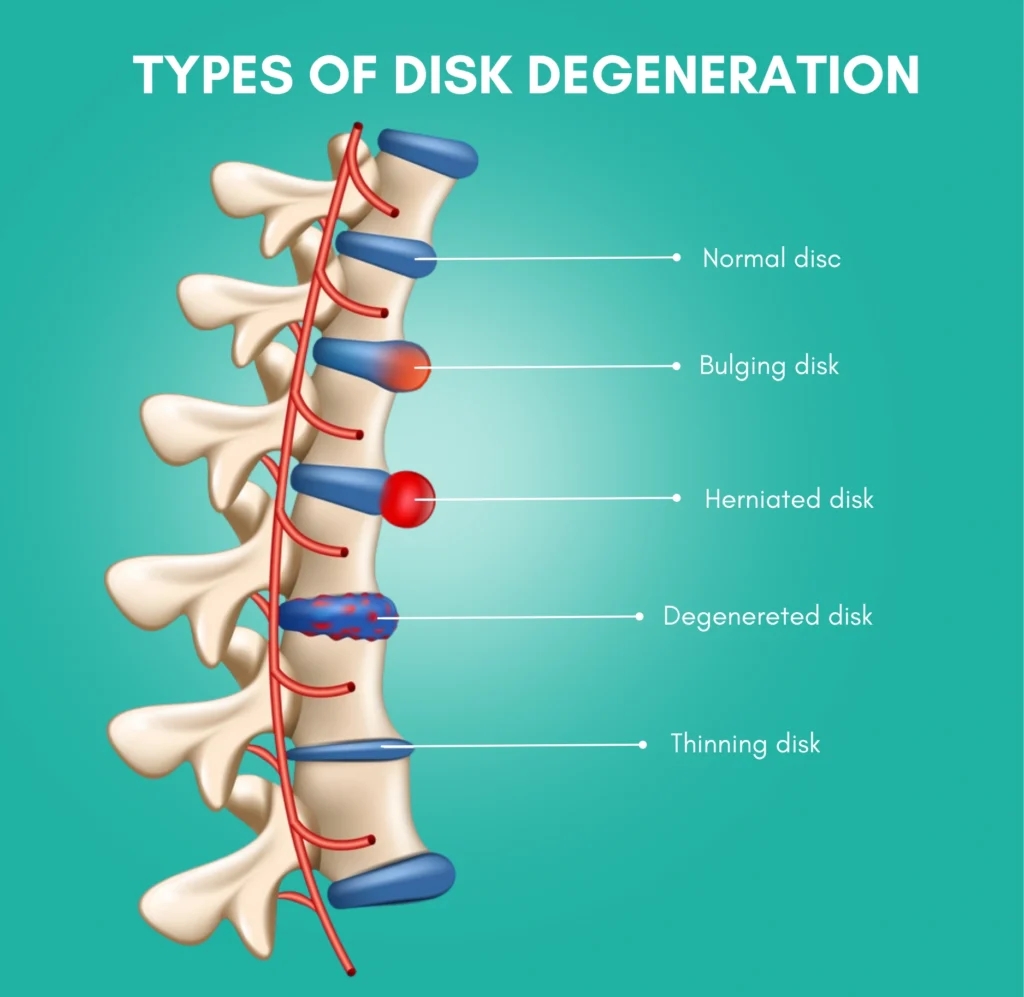
Between each vertebra sits a spinal disc-made of a tough outer ring (annulus fibrosus) and a soft gel-like centre (nucleus pulposus). These discs act as shock absorbers and allow smooth movement of the spine.

With age, the discs begin to dehydrate and wear down. This degeneration can cause:

  • Reduced disc height
  • Less flexibility
  • Stiffness and pain
  • In some cases, nerve irritation due to bony spurs

Although almost everyone develops some disc degeneration over time, not everyone experiences pain.

Common Symptoms

Symptoms vary depending on severity, but the most frequent include:

  • Lower back stiffness, especially in the morning
  • Localised back pain that may radiate to the buttocks
  • Pain that worsens with bending, lifting, or prolonged sitting
  • In severe cases: numbness, tingling, or weakness in the legs (if nerves are compressed)

Why Does Disc Degeneration Happen?

Lumbar disc degeneration is influenced by several factors:

  • Natural aging – discs lose moisture, collagen, and elasticity
  • Repetitive bending or lifting
  • Prolonged sitting or poor postures
  • Genetics
  • High body weight adding extra load on the spine

Although degeneration commonly starts after age 50, early symptoms can appear as early as your 30s.

How Physiotherapy Helps

Physiotherapy focuses on reducing pain, improving mobility, and strengthening the structures that support your spine.

A physiotherapist can provide:

  • Targeted strengthening for core and spinal stabilisers
  • Advice on posture and ergonomics
  • Guided exercise programs to restore movement
  • Education to help you understand the condition and manage flare-ups
  • Manual therapy to ease stiffness

Imaging such as X-rays or MRIs may help identify degeneration, but research shows scan results do not reliably predict pain levels. Your symptoms-not your scan-guide the best treatment.

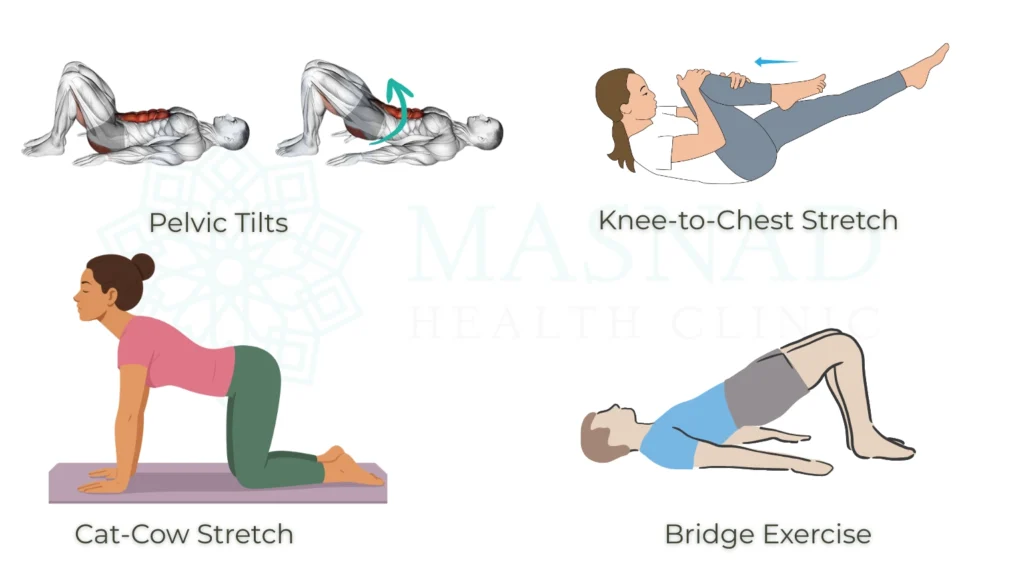
Simple Exercises for Lumbar Disc Degeneration

  1. Cat–Cow Stretch
    Helps mobilise the lower back and reduce stiffness.
  2. Pelvic Tilts
    Strengthens deep core muscles and improves spinal control.
  3. Knee-to-Chest Stretch
    Gently stretches the lumbar muscles and relieves tightness.
  4. Bridge Exercise
    Strengthens glutes and spinal stabilisers.
Exercise

Why Choose Masnad Health Clinic?

  • Experienced physiotherapists specialising in spinal conditions
  • Evidence-based treatment plans tailored to your lifestyle
  • One-on-one care with a focus on long-term recovery
  • Comprehensive support, from pain management to strength rebuilding

Masnad Health Clinic is committed to helping you move confidently, safely, and pain-free.

Conclusion

  1. Lumbar Disc Degeneration is common and often manageable without surgery.
  2. Physiotherapy, education, and strengthening exercises are key to long-term relief.
  3. With the right guidance, you can reduce pain, restore flexibility, and protect your spine from future issues.

For all your Lumbar Disc Degeneration concerns, feel free to call us at 02 9793 8840 or Book an Appointment Now.

FAQ – Lumbar Disc Degeneration

The structural changes are permanent, but symptoms can be successfully managed.

Yes—most people improve with physiotherapy and exercise.

No. Many people have degeneration on scans but no symptoms.

Avoid prolonged rest. Gentle movement and guided exercises help recovery.

If you experience leg numbness, weakness, or severe ongoing pain.