
Waking up with a stiff and painful neck that only turns in one direction can be alarming. This common condition, known as acute wry neck, can cause sharp pain and muscle spasm, often making daily activities difficult. Understanding its causes, types, and treatments is essential for fast recovery and prevention of recurrence.
Acute Wry Neck
Acute Wry Neck: Causes, Symptoms & Treatments
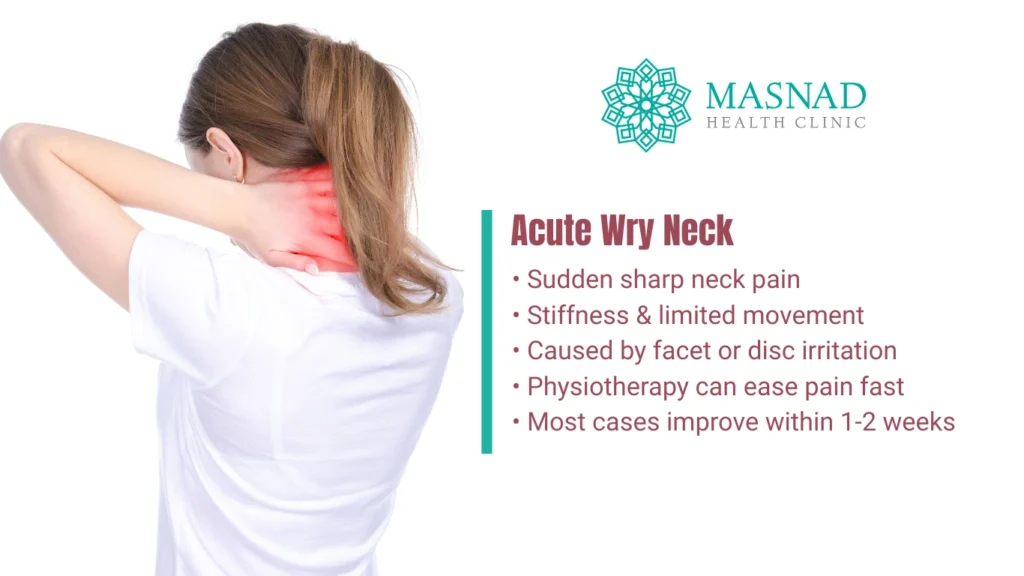
What Is Acute Wry Neck?
Acute wry neck is a sudden neck pain that limits movement, often with the head tilted to one side. It typically appears without warning and can result from minor movements or underlying conditions. Clinically, wry neck is classified into two main types:
Types of Acute Wry Neck
1. Facet Wry Neck
- Cause: The facet joints, located on either side of the cervical spine, allow rotation and side bending of the neck. Sudden or awkward neck movements can cause the joint capsule to tear or become trapped, resulting in pain and stiffness.
- Symptoms: Sharp, localized pain, usually without arm involvement. Pain often eases in certain resting positions and worsens with specific movements.
- Treatment: Gentle physiotherapy mobilization “unlocks” the neck, often resulting in a full recovery within a week.
2. Discogenic Wry Neck
- Cause: The discs between cervical vertebrae can bulge or tear under pressure. Poor posture, neck stiffness, and biomechanical issues make discs more vulnerable.
- Symptoms: Pain may radiate into the arm, with pins and needles, and finding a comfortable position can be difficult.
- Treatment: Focused on reducing pain and muscle spasm through massage, heat therapy, taping, postural education, and gentle mobilization. Recovery may take up to six weeks, with attention to preventing recurrence.
Symptoms of Acute Wry Neck
- Sharp pain in one side of the neck
- Limited neck movement and stiffness
- Muscle spasms around the neck
- Pain radiating to shoulders or arms (common in discogenic type)
- Head tilt to one side
Causes of Acute Wry Neck
- Sleeping in an awkward position or using the wrong pillow.
- Sudden movements or jerks of the neck.
- Poor posture, especially during prolonged computer or phone use.
- Muscle imbalances or pre-existing neck stiffness.
- Previous neck injuries or degenerative changes.
Understanding the cause is crucial for preventing recurrence. Your physiotherapist can assess posture, muscle strength, and spinal alignment to identify contributing factors.
How Physiotherapy Helps
Physiotherapy plays a vital role in the recovery from acute wry neck. Treatment strategies include:
- Manual mobilisation: Gentle techniques to unlock facet joints and relieve stiffness.
- Massage therapy: Reduces muscle spasm and improves blood flow.
- Postural education: Correcting posture to prevent recurrence.
- Targeted exercises: Strengthening neck, shoulder, and upper back muscles.
- Pain management techniques: Heat, cold, or taping as needed.
Facet wry neck often resolves within a few days with physiotherapy, whereas discogenic wry neck may take several weeks and requires ongoing exercises and lifestyle adjustments.
Why Choose Masnad Health Clinic?
- Specialized physiotherapists for neck and spinal conditions
- Personalized treatment plans for fast and safe recovery
- Modern equipment and evidence-based therapies
- Guidance on posture, exercises, and prevention
Conclusion
Acute wry neck is painful but manageable. Early care, targeted exercises, and professional physiotherapy guidance can prevent worsening symptoms and restore mobility.
For all your neck pain concerns, feel free to call us at 02 9793 8840 or Book an Appointment Today.
FAQ
Facet wry neck typically resolves in a few days, while discogenic wry neck can take 4–6 weeks.
Gentle activity is recommended; avoid heavy lifting and sudden neck movements.
Supportive pillows and gentle heat can ease pain. Avoid sleeping on very firm surfaces initially.
Yes, without proper posture correction and exercises, it may recur.
Seek urgent care if you experience numbness, weakness, or loss of bladder/bowel control.

New Client Offer - 10% OFF
Are you in pain? Not sure if we can help you?
Book your initial appointment and receive 10% off any service!