
AC Joint Sprains (Separated Shoulder)

AC Joint Sprains (Separated Shoulder): Causes, Symptoms, and Recovery

What is an AC Joint Sprain?

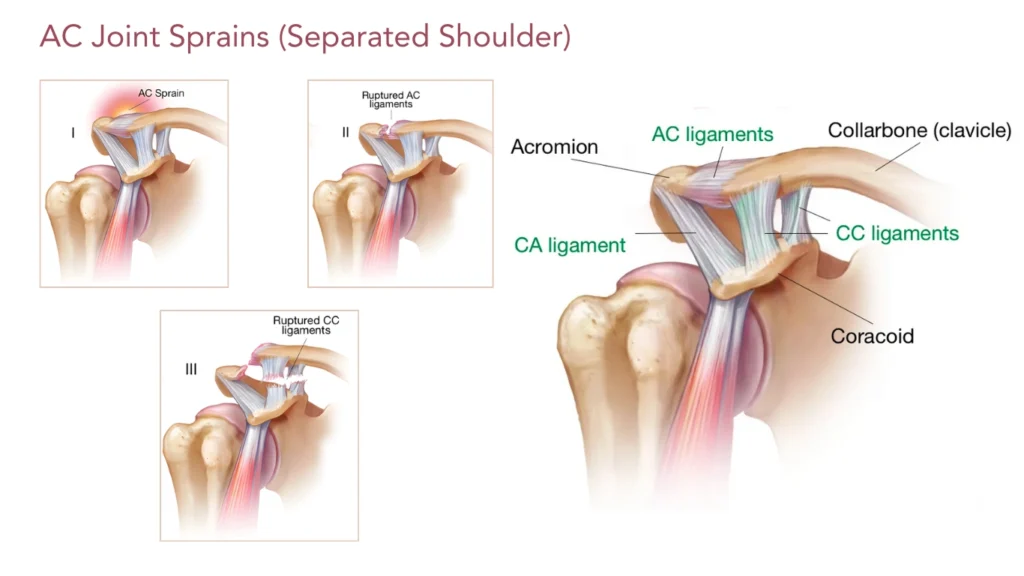
AC Joint Sprains (Separated Shoulder)

The AC (acromioclavicular) joint is a fibrous joint located at the top of the shoulder, connecting the shoulder blade (scapula) to the outer end of the collarbone (clavicle). It plays a crucial role in transferring forces from the arm to the skeleton while allowing smooth shoulder movement.

Three strong ligaments stabilise this joint:

  • Acromioclavicular ligament
  • Coracoclavicular ligament
  • Coracoacromial ligament

An AC joint sprain, commonly known as a separated shoulder, occurs when these ligaments are partially or completely torn.
How Does This Injury Occur?

AC joint sprains are typically caused by direct trauma to the shoulder or a force that separates the shoulder from the collarbone, such as:

  • Falling directly onto the top of the shoulder
  • A rugby, football, or contact sports tackle
  • Falling onto an outstretched hand

The severity of the injury can vary, and AC joint injuries are graded based on ligament damage. Lower-grade injuries involve partial ligament tears, while higher-grade injuries may require surgical repair.

Symptoms of AC Joint Sprain

The following symptoms are commonly experienced:

  1. Immediate shoulder pain after trauma
  2. Swelling and bruising around the top of the shoulder
  3. Loss of shoulder movement or difficulty lifting the arm
  4. Pain when putting weight through the arm or carrying objects
  5. Visible deformity (“step deformity”) in severe cases, where the collarbone appears higher than the shoulder
  6. Pain when reaching across the body, such as putting on a seatbelt

Diagnosis is confirmed through clinical examination and X-rays, which also help determine the grade of the injury and guide treatment.

Classification of AC Joint Sprains

AC joint injuries are classified into four to six grades, depending on the system used:

  • Low-grade (Grade I-II): Partial ligament tear, mild instability, usually non-surgical
  • Moderate-grade (Grade III): Complete ligament tear, some instability, may require physiotherapy with possible surgery depending on activity level
  • High-grade (Grade IV-VI): Complete tear with significant displacement, often requires surgical repair

Grading ensures that the injury is managed appropriately based on severity and patient needs.

How Physiotherapy Can Help

Physiotherapy plays a critical role in recovery by:

  • Supporting the joint with slings, braces, or taping
  • Managing pain and swelling with gentle techniques, ice, and soft tissue therapy
  • Restoring shoulder mobility and strength through progressive exercises
  • Preventing long-term complications such as weakness or recurring injuries

Recovery Timeline:

  • Most AC joint sprains heal in six weeks
  • Severe injuries that require surgery also need post-operative rehabilitation for optimal recovery

A comprehensive physiotherapy program ensures the shoulder regains full function and reduces the risk of future issues.

Why Choose Masnad Health Clinic?

At Masnad Health Clinic, we provide:

  • Individualised assessment and treatment for AC joint injuries
  • Evidence-based rehabilitation programs tailored to your sport, work, or daily activities
  • Experienced physiotherapists trained in shoulder injuries
  • Hands-on therapy, exercise prescription, and postural correction to prevent recurrence

Your recovery and long-term shoulder health are our top priorities.

Conclusion

AC joint sprains are common but manageable with early care and physiotherapy. Targeted exercises, joint support, and professional guidance can restore shoulder function and prevent long-term issues.

For all your shoulder pain concerns, call us at 02 9793 8840 or Book an Appointment Today.

FAQ

Most mild sprains heal within six weeks, while severe injuries requiring surgery may take several months.

Gradual return is possible with physiotherapy. High-contact sports should be resumed only with medical clearance.

No, low to moderate-grade injuries typically heal with physiotherapy. Surgery is for severe displacements or high-grade injuries.

Yes, without proper rehabilitation, the risk of recurrent injury increases. Strengthening and posture correction are key.

Use ice for the first 48 hours, avoid heavy lifting, and follow your physiotherapist’s exercise program.