
Biceps tendinopathy is a common cause of front-of-shoulder pain, particularly in people who perform repetitive lifting, overhead activities, or sports involving throwing and racquet use. While it often develops gradually, untreated biceps tendon pain can significantly affect shoulder function, sleep, work, and sport.
Biceps Tendinopathy
Biceps Tendinopathy: Symptoms, Causes, Diagnosis & Physiotherapy Treatment
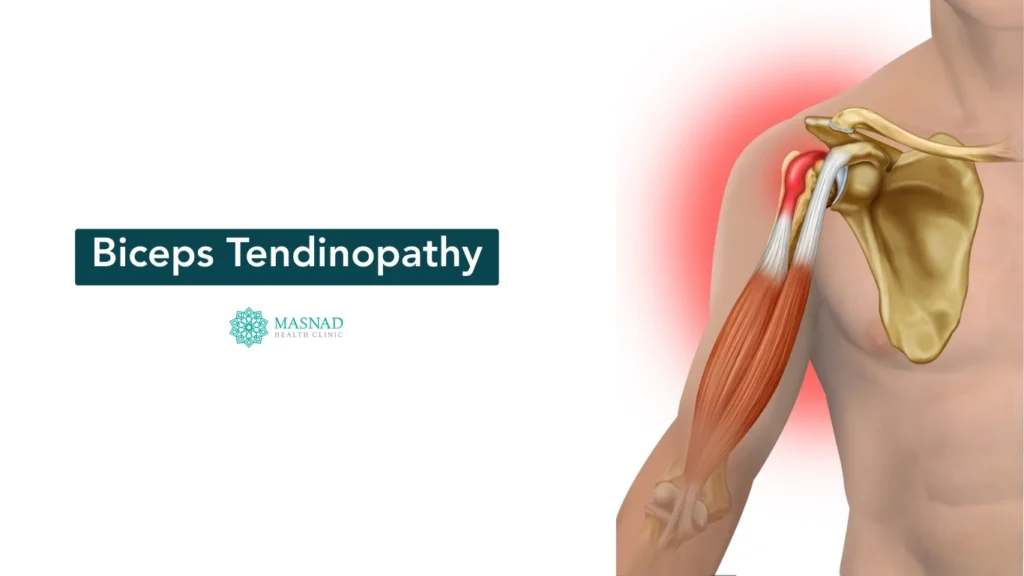
What Is Biceps Tendinopathy?
The biceps brachii is a large muscle located at the front of the upper arm, running between the shoulder and the elbow. It has two tendons at the shoulder:
- Long head of biceps tendon (most commonly affected)
- Short head of biceps tendon
These tendons attach the muscle to the shoulder and allow the biceps to assist with:
- Bending the elbow
- Rotating the forearm (palm-up position)
- Supporting shoulder stability
Biceps tendinopathy refers to pain, irritation, and degeneration of the biceps tendon, most often affecting the long head as it travels through the shoulder joint and bicipital groove.
Rather than being a sudden injury, biceps tendinopathy usually develops slowly over time due to overload and reduced tendon capacity.
How Does Biceps Tendinopathy Develop?
Biceps tendinopathy is typically an overuse condition. The tendon becomes irritated when the load placed on it exceeds its ability to recover.
Common contributing factors include:
1. Repetitive Shoulder Use
Activities involving repeated arm movements such as:
- Overhead lifting
- Reaching and carrying
- Manual work
- Gym exercises (especially poor technique)
2. Sporting Activities
Higher risk sports include:
- Tennis
- Golf
- Swimming
- Throwing sports
- Weightlifting
3. Age-Related Tendon Changes
As we age:
- Tendons lose collagen and elasticity
- Blood supply to the tendon reduces
- Tendons become less tolerant to load
This makes them more prone to degeneration and pain, even with everyday activities.
4. Poor Shoulder Biomechanics
Weakness or poor control of:
- Rotator cuff
- Shoulder blade muscles
- Upper back and posture
can place excessive strain on the biceps tendon over time.
Common Symptoms of Biceps Tendinopathy
Symptoms usually develop gradually and may include:
- Pain at the front of the shoulder
- Pain radiating down the front of the arm
- Aching pain, often worse at night
- Pain with overhead activities
- Pain when lifting, carrying, or reaching
- Tenderness over the biceps tendon
- Reduced shoulder strength
- Stiffness or discomfort after activity
Many people unconsciously change how they move to avoid pain, such as shrugging the shoulder or using the neck more. While this may reduce short-term discomfort, it often leads to secondary neck and upper shoulder pain.
How Is Biceps Tendinopathy Diagnosed?
Diagnosis is based on:
- A detailed clinical assessment
- Specific shoulder and biceps tendon tests
- Assessment of posture, strength, and movement patterns
Imaging such as ultrasound or MRI may be used if:
- Symptoms persist
- There is suspicion of a tendon tear
- Other shoulder conditions need to be ruled out
Your physiotherapist can guide you on whether imaging or referral is required.
How Physiotherapy Helps Biceps Tendinopathy
Physiotherapy is the first-line treatment for biceps tendinopathy and is highly effective when tailored correctly.
Key Goals of Physiotherapy:
- Reduce pain and inflammation
- Restore shoulder movement
- Improve tendon load tolerance
- Correct faulty movement patterns
- Prevent recurrence
Physiotherapy Treatment May Include:
- Pain Management
- Activity modification
- Load management strategies
- Education on what to avoid and what to continue
- Strengthening Exercises
- Gradual strengthening of the biceps tendon
- Rotator cuff strengthening
- Shoulder blade and upper back exercises
- Mobility & Flexibility
- Targeted stretching where appropriate
- Improving shoulder and thoracic spine mobility
- Manual Therapy
- Soft tissue techniques
- Joint mobilisation if required
- Movement Retraining
- Correcting compensatory patterns
- Improving lifting, reaching, and posture habits
If secondary issues have developed (neck pain, upper trapezius overload), these are also addressed as part of a comprehensive plan.
Recovery Timeframes
Recovery varies depending on:
- Severity of tendon involvement
- Duration of symptoms
- Consistency with rehabilitation
- Work and activity demands
Most people see improvement within 6–12 weeks, though longer-standing cases may take several months to fully resolve.
Why Choose Masnad Health Clinic?
At Masnad Health Clinic, we take a whole-shoulder approach to biceps tendon pain.
- Experienced physiotherapists in shoulder and tendon injuries
- Evidence-based rehabilitation programs
- Individualised exercise prescription
- Focus on long-term recovery, not just symptom relief
- Trusted by local GPs, athletes, and the community
Our goal is to help you return to work, daily life, and sport safely and confidently.
Conclusion
Biceps tendinopathy is a common but manageable condition. With early assessment, targeted physiotherapy, and proper load management, most people make a full recovery without the need for injections or surgery. Addressing contributing factors and movement habits is key to long-term success.
For all your biceps and shoulder concerns, feel free to call us at 02 9793 8840 or Book an Appointment Today.
FAQ
No. Tendinopathy involves irritation or degeneration, not a full tear.
Yes, but exercises may need to be modified to avoid aggravation.
It can, but physiotherapy significantly speeds up recovery and reduces recurrence.
Most cases improve with physiotherapy alone.
Yes, aching at night is a common symptom of biceps tendon involvement

New Client Offer - 10% OFF
Are you in pain? Not sure if we can help you?
Book your initial appointment and receive 10% off any service!