
Broken Collarbone

The Broken Collarbone (Clavicle Fracture)

A Complete Guide by Masnad Health Clinic

A broken collarbone-medically known as a clavicle fracture-is one of the most common bone injuries seen in both children and adults. Because the collarbone plays a vital role in connecting the arm to the rest of the body, an injury here can significantly affect shoulder movement, strength, and daily function.

In this guide, we explain what a broken collarbone is, how it happens, symptoms to watch for, treatment options, the role of physiotherapy, recovery timelines, and when to seek professional care.
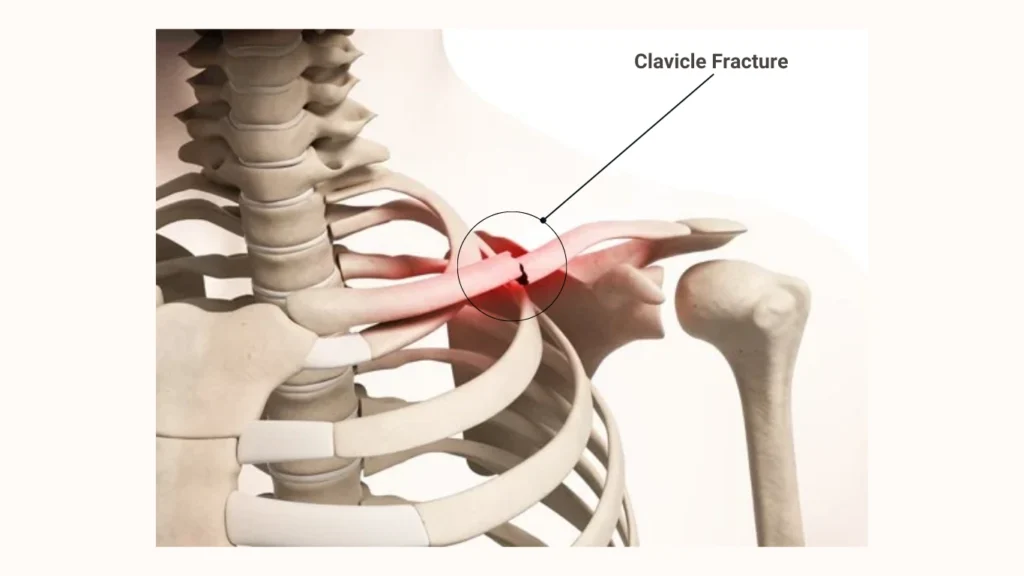
Clavicle Fracture

What Is a Broken Collarbone?

The collarbone (clavicle) is a long, slender bone that connects the breastbone (sternum) to the shoulder blade (scapula). It is:

  • The only bony connection between the arm and the trunk
  • Essential for shoulder movement and stability
  • An attachment point for important muscles such as the Deltoid and Pectoralis Major

Because of its position and shape, the collarbone is particularly vulnerable to injury.

How Does a Collarbone Break?

The most common mechanism of injury is a fall directly onto the shoulder. This can occur during:

  • Slips and trips
  • Bicycle or motorbike accidents
  • Contact sports such as rugby or football
  • Mountain biking or skateboarding
  • Falls during childhood play

While collarbone fractures are very common in children, they can occur at any age.

Symptoms of a Broken Collarbone

Common symptoms include:

  • Moderate to severe pain over the collarbone
  • Pain that worsens with arm or shoulder movement
  • Swelling and bruising over the injured area
  • A visible bump or deformity
  • Grinding, clicking, or creaking sensations with movement
  • Limited ability to lift or use the arm

Some people report hearing or feeling a crack or pop at the time of injury.

Seek urgent medical attention if there is:

  • Severe deformity
  • Numbness or tingling in the arm
  • Shortness of breath
  • Skin tenting or an open wound

Diagnosis

Diagnosis typically includes:

  • Physical examination
  • X-ray imaging to confirm the fracture
  • Further imaging if complications are suspected

Your healthcare provider will assess fracture position, displacement, and whether nearby structures are affected.

Treatment Options

Non-Surgical Treatment (Most Common)

Most collarbone fractures heal naturally without surgery. Treatment often includes:

  • Arm support with a sling
  • Pain management
  • Activity modification
  • Regular monitoring to ensure proper healing

Surgical Treatment (Severe Cases)

Surgery may be recommended if:

  • The fracture is significantly displaced
  • Multiple fragments are present
  • Nerves or blood vessels are at risk
  • Healing is delayed or poor

Nearby structures-such as muscles, nerves, blood vessels, or even lung tissue-can sometimes be affected. In rare cases, damage to the lung may cause a collapsed lung, requiring urgent care.

Physiotherapy and Recovery

Once your medical team confirms it is safe to begin rehabilitation, physiotherapy plays a vital role in recovery.

Phase 1: Protection & Pain Relief

  • Sling management
  • Gentle movements to prevent stiffness
  • Pain and swelling control

Phase 2: Restore Movement

  • Gradual shoulder and arm mobility exercises
  • Postural correction
  • Scapular control

Phase 3: Strengthening

  • Shoulder and upper limb strengthening
  • Core and upper back conditioning
  • Functional movement retraining

Phase 4: Return to Activity

  • Work- or sport-specific exercises
  • Gradual return to lifting and overhead activity
  • Injury prevention education

Most fractures heal within 6-12 weeks, though full strength and confidence may take longer.

Why Choose Masnad Health Clinic?

  • Experienced physiotherapists in fracture rehabilitation
  • Individualised, evidence-based recovery programs
  • Focus on restoring full strength, mobility, and confidence
  • Holistic care addressing posture, biomechanics, and lifestyle
  • Trusted by families, athletes, and referring doctors

At Masnad Health Clinic, we guide you safely from injury through to full recovery.

Conclusion

A broken collarbone can be painful and disruptive, but with proper medical care and structured physiotherapy, most people make a full recovery. Early diagnosis, appropriate treatment, and guided rehabilitation are key to restoring shoulder function and preventing long-term issues.

If you’ve injured your collarbone or are struggling to recover, call 02 9793 8840 or Book an Appointment Today with Masnad Health Clinic.

FAQ

Most collarbone fractures heal in 6-12 weeks, depending on age, fracture severity, and treatment.

No. Most heal well without surgery using a sling and physiotherapy.

Light activities may resume after a few weeks, but sport and heavy lifting usually require full healing and rehabilitation.

A small bump may remain where the bone healed, but this often reduces over time and rarely affects function.

Yes. Physiotherapy helps restore movement, strength, and shoulder coordination, reducing stiffness and re-injury risk.