
Shoulder Dislocations

Shoulder Dislocations

A Complete Guide by Masnad Health Clinic

Shoulder dislocations are one of the most common and painful shoulder injuries. Because the shoulder joint is the most mobile joint in the body, it is also the least stable-making it highly susceptible to slipping out of place. Whether caused by trauma, sport, or unusually flexible joints, a shoulder dislocation requires proper diagnosis, structured rehabilitation, and ongoing care to prevent long-term complications.

In this guide, we break down everything you need to know, including symptoms, causes, physiotherapy treatment, exercises, recovery expectations, and when to seek help.
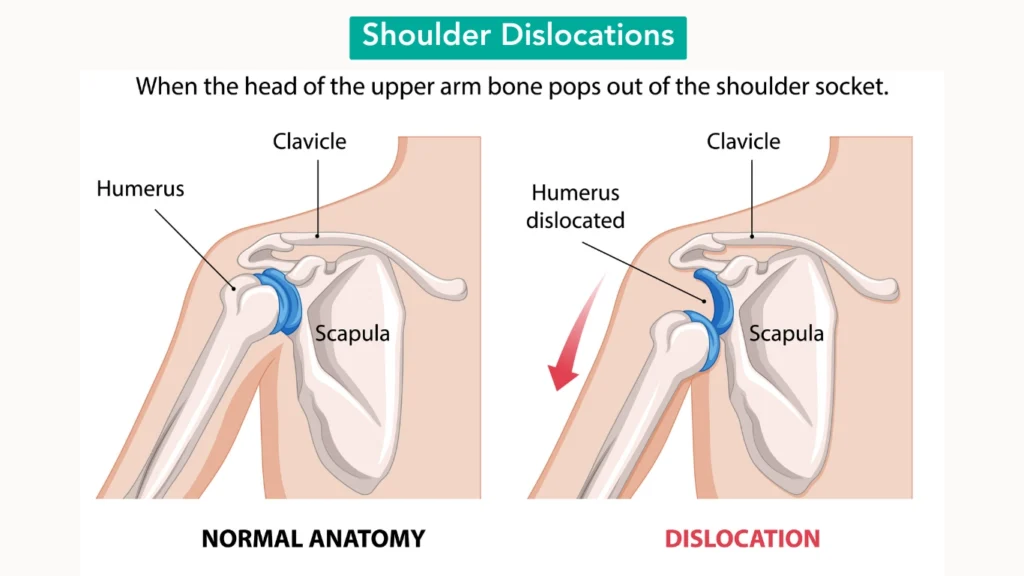

Shoulder Dislocations

What Is a Shoulder Dislocation?

A shoulder dislocation occurs when the head of the humerus (upper arm bone) moves out of its normal position in the shoulder socket.
The shoulder can dislocate:

  • Anteriorly (most common) – humeral head slips forward
  • Posteriorly – slips backward
  • Inferiorly – slips downward (rare)

Because the shoulder sacrifices stability for mobility, it relies heavily on ligaments, muscles and the labrum to hold it in place. When a dislocation occurs, these structures are often stretched or torn.

Common Causes of Shoulder Dislocation

Several factors can contribute to a shoulder slipping out of position:

1. Trauma (most common)

A sudden, forceful impact such as:

  • Falls
  • Sporting collisions
  • Motor vehicle accidents
  • A hard tackle or being hit from the side

2. Overhead or High-Velocity Movements

Sports such as:

  • Rugby
  • AFL
  • Volleyball
  • Swimming
  • Tennis

3. Hypermobile or “Double-Jointed” Shoulders

Some individuals naturally have:

  • Looser ligaments
  • More flexible joints
  • A higher tendency toward dislocations even with minor force

4. Previous Shoulder Dislocation

Once the shoulder has dislocated once, the risk of recurrence increases significantly without proper rehabilitation.

Symptoms of a Shoulder Dislocation

You may experience:

  • Severe shoulder pain immediately after injury
  • Visible deformity or the shoulder “looking out of place”
  • Inability to lift or move the arm
  • Swelling and bruising
  • Muscle spasms
  • Numbness or tingling in the arm or hand
  • Weakness in the shoulder and arm

If you see an obvious deformity or can’t move your shoulder, immediate medical care is essential.

What To Do If Your Shoulder Dislocates

1. DO NOT attempt to relocate it yourself

Forcing it back can cause fractures, nerve injury or blood vessel damage.

2. Support your arm

Use a sling or hold the arm close to the body.

3. Seek urgent medical attention

A professional must confirm the type of dislocation and check for associated fractures.

4. X-Ray / Imaging

Essential to:

  • Confirm dislocation
  • Assess alignment
  • Check for fractures or labral tears

5. Professional Relocation

A trained clinician will gently manoeuvre the joint back into place-often under pain relief or sedation.

Diagnosis

Your physiotherapist or doctor may use:

  • Clinical tests
  • X-ray
  • Ultrasound
  • MRI (if soft tissue damage is suspected)

This helps determine the degree of ligament injury, labral tears, or bone involvement.

How Physiotherapy Helps

Physiotherapy is essential for recovery and for preventing future dislocations.

Phase 1: Protection & Pain Relief

  • Sling support
  • Ice, heat and soft tissue therapy
  • Pain management strategies

Phase 2: Restore Movement

  • Gentle mobility exercises
  • Posture correction
  • Scapular (shoulder blade) control

Phase 3: Strengthening & Stability

Focus on key muscle groups:

  • Rotator cuff
  • Scapular stabilisers
  • Deltoids
  • Core and upper back

Phase 4: Return to Activity

  • Sport-specific drills
  • Strength and control exercises
  • Re-injury prevention strategies

Many patients avoid surgery by following a structured program guided by a physiotherapist.

Are Shoulder Dislocations Serious?

Yes – especially the first-time dislocation.
Possible complications include:

  • Labral tears
  • Ligament sprains or tears
  • Nerve and blood vessel damage
  • Recurrent dislocations (very common)
  • Chronic shoulder instability
  • Arthritis later in life

Early treatment and rehabilitation reduce these risks significantly.

Why Choose Masnad Health Clinic?

  • Experienced Physiotherapists with advanced training in shoulder injuries
  • Evidence-based rehabilitation programs tailored to each patient
  • State-of-the-art equipment for accurate recovery tracking
  • Holistic care approach addressing posture, biomechanics and lifestyle
  • Trusted by local GPs, athletes and families across the community

Your recovery is our priority – we ensure you return safely to daily activities, work and sport.

Conclusion

Shoulder dislocations can be painful and debilitating, but with early treatment and structured physiotherapy, full recovery is achievable. Strengthening, stability training and guided rehabilitation are essential to prevent future dislocations and restore shoulder function.

For all your shoulder concerns, feel free to call us at 02 9793 8840 or Book an Appointment Today.

FAQ

Typically 6-12 weeks, depending on severity and rehabilitation.

Yes, recurrence is common without proper strengthening.

Not always. Many patients recover fully with physiotherapy.

Side sleeping on the injured shoulder should be avoided initially.

Usually after full strength and stability return – often 8-16 weeks.