
Shoulder Instability

Shoulder Instability: Causes, Symptoms & Physiotherapy Treatment

A Complete Guide by Masnad Health Clinic

Shoulder instability is a common condition that occurs when the shoulder joint is unable to maintain its normal position during movement. Because the shoulder is the most mobile joint in the body, it relies heavily on muscles, ligaments and joint structures to stay stable. When these supports are weakened or damaged, the shoulder may feel loose, painful, or prone to slipping out of place.

Whether caused by trauma, repetitive overuse, or naturally flexible joints, shoulder instability requires early assessment, structured rehabilitation and ongoing management to prevent long-term issues such as recurrent dislocations or chronic pain.

In this guide, we explain everything you need to know, including symptoms, causes, diagnosis, physiotherapy treatment, recovery expectations and when to seek help.
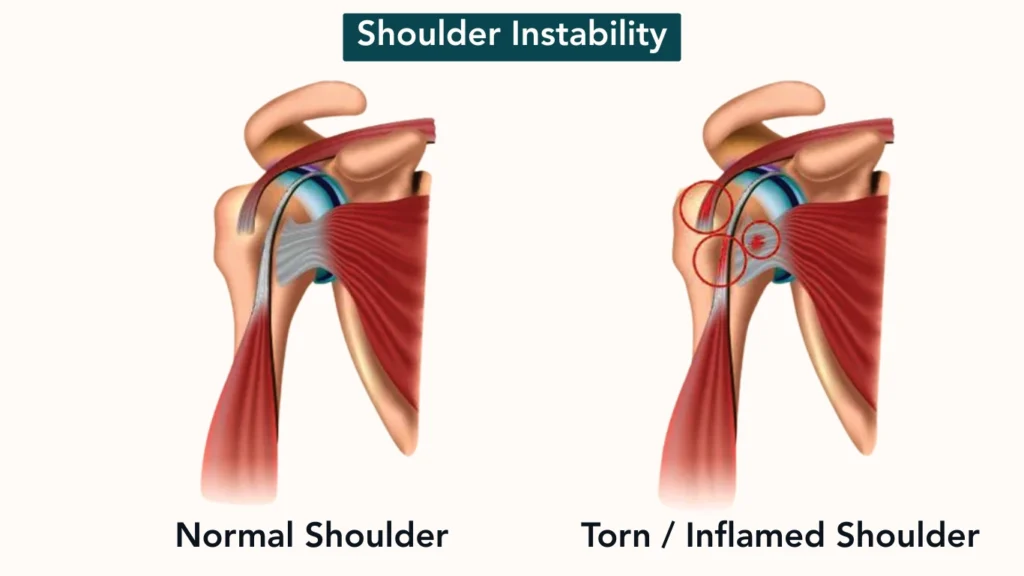

Shoulder Instability

What Is Shoulder Instability?

Shoulder instability occurs when the head of the humerus (upper arm bone) does not remain securely positioned within the shoulder socket (glenoid).

Instead of fully dislocating, the shoulder may:

  • Partially slip out (subluxation)
  • Feel loose or unstable during movement
  • Dislocate repeatedly over time

Shoulder instability is commonly classified by direction:

  • Anterior instability (most common) – shoulder slips forward
  • Posterior instability – shoulder slips backward
  • Multidirectional instability – instability in more than one direction

Because the shoulder sacrifices stability for mobility, it relies on:

  • Ligaments and joint capsule
  • Labrum (cartilage rim)
  • Rotator cuff muscles
  • Scapular (shoulder blade) control

Damage or weakness in any of these structures can lead to instability.

Common Causes of Shoulder Instability

Several factors may contribute to shoulder instability:

1. Traumatic Injury (Most Common)

A significant force that pushes the shoulder beyond its normal range can damage stabilising structures.

Common causes include:

  • Falls onto an outstretched arm
  • Sporting collisions
  • Motor vehicle accidents
  • Heavy impact during contact sports

This often results in anterior instability and increases the risk of recurrent episodes.

2. Repetitive Overhead or High-Demand Movements

Repeated stress on the shoulder can gradually stretch the ligaments and capsule.

Sports and activities include:

  • Swimming
  • Tennis
  • Volleyball
  • AFL and rugby
  • Weightlifting

3. Hypermobile or Naturally Flexible Joints

Some individuals are born with looser ligaments, making their shoulders more prone to instability even during everyday activities.

4. Previous Shoulder Dislocation

Once the shoulder has dislocated, the risk of ongoing instability increases significantly without proper rehabilitation.

Symptoms of Shoulder Instability

Symptoms may vary but commonly include:

  • Recurrent shoulder subluxations or dislocations
  • Pain during overhead or pushing movements
  • A feeling of looseness or instability
  • Clicking, catching or popping sensations
  • Reduced strength or confidence using the arm
  • Pins and needles or tingling down the arm
  • Fear or apprehension during certain movements

Posterior instability may also cause reduced range of motion and can mimic other shoulder conditions, making professional assessment essential.

What To Do If You Suspect Shoulder Instability

  1. Avoid forcing the shoulder
    Repeated movements may worsen damage.
  2. Limit aggravating activities
    Especially overhead, lifting or contact activities.
  3. Seek professional assessment
    Early diagnosis helps prevent progression.
  4. Imaging if required
    X-rays, ultrasound or MRI may be used to assess soft tissue or structural damage.

Diagnosis

Your physiotherapist or doctor may use:

  • Detailed injury history
  • Clinical stability tests
  • X-ray (to rule out fractures)
  • Ultrasound or MRI (to assess ligaments, labrum and rotator cuff)

Accurate diagnosis is key to creating an effective rehabilitation plan.

Phase 2: Restore Movement & Control

  • Gentle mobility exercises
  • Posture correction
  • Scapular (shoulder blade) control

Phase 3: Strength & Stability

Focus on:

  • Rotator cuff muscles
  • Scapular stabilisers
  • Deltoids
  • Core and upper back strength

Phase 4: Return to Activity

  • Functional and sport-specific exercises
  • Movement confidence training
  • Injury prevention strategies

Many patients avoid surgery through a structured, progressive physiotherapy program.

Is Shoulder Instability Serious?

Yes – especially if left untreated.

Potential complications include:

  • Recurrent dislocations
  • Labral tears
  • Ligament damage
  • Chronic pain
  • Loss of function
  • Early-onset shoulder arthritis

Early intervention significantly reduces these risks.

Why Choose Masnad Health Clinic?

  • Experienced physiotherapists specialising in shoulder conditions
  • Evidence-based rehabilitation tailored to your needs
  • Modern facilities and hands-on care
  • Focus on long-term recovery and prevention
  • Trusted by local GPs, athletes and families

Your recovery is our priority. We help you return safely to work, daily activities and sport with confidence.

Conclusion

Shoulder instability can affect daily life, work and sport, but with early diagnosis and structured physiotherapy, excellent outcomes are achievable. Strengthening, stability training and guided rehabilitation are essential to restore shoulder control and prevent future injuries.

For expert shoulder care, call Masnad Health Clinic on 02 9793 8840 or Book an Appointment Today.

FAQ

Yes. Many cases improve significantly with physiotherapy alone.

Typically 8-16 weeks, depending on severity and compliance.

The risk is higher without proper rehabilitation.

No – but exercises must be specific and guided.

Once full strength, stability and confidence are restored.