
Shoulder Labral Tears (SLAP Tears)

Shoulder Labral Tears (SLAP Tears)

A Complete Guide by Masnad Health Clinic

Shoulder labral tears – commonly known as SLAP tears – are a frequent cause of deep shoulder pain, weakness, and reduced performance, especially in people who perform overhead activities or sports. Because the shoulder joint prioritises mobility over stability, damage to the labrum can significantly affect how the shoulder functions.

In this guide, we explain what a shoulder labral tear is, its causes, symptoms, diagnosis, treatment options, physiotherapy rehabilitation, and when to seek help.
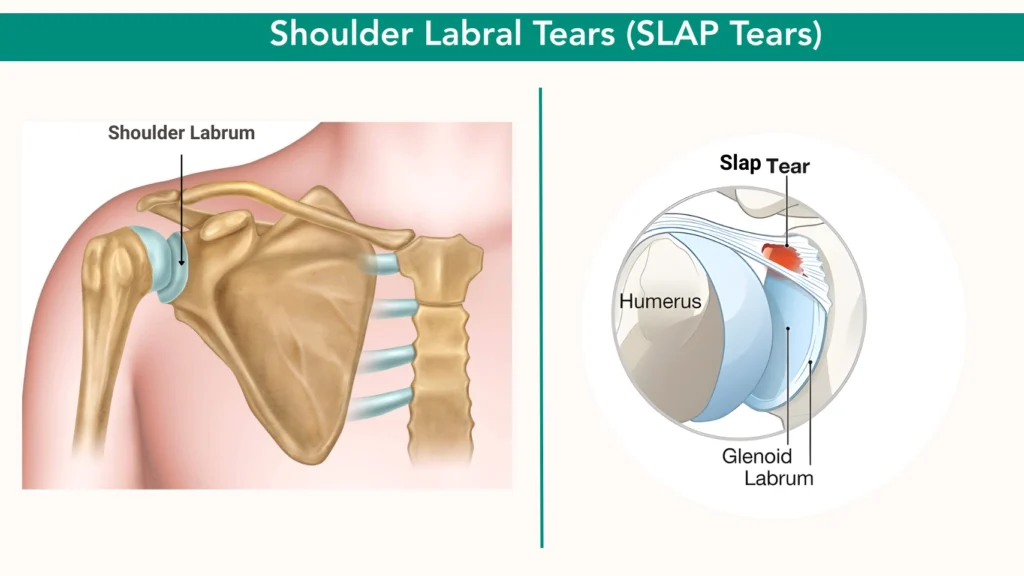
Shoulder Labral Tears (SLAP Tears)

What Is a Shoulder Labral Tear?

The glenohumeral labrum is a ring of flexible, fibrous cartilage that surrounds the shoulder socket. Its role is to:

  • Deepen the socket
  • Improve joint stability
  • Allow smooth, controlled shoulder movement

One of the most important attachments to the labrum is the long head of the biceps tendon. When the labrum tears near this attachment, it often follows a characteristic pattern called a SLAP tearSuperior Labrum Anterior to Posterior.

Labral tears can occur in different regions, but SLAP tears are the most commonly diagnosed type.

Symptoms of a Shoulder Labral Tear

Symptoms vary depending on the severity and how the tear developed.

Common Symptoms

  • Deep, poorly localised shoulder pain
  • Pain with overhead or throwing movements
  • Clicking, popping, or catching sensations
  • Weakness or loss of power
  • Reduced accuracy or endurance with sports
  • Shoulder fatigue

More Severe Symptoms

  • Feeling of instability or “giving way”
  • Increased risk of shoulder dislocation
  • Pain at night or during daily activities

Some people – especially those with gradual-onset tears – may have minimal symptoms initially, but secondary problems such as biceps tendon overload can develop over time.

Diagnosis

Your physiotherapist or doctor may use:

  • Detailed clinical assessment
  • Special shoulder tests
  • X-ray (to rule out bone injury)
  • MRI or MR Arthrogram (best for labral tears)

SLAP tears are often graded Type I–IV, which helps guide treatment decisions.

How Physiotherapy Helps

Physiotherapy is usually the first line of treatment for SLAP tears and is successful for many patients.

Phase 1: Pain Reduction & Protection

  • Activity modification
  • Inflammation and pain management
  • Restoring comfortable movement

Phase 2: Restore Movement & Control

  • Gradual shoulder mobility exercises
  • Scapular (shoulder blade) control
  • Posture correction

Phase 3: Strength & Stability

Focus on:

  • Rotator cuff muscles
  • Scapular stabilisers
  • Biceps load management
  • Upper back and core strength

Phase 4: Return to Sport or Work

  • Sport-specific or work-specific training
  • Gradual return to overhead tasks
  • Injury prevention strategies

Many patients regain full function without surgery through a structured rehabilitation program.

When Is Surgery Needed?

If physiotherapy does not adequately control symptoms, surgery may be recommended. Surgical options include:

  • Labral repair
  • Biceps tenodesis (reattaching the biceps tendon to the humerus)

Post-surgery rehabilitation is essential and includes:

  • Sling immobilisation
  • Gradual, guided physiotherapy
  • Progressive strengthening

Are Shoulder Labral Tears Serious?

They can be-especially if left untreated.

Potential complications include:

  • Chronic shoulder pain
  • Ongoing weakness
  • Reduced sporting performance
  • Shoulder instability
  • Increased risk of dislocation

Early diagnosis and proper rehabilitation greatly improve outcomes.

Why Choose Masnad Health Clinic?

  •  Experienced physiotherapists specialising in shoulder injuries
  •  Evidence-based treatment plans tailored to your goals
  •  Advanced assessment and rehabilitation techniques
  •  Holistic care focusing on posture, biomechanics, and lifestyle
  •  Trusted by athletes, workers, and families in the community

At Masnad Health Clinic, we focus on long-term recovery, not just short-term pain relief.

Conclusion

Shoulder labral (SLAP) tears can significantly affect daily life and athletic performance, but with early diagnosis and expert physiotherapy, most people achieve excellent recovery. Whether managed conservatively or surgically, structured rehabilitation is key to restoring strength, stability, and confidence in your shoulder.

For professional assessment and personalised care, call us on 02 9793 8840 or Book an Appointment Today.

FAQ

Yes. Many SLAP tears respond very well to physiotherapy and do not require surgery.

With physiotherapy, recovery typically takes 6–12 weeks, depending on severity and activity demands.

Low-load and modified exercises may be safe, but overhead and aggravating movements should be avoided initially.

Not always, but clicking with pain, weakness, or instability should be assessed by a professional.

Yes. Most patients return to sport after completing a structured rehabilitation program and regaining full strength and control.