
Fatigue, Stress & Anxiety: Why You Feel Constantly Drained
Feeling exhausted has become so common that many people believe it’s simply…

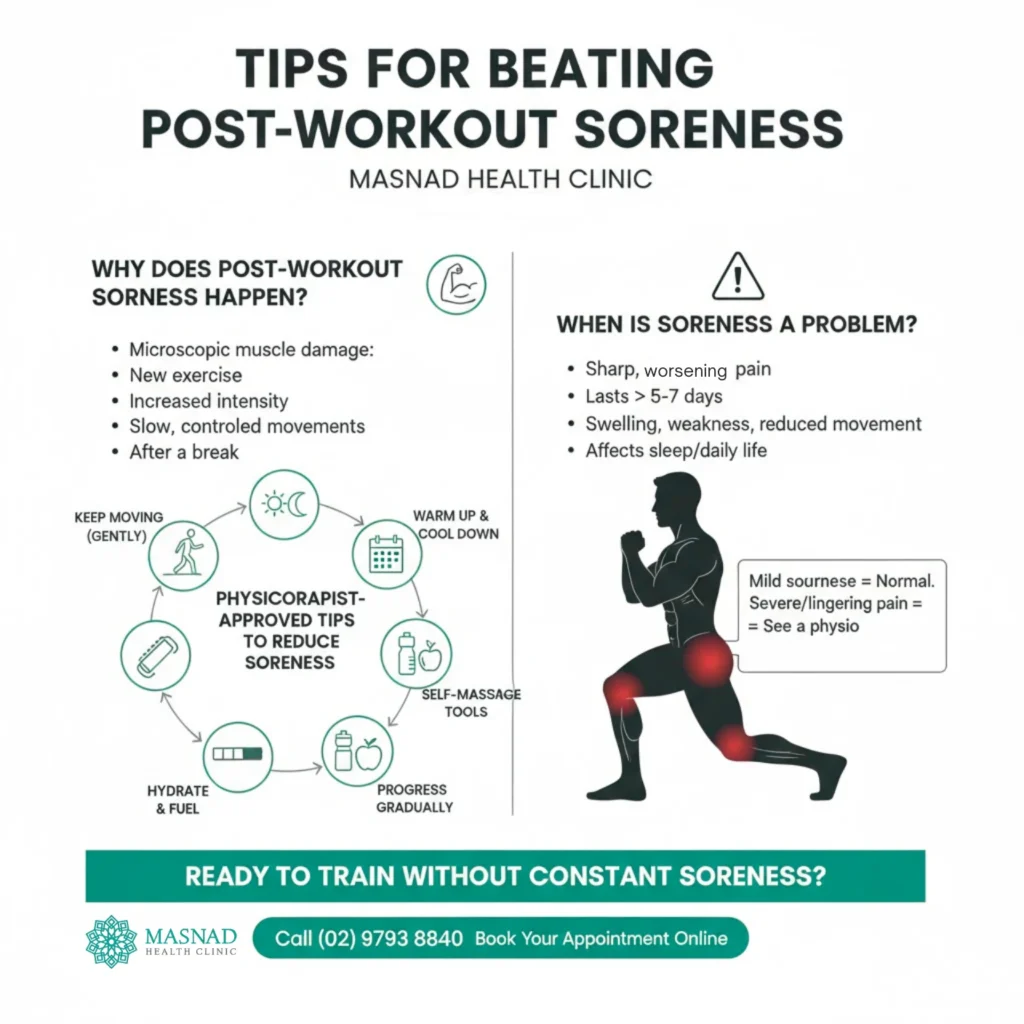
That stiff, achy feeling you get one or two days after exercise is known as Delayed Onset Muscle Soreness (DOMS). While it’s a normal response to new or intense activity, excessive soreness can interfere with daily life, motivation, and future workouts. The good news? There are simple, effective ways to manage it.
DOMS occurs due to microscopic damage to muscle fibres, particularly after:
This process is part of how muscles adapt and become stronger – but recovery matters just as much as training.
Complete rest isn’t always the answer. Light activity such as walking, cycling, or gentle stretching can increase blood flow and reduce stiffness.
A dynamic warm-up prepares muscles for load, while a gradual cool-down helps reduce tightness and stiffness afterward.
Muscles need time to repair. Scheduling rest or low-intensity days helps prevent excessive soreness and overuse injuries.
Foam rollers, massage balls, or trigger point tools can help reduce muscle tension and improve circulation.
Dehydration and poor nutrition can worsen muscle soreness. Adequate water and protein intake support muscle repair.
Sudden jumps in training intensity increase soreness and injury risk. Gradual progression allows muscles to adapt safely.
Mild to moderate soreness is normal. However, you should seek professional advice if:
A physiotherapist can assess whether your pain is normal muscle soreness or something more serious.
At Masnad Health Clinic, we don’t just treat injuries – we help you train smarter and recover better.
What sets us apart:
Whether you’re starting a new fitness routine or training at a high level, we help keep your body moving safely.
Call Masnad Health Clinic on (02) 9793 8840
Book your appointment online today
Not always. Some soreness is normal, but excessive pain doesn’t equal better results.
Gentle stretching can help, but aggressive stretching may worsen symptoms. A physiotherapist can guide you safely.
Yes. Massage can improve circulation and reduce muscle tension when used appropriately.
Light movement is usually fine, but intense training should wait until soreness reduces.
Physiotherapy can improve recovery through manual therapy, tailored exercises, and load management strategies.
Many people live with pain, stiffness, or movement restrictions for weeks, months, or even years before seeking professional help.
Many people live with pain, stiffness, or movement restrictions for weeks, months, or even years before seeking professional help.
Are you in pain? Not sure if we can help you?
Book your initial appointment and receive 10% off any service!