
Fatigue, Stress & Anxiety: Why You Feel Constantly Drained
Feeling exhausted has become so common that many people believe it’s simply…

Stretching has long played an important role in sport and fitness, with many athletes stretching religiously before and after exercise in the hope of preventing injuries and improving performance. In recent years, however, this practice has been questioned, leading many people to wonder whether stretching really makes a meaningful difference.
As with most aspects of health and exercise, the answer is not black and white. Whether stretching is necessary depends on the individual, the activity and the intended outcome.
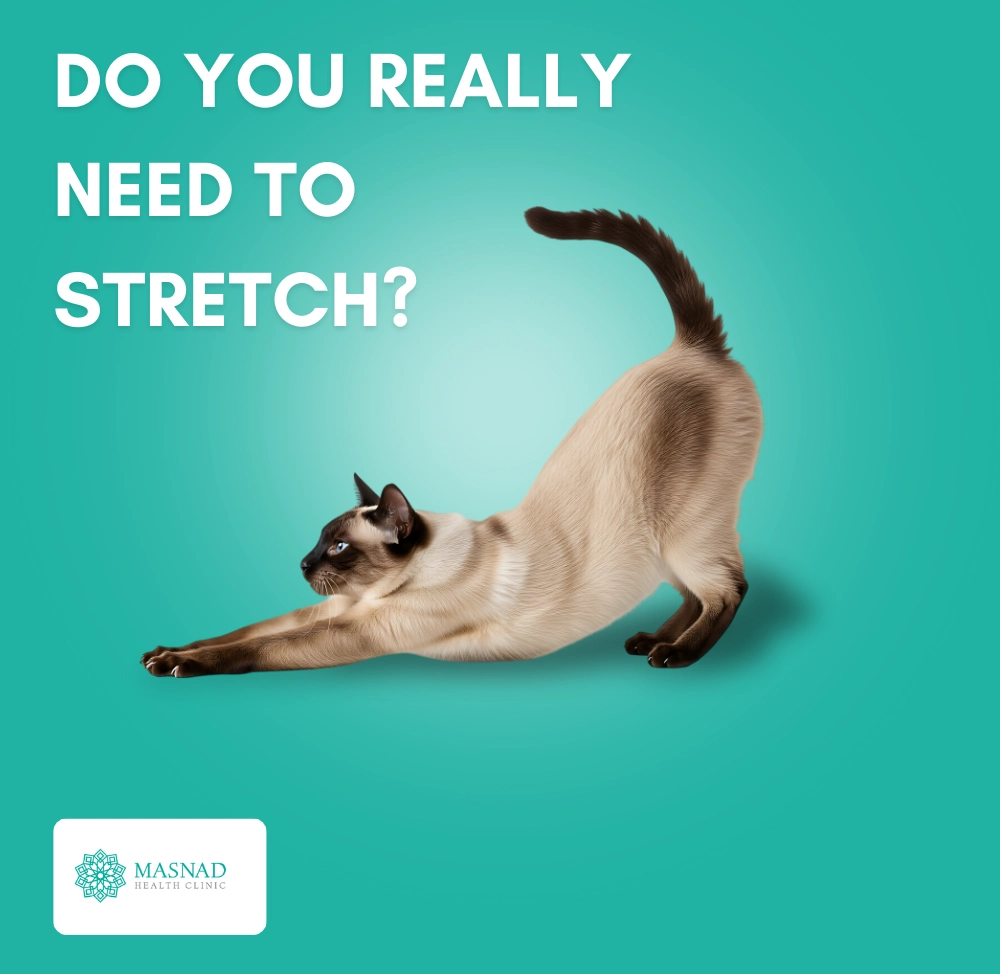
Stretching is a form of movement designed to improve flexibility by lengthening muscle fibres to the end of their available range. Traditionally, stretching before and after exercise has been thought to reduce injury risk, improve athletic performance and decrease muscle soreness.
There are two main types of stretching:
Static stretching involves lengthening a muscle and holding that position for a period of time, usually between 15–60 seconds.
Dynamic stretching uses controlled movement and momentum to take muscles through their range of motion without holding the stretch at the end position.
Research has shown that prolonged static stretching immediately before activity can slightly reduce muscle strength, power and performance. However, these effects are generally minimal and often not noticeable when stretches are held for less than 45 seconds.
Stretching has been shown to improve flexibility, but typically only for a short period. Immediately after stretching, joints tend to move more freely and with less resistance. This temporary increase in range of motion may be useful in some situations, but it does not necessarily lead to long-term changes unless stretching is performed consistently over time.
Despite mixed evidence, stretching remains popular for good reason. Many people report that stretching feels relaxing and helps reduce stress, often describing a sense of release or improved wellbeing after a stretching session.
While it can be difficult to measure the long-term benefits of stretching specific tight muscles, a regular stretching routine can improve overall flexibility. Increased flexibility is believed to play a role in injury prevention, although the scientific evidence supporting this is still inconclusive.
For athletes, the decision to stretch is often a personal one. A proper warm-up before intense exercise that includes dynamic stretching is generally recommended to help prepare the body for movement and reduce injury risk. However, stretching alone is not a guarantee against injury.
Emerging evidence suggests that strength training and balance exercises may have a greater impact on injury prevention than stretching alone. Many feelings of tightness are related to muscle weakness, fatigue or poor movement control rather than a true lack of flexibility.
For this reason, stretching is often most effective when combined with a well-designed strength and conditioning program.
A physiotherapist can assess your movement, flexibility and strength to determine whether stretching is appropriate for you. They can identify specific areas where improved flexibility may help reduce injury risk, improve performance or ease discomfort, and ensure stretching is used as part of a targeted, individualised program.
Stretching is not harmful, but it is not always essential. Used appropriately, it can be a valuable tool for relaxation, short-term flexibility and preparation for movement. For long-term performance and injury prevention, it is best combined with strength, balance and movement training.
None of the information in this article is a replacement for proper medical advice. Always consult a qualified medical professional for advice on your individual condition.
Many people live with pain, stiffness, or movement restrictions for weeks, months, or even years before seeking professional help.
Many people live with pain, stiffness, or movement restrictions for weeks, months, or even years before seeking professional help.
Are you in pain? Not sure if we can help you?
Book your initial appointment and receive 10% off any service!