Overview
Buttock pain is a common but often misunderstood condition. It can range from a mild ache to sharp, radiating pain that affects sitting, walking, sleeping, and exercise. Because the buttock region contains muscles, nerves, joints, and bursae – and is closely linked to the lower back and hips – pain in this area can originate from several different structures.
Understanding the source of buttock pain is essential for effective treatment and long-term recovery.
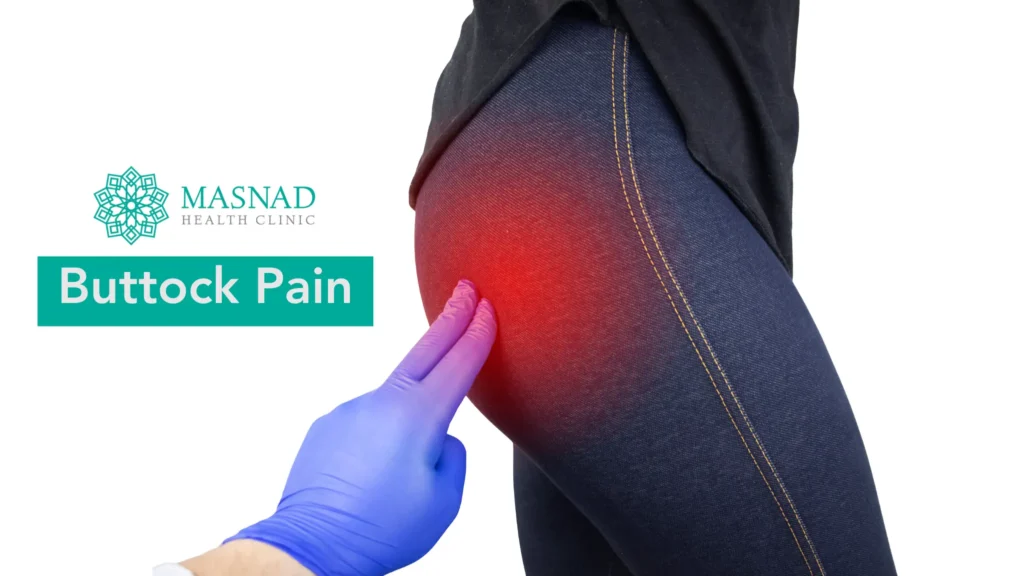
What Is Buttock Pain?
Buttock pain refers to discomfort felt in the gluteal region, which may stay localised or radiate into the lower back, hip, or leg. It can be caused by muscle strain, nerve irritation, joint dysfunction, or inflammation of soft tissues.
The pain may feel:
- Dull or aching
- Sharp or stabbing
- Burning or shooting
- Tight or stiff
How Common Is Buttock Pain?
Buttock pain is very common and frequently seen in people who:
- Sit for long periods
- Perform repetitive movements
- Participate in running or strength sports
- Have lower back or hip conditions
- Experience postural or movement imbalances
It affects people of all ages and activity levels.
What’s the Difference Between Buttock Pain and Sciatica?
While buttock pain and sciatica often feel similar, they are not always the same condition.
- Buttock pain can originate from muscles, joints, or bursae within the gluteal region.
- Sciatica specifically involves irritation of the sciatic nerve, usually originating from the lower spine, with pain radiating through the buttock and down the leg.
A proper assessment is required to distinguish between the two.
Symptoms and Causes
1. Piriformis Syndrome
Occurs when the piriformis muscle irritates the sciatic nerve.
Symptoms include:
- Deep buttock pain
- Tingling or numbness
- Pain that may radiate down the leg
Often triggered by prolonged sitting, overuse, or direct trauma.
2. Sciatica
Caused by irritation of the sciatic nerve, usually due to spinal issues such as disc bulges or stenosis.
Symptoms include:
- Sharp, shooting, or burning pain
- Pain travelling from the buttock down the leg
- Symptoms often worsen with sitting
3. Sacroiliac (SI) Joint Dysfunction
Results from abnormal movement or inflammation of the SI joint.
Symptoms include:
- Deep buttock pain on one or both sides
- Pain when standing from sitting
- Discomfort when climbing stairs or rolling in bed
4. Gluteal Muscle Strain
Occurs due to overstretching or tearing of the gluteal muscles.
Symptoms include:
- Localised buttock pain
- Pain with movement
- Tenderness to touch
Often related to exercise, lifting, or sudden movements.
5. Ischial Bursitis
Inflammation of the bursa at the base of the buttock.
Symptoms include:
- Dull ache or sharp pain when sitting
- Pain worsens on hard surfaces
- Discomfort during repetitive activities like cycling
Diagnosis and Tests
A physiotherapist will diagnose buttock pain through:
- A detailed history of symptoms
- Movement and posture assessment
- Strength and flexibility testing
- Nerve screening where required
Imaging such as X-ray or MRI is only recommended when necessary and usually to rule out serious conditions.
Treatment
Physiotherapy treatment for buttock pain may include:
- Manual therapy to reduce pain and stiffness
- Targeted strengthening and mobility exercises
- Postural and movement retraining
- Nerve desensitisation techniques
- Education on activity modification and load management
Treatment is tailored to the underlying cause and individual goals.
When Should I See My Healthcare Professional?
You should seek professional advice if:
- Buttock pain persists for more than a few days
- Pain worsens or spreads down the leg
- Sitting or walking becomes increasingly difficult
- Pain interferes with sleep or daily activities
Early assessment can prevent symptoms from becoming chronic and improve recovery outcomes.
Conclusion
Buttock pain can have many different causes, and while symptoms may feel similar, the underlying issue can vary significantly from person to person. Identifying the correct source of pain is essential for effective treatment and long-term relief. Early assessment can help prevent ongoing discomfort, movement limitations, and secondary problems from developing.
Buttock Pain Treatment at Masnad Health Clinic
At Masnad Health Clinic, our experienced physiotherapists take the time to assess the cause of your buttock pain and develop a personalised treatment plan tailored to your needs. Our focus is on reducing pain, restoring movement, and helping you return to your normal activities safely and confidently.
Book an appointment at Masnad Health Clinic today to get expert guidance and long-lasting relief.