

Fatigue, Stress & Anxiety: Why You Feel Constantly Drained
Feeling exhausted has become so common that many people believe it’s simply…

Posture is something health professionals talk about often, yet it’s also something many people misunderstand. When we hear the word posture, most of us imagine being told to “stand up straight” or “stop slouching.” However, good posture is not about forcing yourself into a rigid position or holding your body stiff all day. In reality, posture is far more dynamic – and when understood properly, it can have a meaningful impact on how you feel, move, and live.
Your posture influences much more than how you look. It affects how your joints move, how your muscles work, how efficiently you breathe, and even how much energy you have throughout the day. Over time, small changes in posture can lead to noticeable improvements in comfort, confidence, and overall wellbeing.
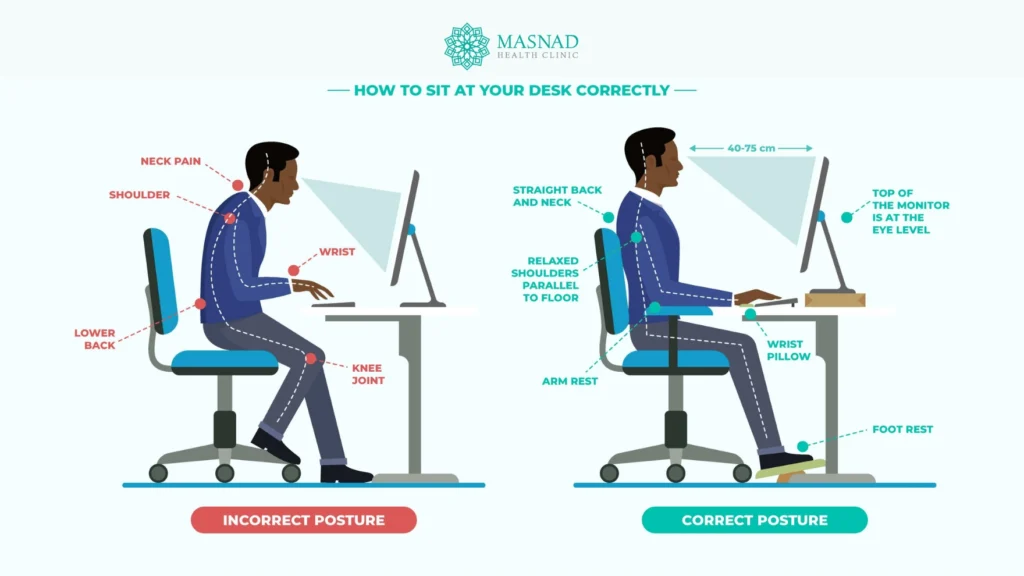
Posture refers to how your body is aligned and positioned when you are sitting, standing, walking, or moving. Every joint in the body has an optimal alignment – a position where it works most efficiently with the least amount of strain.
The human body is designed to move with balance and efficiency. When joints are well-aligned:
Good posture is not a single “perfect” position. Instead, it’s the ability to move in and out of different positions while maintaining control, balance, and comfort.
The spine is one of the most important structures when it comes to posture. It is made up of multiple joints that work together to provide:
In addition, the spine protects the spinal cord and allows nerves to travel freely from the brain to the arms, trunk, and legs. When the spine is closer to its optimal position, these nerves can move without irritation or compression.
When spinal alignment is consistently poor – such as prolonged slouching or excessive arching – the surrounding muscles and joints are forced to work harder than necessary. Over time, this extra strain can contribute to discomfort, stiffness, or reduced mobility.
One of the incredible things about the human body is how adaptable it is. Even when posture is not ideal, the body will find ways to compensate so that you can keep functioning. While this adaptability is useful in the short term, it can create problems over time.
When posture places joints outside their optimal alignment:
These compensations often happen gradually, which is why many people don’t notice them until discomfort or pain appears. Common complaints linked to long-term postural strain include neck tension, lower back discomfort, shoulder tightness, headaches, and reduced flexibility.
A common misconception is that good posture means holding yourself in one “correct” position all day. In reality, staying in any position for too long – even a technically ideal one – can cause problems.
Joints are designed to move. When they are held still for extended periods:
This is why people who sit for long hours or stand in one position all day often experience similar discomfort, even if they try to maintain good posture.
The goal isn’t perfection – it’s variety and movement.
Good posture works best when combined with regular movement. Changing positions, stretching, and gently activating different muscle groups throughout the day helps prevent stiffness and overload.
Simple habits can make a noticeable difference, such as:
When movement is added to a solid base posture, the body becomes more resilient and adaptable.
Improving posture isn’t just about reducing aches and pains. Research and clinical experience have linked better posture with a range of physical and mental benefits.
Better alignment can reduce unnecessary strain on muscles and joints, helping to ease ongoing discomfort in areas like the neck, back, and shoulders.
When the spine and rib cage are better positioned, the lungs have more room to expand. This can lead to deeper, more efficient breathing.
Poor posture often requires more muscular effort to maintain. Improving alignment can reduce fatigue and help conserve energy throughout the day.
Discomfort and tension can be distracting. When the body feels more supported and relaxed, focus and productivity often improve.
Posture has a subtle but powerful influence on how we feel about ourselves. Standing and sitting with balance and openness can positively affect mood and confidence.
Posture isn’t limited to standing or sitting at a desk. It influences many everyday activities, including:
Small, repeated habits – such as constantly looking down at a screen or carrying weight on one side – can add up over time. Becoming more aware of these patterns is often the first step toward positive change.
Improving posture doesn’t require drastic changes. Small, consistent adjustments tend to be the most effective.
Here are a few practical strategies:
A physiotherapist can provide individual guidance and exercises tailored to your daily routines and physical needs.
Over time, posture influences how the body ages and adapts. Maintaining better alignment and movement habits can help preserve mobility, reduce the risk of recurring discomfort, and support independence as you get older.
Posture also connects physical health with emotional and mental wellbeing. Feeling physically supported can influence how we experience stress, confidence, and daily challenges.
Good posture supports breathing, reduces muscle tension, and helps the body move with greater ease. It can also influence energy levels, focus, and overall wellbeing.
At Masnad Health Clinic, our physiotherapy team helps people improve postural awareness, strength, and stability through practical guidance that fits into everyday life.
Many people live with pain, stiffness, or movement restrictions for weeks, months, or even years before seeking professional help.
Many people live with pain, stiffness, or movement restrictions for weeks, months, or even years before seeking professional help.

Are you in pain? Not sure if we can help you?
Book your initial appointment and receive 10% off any service!