

Fatigue, Stress & Anxiety: Why You Feel Constantly Drained
Feeling exhausted has become so common that many people believe it’s simply…

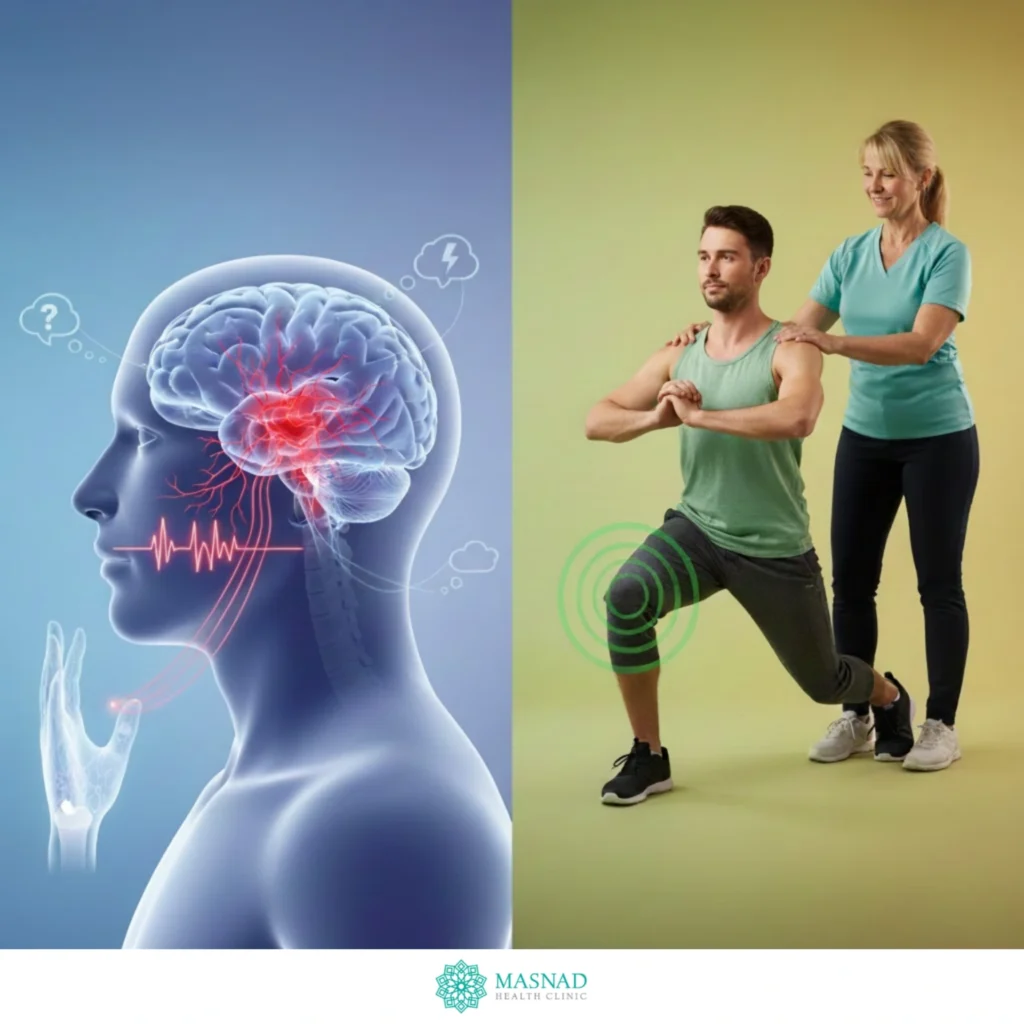
Pain is something we’ve all experienced – but it’s far more complex than simply “something hurts.” Pain is not just created in your body; it is interpreted, shaped, and sometimes amplified by your brain. Understanding how this works can be a powerful step toward better pain management and recovery.
Pain plays a critical role in keeping us safe. It alerts us to injury, encourages rest, and helps protect damaged tissues while they heal. No matter where pain starts – muscles, joints, nerves – it must be processed by the brain for you to feel it.
There is even a rare condition called congenital analgesia, where people are unable to feel pain at all. While this might sound appealing, it is extremely dangerous. Without pain as a warning signal, injuries often go unnoticed, leading to infections, severe tissue damage, and reduced life expectancy. Pain, despite how unpleasant it feels, is essential for survival.
Although pain often accompanies injury, the two are not always directly linked. One of the most well-known examples is phantom limb pain, where people experience pain in a limb that no longer exists. This occurs because the brain still holds a “map” of that limb, even after it has been removed.
Similarly, people living with chronic pain conditions – such as fibromyalgia or persistent back pain – may experience significant discomfort despite no ongoing tissue damage. In these cases, the nervous system becomes more sensitive, continuing to send danger signals even when the body has healed.
Your emotional state plays a major role in how pain feels. Stress, anxiety, fear, poor sleep, and low mood can all increase pain sensitivity. On the other hand, feeling safe, supported, and informed can help calm the nervous system and reduce pain intensity.
You may have noticed that sometimes you discover a bruise without remembering how it happened – tissue damage without pain. At other times, even a small injury can feel overwhelming, especially during periods of emotional stress. This is because pain is influenced by how the brain assesses threat, not just physical injury.
Beliefs about pain also matter. Avoiding all movement out of fear can make pain worse over time, while pushing through severe pain without guidance can also delay recovery. The most effective approach is usually a balanced, individualised plan that builds confidence and restores normal movement safely.
Chronic pain can be exhausting, especially when it interferes with work, exercise, sleep, or everyday life. Feeling powerless over pain often increases distress – and distress can intensify pain.
Education, reassurance, and a clear plan can make a big difference. When you understand what’s happening in your body and why pain persists, your brain is less likely to interpret normal sensations as dangerous.
Physiotherapists don’t just treat injured tissues – they help retrain how your nervous system responds to pain. Treatment may include:
By addressing both the physical and neurological aspects of pain, physiotherapy helps you move better, feel safer in your body, and regain control of your recovery.
Pain is real – but it is not always a sign of damage. Your brain plays a powerful role in how pain is experienced, and the good news is that the nervous system can change for the better. With the right guidance, education, and treatment, pain can be reduced and quality of life improved.
Call now to book your physiotherapy appointment: (02) 9793 8840
Yes. The nervous system can produce pain even when tissues are healed.
No. Pain intensity doesn’t always reflect injury severity.
Yes. Stress and emotions can increase pain sensitivity.
Often yes – guided movement usually helps recovery.
Yes. Physio helps retrain the body and brain to move safely.
Many people live with pain, stiffness, or movement restrictions for weeks, months, or even years before seeking professional help.
Many people live with pain, stiffness, or movement restrictions for weeks, months, or even years before seeking professional help.

Are you in pain? Not sure if we can help you?
Book your initial appointment and receive 10% off any service!