
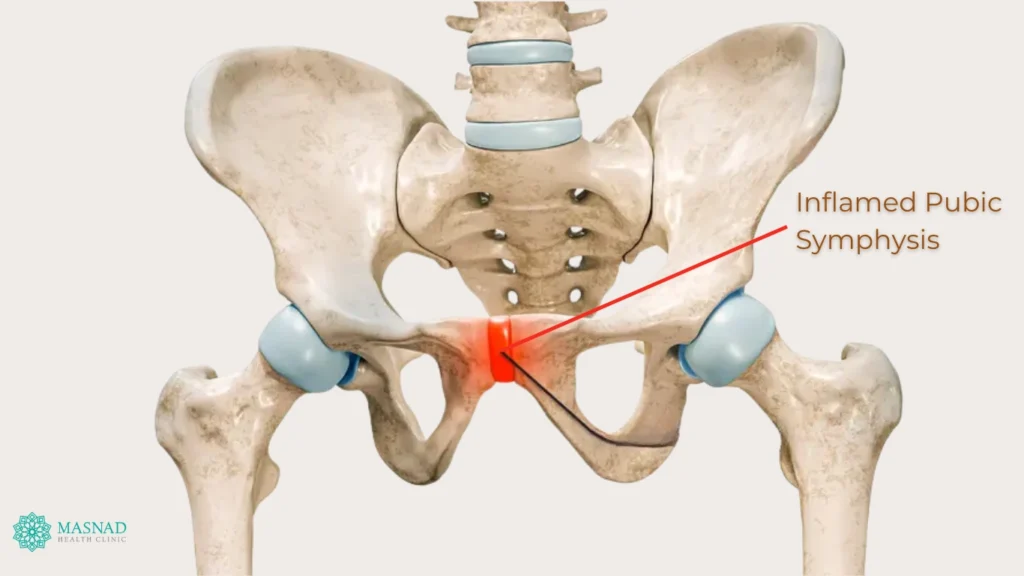
Osteitis Pubis is a painful inflammatory condition affecting the pubic symphysis – the joint located at the front of the pelvis. It is commonly seen in athletes, especially those involved in running, football, and activities requiring sudden changes of direction. It can also occur in postpartum women or after pelvic surgeries.
Osteitis Pubis
Osteitis Pubis: Symptoms, Causes, Diagnosis, and Treatment

What Is Osteitis Pubis?
Osteitis Pubis is the inflammation of the pubic symphysis and the surrounding soft tissues. Repetitive stress on the pelvic region leads to irritation, swelling, and pain, making day-to-day movements uncomfortable.
Common Symptoms
- Pain in the groin, lower abdomen, or pelvis
- Pain that worsens with running, kicking, or sudden movements
- Tenderness around the pubic bone
- Stiffness when waking up or after prolonged sitting
- Pain while climbing stairs or turning in bed
- Reduced strength in the inner thigh muscles
- Clicking or grinding sensation in the pelvis
Causes
- Repetitive strain from sports activities
- Weakness or imbalance in core, hip, or pelvic muscles
- Overtraining without adequate rest
- Pelvic trauma
- Tight hip muscles creating stress on the pubic joint
- Post-partum changes
- Previous pelvic or abdominal surgery
Diagnosis
Physiotherapists diagnose Osteitis Pubis through:
- Detailed history and physical examination
- Palpation of the pubic joint
- Assessment of hip flexibility and muscle strength
- Movement tests that reproduce the pain
- Imaging such as MRI or X-ray (if required)
Treatment Options
1. Rest and Activity Modification
Avoid activities that trigger pain, especially high-impact sports.
2. Physiotherapy
- Manual therapy to reduce tightness around the pelvis
- Strengthening exercises for the core, glutes, and hip muscles
- Flexibility training
- Functional rehabilitation to gradually return to sports
3. Anti-Inflammatory Techniques
- Ice therapy
- Ultrasound therapy
- Shockwave therapy (if recommended)
4. Supportive Measures
- Pelvic compression belt
- Sports taping methods
5. Gradual Return to Activity
A structured program helps prevent recurrence and improves athletic performance.
Prevention Tips
- Maintain strong core and hip muscles
- Warm up before sports
- Avoid sudden increases in activity intensity
- Improve flexibility in the hip and groin muscles
- Use proper footwear during training
Why Choose Masnad Health Clinic?
- Experienced physiotherapists trained in sports injury rehabilitation
- Individualized treatment plans
- Modern equipment for accurate assessment and effective therapy
- Supportive, patient-centered care
- Proven success with athletes and active individuals
Ready to relieve your pelvic or groin pain?
Book an appointment with our expert physiotherapists today.
Call Now | Book Online | Visit Masnad Health Clinic
FAQ
Recovery varies from weeks to months, depending on the severity. Early treatment leads to faster healing.
You should avoid painful activities until your physiotherapist clears you. Continuing may worsen the condition.
No, most cases are diagnosed clinically. Imaging is used for severe or persistent cases.
Yes, if muscle imbalances or training errors are not corrected. Proper rehab prevents recurrence.
Surgery is extremely rare and only considered if conservative treatment fails over a long period.
Get a Free Courtesy Call from Janet, Our Expert Women’s Health Physiotherapist!
Have questions about your health? Enter your name and number below, and Janet will personally call you to answer your questions and provide guidance on women’s health physiotherapy.