

Osteoarthritis of the Hip: Symptoms & Treatment
Overview
Osteoarthritis of the hip is one of the most common causes of long-term joint pain and stiffness. It can develop gradually, often making it difficult for people to walk, stand, exercise, or complete daily tasks comfortably. While osteoarthritis cannot be reversed, the right combination of physiotherapy, lifestyle modification, and medical management can significantly slow its progression and improve quality of life.
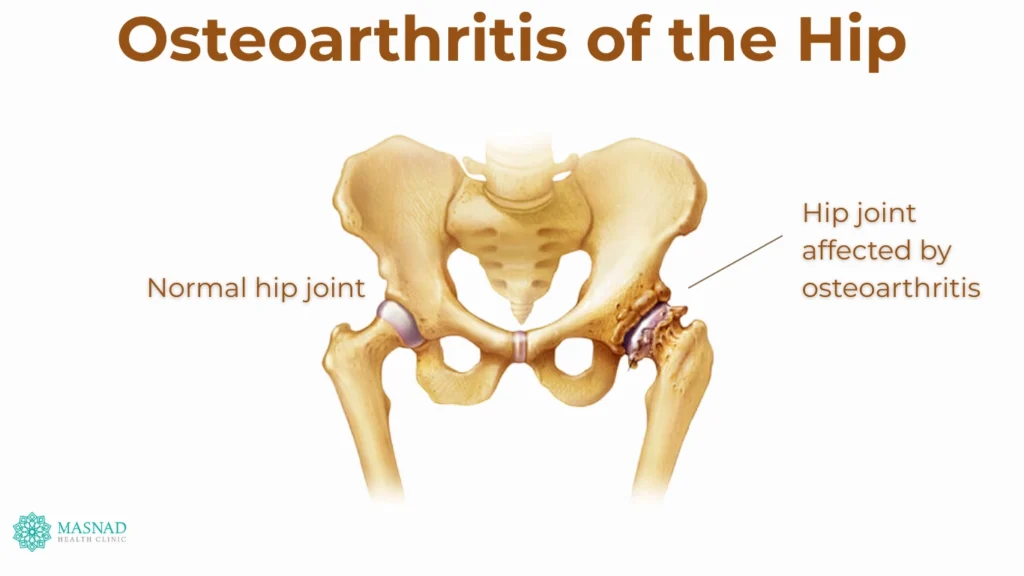
What Is Osteoarthritis?
Osteoarthritis is a degenerative joint condition where the smooth protective cartilage that cushions the ends of bones begins to break down. Healthy cartilage acts like a shock absorber, allowing the hip joint to move smoothly and without friction.
As cartilage wears away, the underlying bone surfaces start to rub against each other. Over time, the body attempts to protect the joint by forming extra bony growths called osteophytes. Unfortunately, these changes often increase stiffness, pain, and difficulty with movement.
The hip is particularly vulnerable because it is a major weight-bearing joint responsible for supporting the body in standing, walking, and running.
What Causes Hip Osteoarthritis?
Although ageing is the most common contributor, several factors can increase the risk of developing hip osteoarthritis. These include:
- Family history of osteoarthritis
- Previous hip injuries or fractures
- Hip shape abnormalities from birth, such as developmental dysplasia
- Excess body weight adding extra strain on the joint
- Genetic cartilage disorders
- Repetitive high-impact activities or long-term physically demanding work
- Hip impingement conditions such as femoroacetabular impingement (FAI)
Younger individuals may also develop osteoarthritis following trauma or structural issues affecting hip movement.
Signs and Symptoms of Hip Osteoarthritis
Hip osteoarthritis often progresses slowly, with symptoms becoming more noticeable over time. Common signs include:
- Deep, aching pain felt in the groin, buttock, or front of the thigh
- Pain spreading to the knee
- Morning stiffness lasting less than one hour
- Difficulty rotating the hip inward
- Pain during walking, standing, or transferring from sitting to standing
- Grating or crunching sensations with movement
- Swelling or warmth around the joint
- Reduced ability to perform daily activities or exercise
As the condition progresses, even light movements such as getting out of a car or climbing stairs may become challenging.
How Can Physiotherapy Help?
Physiotherapy plays a central role in managing hip osteoarthritis, especially during the early and moderate stages. While the condition cannot be cured, physiotherapy helps slow its progression, maintain joint mobility, and reduce pain.
1. Strengthening the Supporting Muscles
Strong hip and pelvic muscles reduce the load placed on the joint. Your physiotherapist will design a personalised strengthening program targeting the gluteals, hip stabilisers, and core muscles.
2. Improving Joint Mobility
Techniques such as joint mobilisation, stretching, and muscle release help reduce stiffness and improve movement.
3. Pain Relief Strategies
Your physiotherapist may use:
- Manual therapy
- Heat or cold therapy
- Activity modification
- Assistive movement techniques
- Hydrotherapy to offload the joint
4. Improving Walking and Movement Patterns
Gait retraining, posture correction, and adjustments to daily activities can significantly reduce strain on the hip.
5. Preparing for Surgery (If Needed)
For individuals requiring total hip replacement:
- Pre-surgery physiotherapy helps build strength, mobility, and confidence
- Post-surgery rehabilitation accelerates recovery, restores function, and improves long-term outcomes
Physiotherapy is essential at every stage, from early management through surgical rehabilitation.
Why Choose Masnad Health Clinic?
At Masnad Health Clinic, we take a holistic approach to managing hip osteoarthritis. Our physiotherapists provide:
- Thorough assessment and accurate diagnosis
- Targeted hands-on treatment to reduce pain
- Personalised exercise and mobility programs
- Education to help you understand and manage your condition
- Support before and after hip replacement surgery
- A focus on long-term independence, movement, and quality of life
We aim to empower you with the tools and guidance needed to stay active and confident.
Osteoarthritis of the hip can significantly affect everyday life, but with the right combination of physiotherapy, medical care, and ongoing self-management, you can reduce pain, maintain mobility, and protect your joint for the long term.
For all your Hip Osteoarthritis needs, feel free to call us on 02 9793 8840 or book your appointment online to begin your journey toward long-lasting comfort and improved function.
FAQs
No, but symptoms can be managed effectively, and progression can often be slowed with physiotherapy and lifestyle changes.
The right exercises help improve mobility and reduce pain. High-impact exercises may aggravate symptoms, but controlled strengthening is beneficial.
When pain becomes severe, daily activities are significantly limited, or conservative treatment no longer provides relief.
It is a progressive condition, but early treatment helps maintain function for as long as possible.
Gentle walking is beneficial, but long distances or uneven surfaces may increase discomfort.