

Fatigue, Stress & Anxiety: Why You Feel Constantly Drained
Feeling exhausted has become so common that many people believe it’s simply…

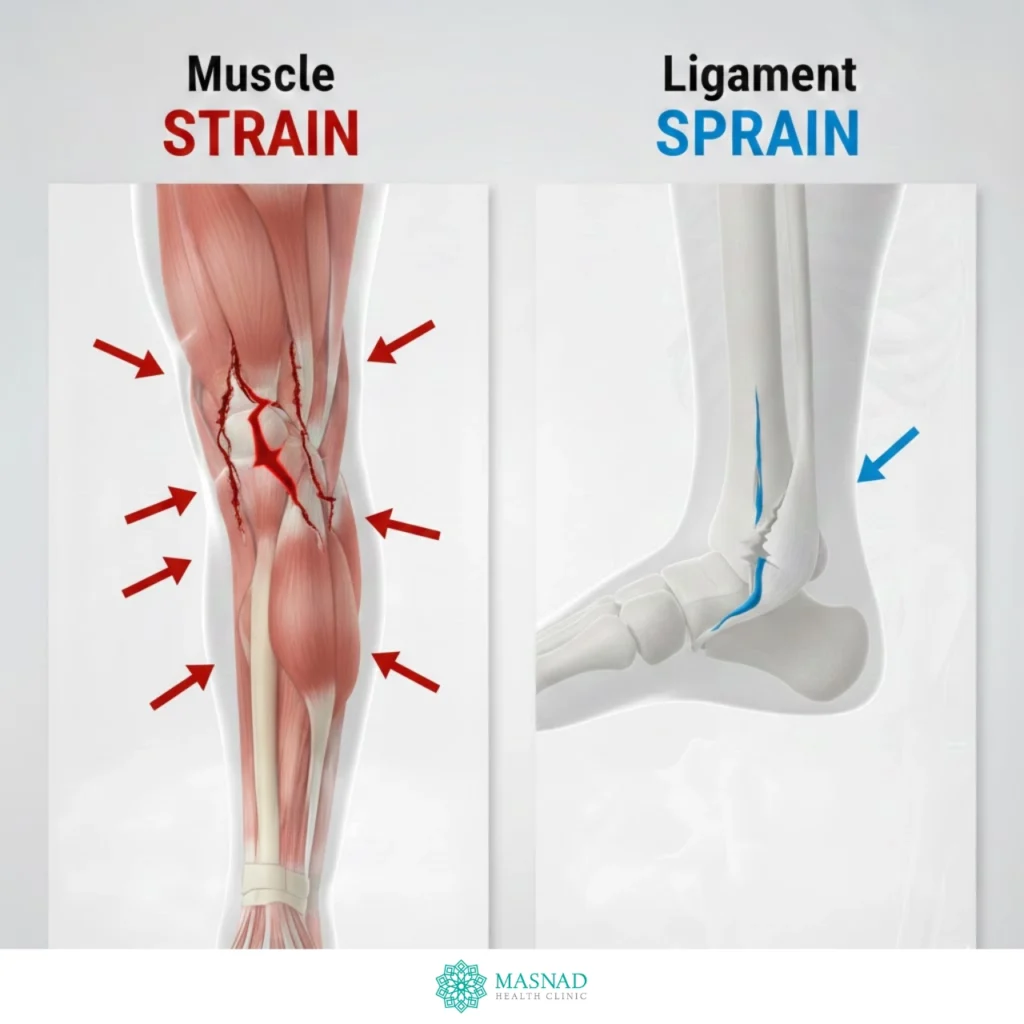
The terms strain and sprain are often used interchangeably when describing injuries, but they actually refer to two different types of tissue damage. Understanding the difference is important, as it can influence how the injury is treated, how long recovery may take, and when it is safe to return to activity.
In simple terms:
Below, we explain what this means, how each injury presents, and why professional assessment is important.
A sprain occurs when a ligament is stretched or torn. Ligaments are strong, fibrous tissues that connect one bone to another and play a vital role in maintaining joint stability.
Because ligaments are designed to resist excessive movement, sprains often occur during:
Some ligaments are so strong that, in certain injuries, the bone may fracture before the ligament tears.
Pain is usually worse with movement or when the ligament is placed under stress. Interestingly, in some complete ligament tears, pain may feel less intense than in partial tears due to disruption of pain fibres.
Physiotherapists are able to grade ligament sprains (mild, moderate, or severe), which helps guide treatment decisions and expected recovery time.
A strain involves injury to a muscle or tendon, typically occurring when the tissue is overstretched or overloaded.
Muscle strains commonly happen during:
Unlike sprains, strains usually cause a feeling of weakness rather than joint instability, and the pain is typically located within the muscle rather than around a joint.
Ligament injuries are often tender directly over the ligament and may show increased joint movement during specific clinical tests. Muscle strains are more likely to be painful during resisted movements or stretching of the affected muscle.
Accurate diagnosis is important, as treatment approaches differ depending on the tissue involved.
While both injuries benefit from early management, rehabilitation strategies are slightly different:
In the early stages of both injuries, the RICE principles are recommended:
Heat should generally be avoided for at least the first 48 hours, as it can increase swelling.
Returning to activity too early or without proper rehabilitation significantly increases the risk of:
A physiotherapist can:
Although strains and sprains may seem similar, they involve different tissues, symptoms, and recovery needs. Seeking professional advice ensures that your injury is managed appropriately and that you return to activity safely.
Speak to your physiotherapist for individualised advice and treatment.
This article is not intended to replace medical advice. Always consult a qualified healthcare professional regarding your injury.
Call now to book your physiotherapy appointment: (02) 9793 8840
Many people live with pain, stiffness, or movement restrictions for weeks, months, or even years before seeking professional help.
Many people live with pain, stiffness, or movement restrictions for weeks, months, or even years before seeking professional help.

Are you in pain? Not sure if we can help you?
Book your initial appointment and receive 10% off any service!