

Fatigue, Stress & Anxiety: Why You Feel Constantly Drained
Feeling exhausted has become so common that many people believe it’s simply…

If you work in an office, chances are you spend a large portion of your day sitting. While modern office jobs are common in today’s world, prolonged sitting has been linked to a range of chronic health issues, including back pain, neck stiffness, poor posture, reduced flexibility and decreased circulation.
The good news is that staying healthy at work doesn’t require long gym sessions or complicated routines. Small, regular movements and simple stretches performed throughout the day can make a significant difference. This article outlines why movement matters, how posture affects your body, and three effective stretches you can easily do at your desk to counteract the effects of prolonged sitting.
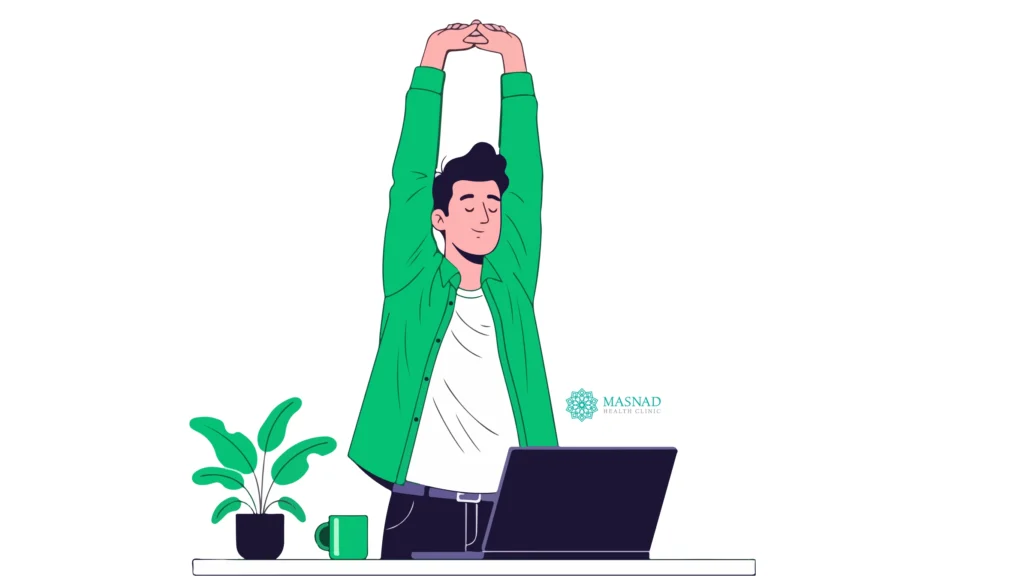
In physiotherapy, there is a common saying: “The best posture is your next posture.” This highlights the idea that no single posture is inherently harmful – rather, it is staying in one position for too long that causes problems.
When you’re focused on deadlines or meetings, it’s easy to remain still for hours without noticing. Over time, this lack of movement can lead to muscle stiffness, joint discomfort and reduced mobility.
Regular movement helps improve circulation, reduce muscle tension and keep your joints healthy.
While lack of movement is the biggest issue, posture also plays a role. Many office workers gradually sink into a slouched position with:
This posture requires minimal effort to maintain but can lead to muscle imbalances over time. Commonly affected muscles include:
To counteract this, it’s important to regularly move into the opposite positions – extending your spine, opening your chest and lengthening muscles that tighten during sitting.
These stretches are designed to be simple, effective and easy to perform while seated at work. Try to complete them every few hours throughout your working day.
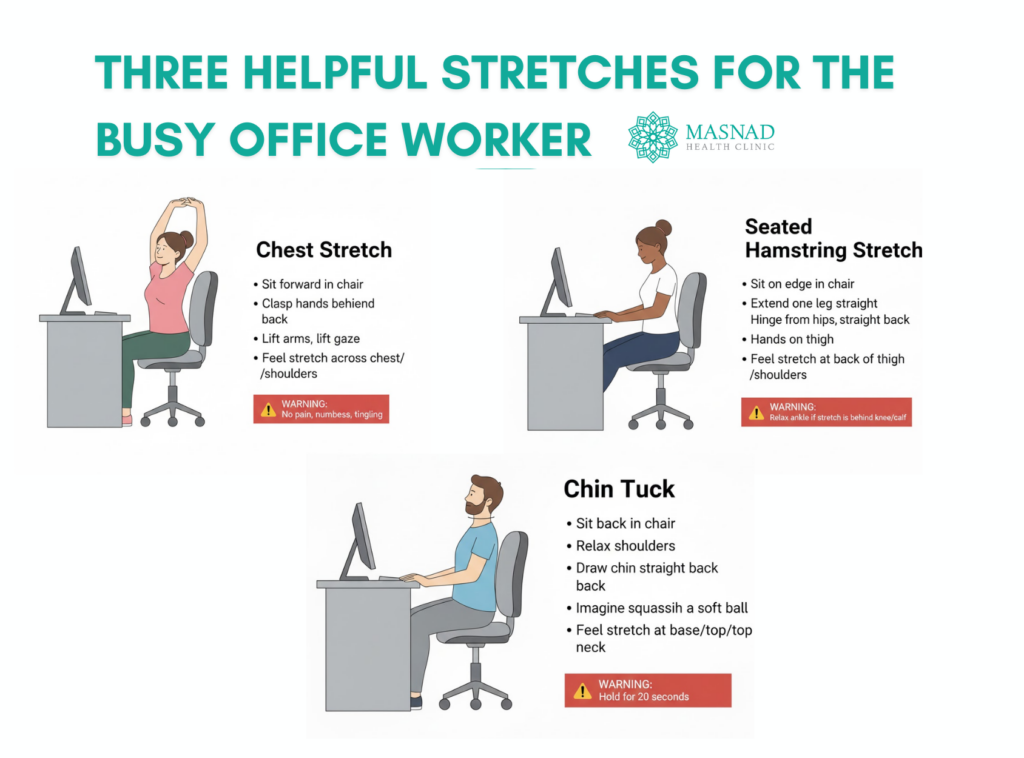
This stretch helps open the chest and shoulders, counteracting rounded posture.
How to do it:
You should feel a stretch across the front of your chest and shoulders.
Hold for 30 seconds, relax, and repeat once.
⚠️ You should not feel pain, numbness or tingling in your arms.
This stretch targets the hamstrings, which often become tight with prolonged sitting.
How to do it:
You should feel a gentle stretch at the back of your thigh.
If you feel the stretch behind the knee or into the calf, relax your ankle and allow your foot to drop.
Hold for 20 seconds, then swap legs.
Repeat twice on each side.
This exercise helps reduce neck tension and improve head and neck posture.
How to do it:
You should feel a mild stretch at the base and top of your neck.
Hold for 20 seconds, relax, and repeat.
If you experience ongoing neck pain, back pain, headaches or stiffness despite regular stretching, it may be time to seek professional advice. A physiotherapist can:
Book an appointment with our physiotherapy team today to receive a tailored plan that fits your workday and keeps you moving comfortably.
Call us on 02 9793 8840 or book online at your convenience.
Many people live with pain, stiffness, or movement restrictions for weeks, months, or even years before seeking professional help.
Many people live with pain, stiffness, or movement restrictions for weeks, months, or even years before seeking professional help.

Are you in pain? Not sure if we can help you?
Book your initial appointment and receive 10% off any service!