

Fatigue, Stress & Anxiety: Why You Feel Constantly Drained
Feeling exhausted has become so common that many people believe it’s simply…

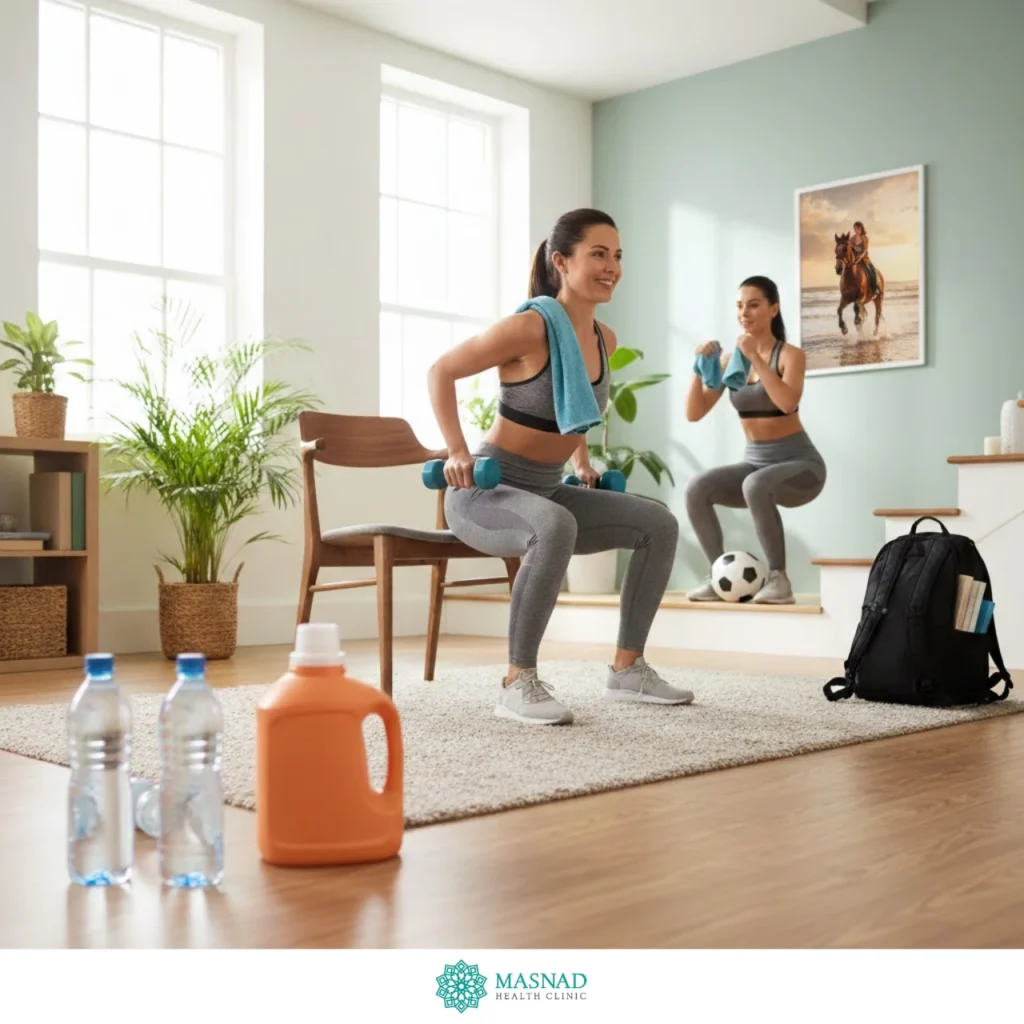
Staying active at home can feel challenging, particularly when access to a gym is limited. However, maintaining physical activity is important not only for physical strength and mobility but also for mental wellbeing. Regular movement supports joint health, improves circulation, reduces stress, and helps maintain routine.
The good news is that you do not need expensive equipment or a dedicated gym space to stay active. With a little creativity, everyday household items can be used to support strength training, mobility, and cardiovascular exercise from the comfort of your own home.
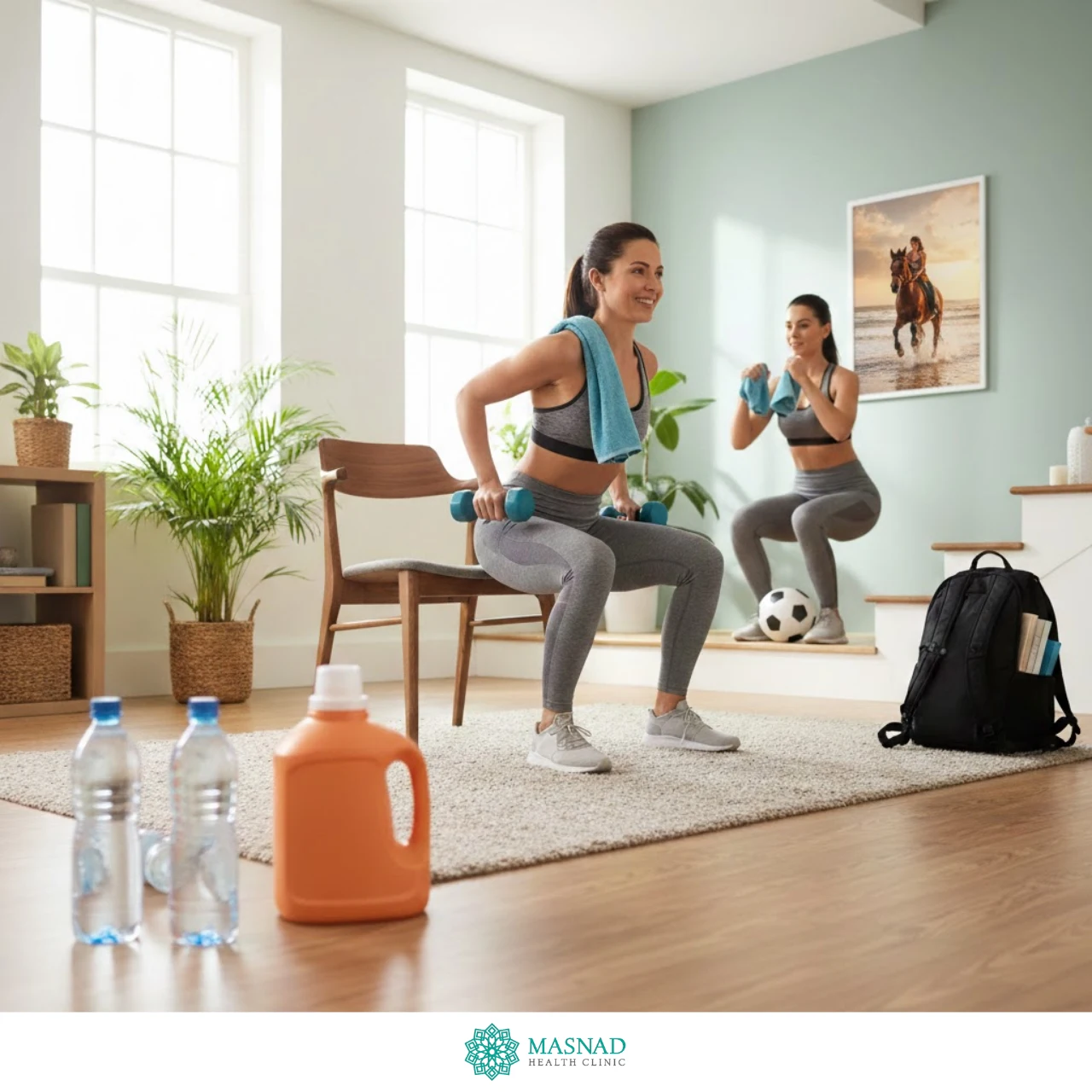
Periods of reduced activity can lead to muscle weakness, joint stiffness, reduced fitness, and increased aches and pains. Even short, consistent exercise sessions can help maintain strength and support overall health.
At-home exercise also allows you to:
Many common household items can effectively replace traditional gym equipment when used safely and correctly.
Water bottles, soup cans, or laundry detergent jugs can be used as substitutes for dumbbells. The weight can be adjusted depending on your strength and comfort level.
You can use these for:
If you have empty bottles, filling them with sand, rice, or small rocks allows you to increase resistance gradually.
A sturdy chair can be a versatile piece of exercise equipment. It is important to choose a stable chair that does not slide.
Chair-based exercises include:
These exercises use body weight to build strength without the need for machines or weights.
Towels can be used for both strengthening and stretching exercises.
For strengthening:
For stretching:
Hold for around 30 seconds and repeat several times on each side
Walls provide excellent support for posture and balance during exercise.
Examples include:
Using the wall can improve technique and reduce strain, particularly if you are new to exercise.
Stairs are a simple and effective way to increase heart rate and build leg strength.
You can use stairs for:
Always use handrails if needed and move at a pace that feels safe.
A basketball, volleyball, or soccer ball can act as a light medicine ball.
These can be used for:
Balance-based exercises are especially helpful for joint stability and injury prevention.
A backpack filled with books, water bottles, or other household items can be used as a weighted vest.
Wearing a backpack can make exercises more challenging, such as:
Start with light weight and increase gradually to avoid strain.
When exercising at home:
Listening to your body is essential for safe and effective exercise.
Creating an at-home gym does not require expensive equipment. With everyday household items and a bit of creativity, you can stay active, strong, and mobile while supporting both physical and mental wellbeing.
If you would like personalised guidance on safe home exercises or adapting workouts to suit your needs, consider speaking with a qualified physiotherapist.
Call now to book your physiotherapy appointment: (02) 9793 8840
Why it works:
Can integrate:
Can integrate:
Many people live with pain, stiffness, or movement restrictions for weeks, months, or even years before seeking professional help.
Many people live with pain, stiffness, or movement restrictions for weeks, months, or even years before seeking professional help.

Are you in pain? Not sure if we can help you?
Book your initial appointment and receive 10% off any service!