

Fatigue, Stress & Anxiety: Why You Feel Constantly Drained
Feeling exhausted has become so common that many people believe it’s simply…

Knee pain is one of the most common musculoskeletal complaints and can affect people of all ages – from active athletes to those who sit for long hours at work. It may develop suddenly after an injury or build up gradually due to overuse, poor movement habits, or underlying joint conditions.
Because the knee plays a vital role in walking, climbing stairs, and standing from sitting, even mild discomfort can interfere with daily life. While every knee condition requires an individual assessment, the following four practical tips can help reduce knee pain, protect the joint, and support long-term recovery.
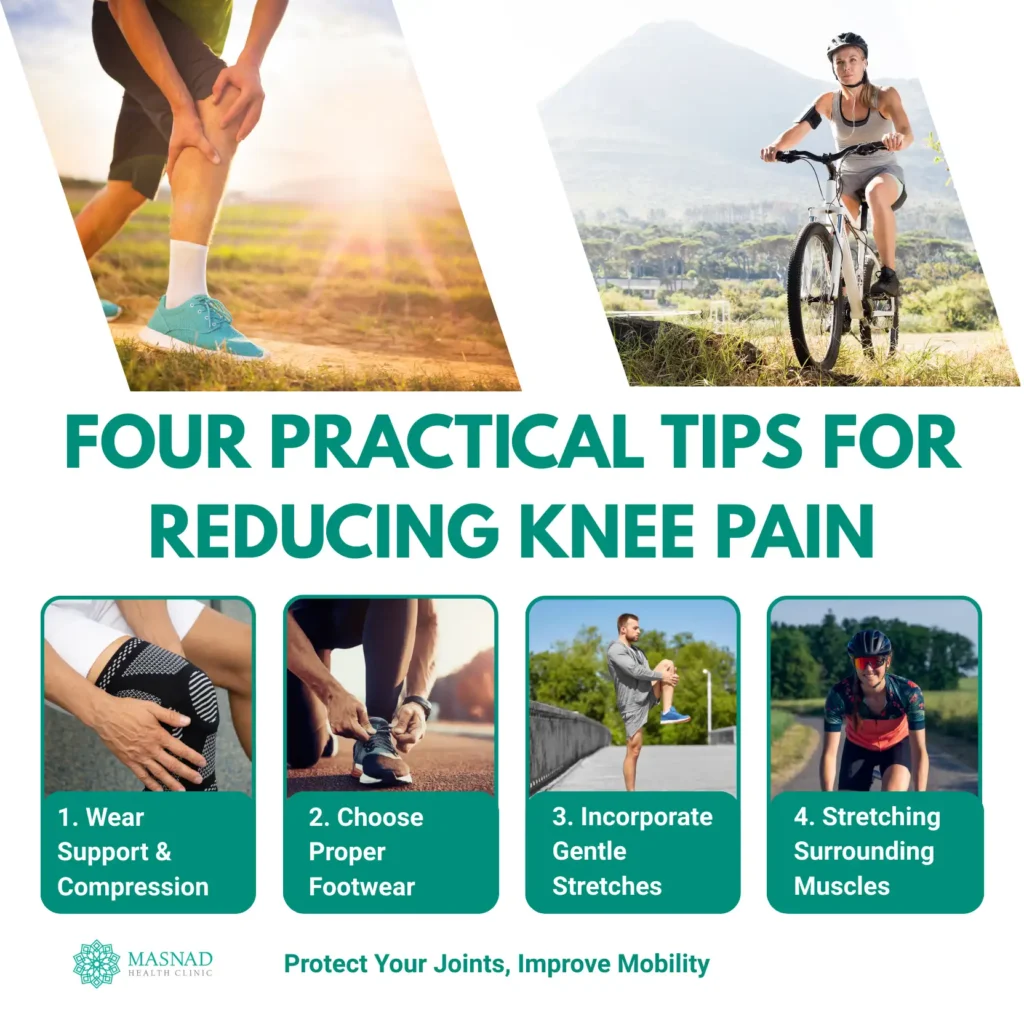
What you wear on your feet has a direct impact on how forces travel through your knees. Shoes that lack arch support or stability can allow the feet to roll inward, placing additional strain on the knee joint. High-heeled footwear can further increase stress by altering posture and shortening the calf muscles, which changes how you walk.
Supportive footwear can help by:
If knee pain is persistent, a physiotherapist can assess how your footwear and walking pattern may be contributing to your symptoms and advise whether supportive shoes or orthotics may help.
Although sleep is meant to be a time of rest and recovery, certain sleeping positions can place prolonged stress on the knee joint. Side sleeping with deeply bent knees can increase tension through the outer thigh muscles and compress the knee.
Helpful adjustments include:
Small changes in sleep positioning can significantly reduce morning stiffness and overnight discomfort.
When knee pain flares up, it’s common to reduce activity altogether. However, prolonged rest can actually worsen symptoms by causing joint stiffness, muscle weakness, and reduced circulation.
Instead of stopping movement completely:
Movement nourishes the cartilage and strengthens the muscles that support the knee, helping to reduce pain over time.
👉 You may also find this helpful:
Do You Really Need To Stretch? – Understanding stiffness versus weakness can guide smarter knee care.
Ignoring knee pain or “pushing through it” can allow small problems to develop into long-term conditions. Early physiotherapy intervention can identify contributing factors such as muscle imbalances, joint stiffness, altered movement patterns, or training errors.
Physiotherapy for knee pain may include:
Early treatment often leads to faster recovery and reduces the risk of chronic knee issues.
👉 Related reading:
Four Surprising Reasons To Visit Your Physiotherapist
Consider booking an assessment if your knee pain:
A personalised physiotherapy assessment can help identify the root cause of your knee pain and create a clear plan for recovery. Book an appointment today to take the first step toward moving comfortably again.
Many people live with pain, stiffness, or movement restrictions for weeks, months, or even years before seeking professional help.
Many people live with pain, stiffness, or movement restrictions for weeks, months, or even years before seeking professional help.

Are you in pain? Not sure if we can help you?
Book your initial appointment and receive 10% off any service!