

Fatigue, Stress & Anxiety: Why You Feel Constantly Drained
Feeling exhausted has become so common that many people believe it’s simply…

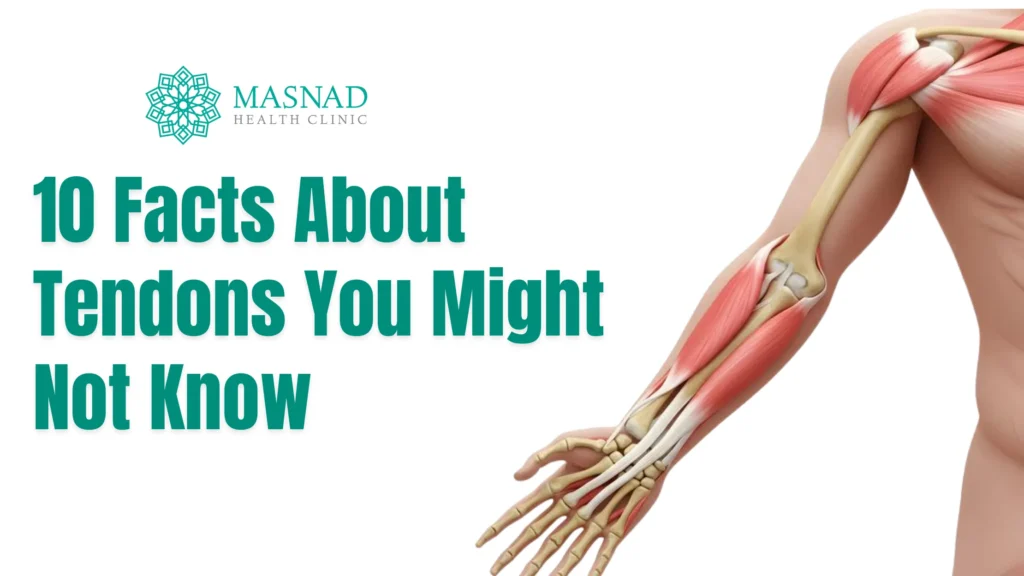
Tendons are found all over the body and play a vital role in how we move, stabilise joints, and perform everyday activities. While many people have heard of tendons like the Achilles, there’s much more to these structures than most realise. Here are 10 key facts that highlight just how important tendons are to your overall musculoskeletal health.
Tendons are strong connective tissues that attach muscles to bones. When a muscle contracts, the tendon transmits that force to move a joint. Without tendons, coordinated movement would not be possible.
Although tendons are often imagined as long, thin cords, they vary widely in shape. Some are flat and broad, while others are thick and rounded. Flat tendons are known as aponeuroses, commonly seen in the abdominal muscles.
Tendons have elastic properties that allow them to stretch slightly and recoil. This helps store and release energy during movement, particularly in activities like walking, running, and jumping. However, excessive force can cause tendons to overstretch or tear.
Unlike artificial elastic materials, tendons are living tissue and respond to changes in the body. Hormones, nutrition, autoimmune conditions, and overall health can all affect a tendon’s strength and ability to tolerate load.
While most tendons connect muscles to bones, some attach muscles to other structures. A well-known example is found in the eye, where tendons help control precise eye movements.
Tendons can tear, but more commonly they are injured through repetitive strain or overload over time. Tendon healing can be slow because tendons have less blood supply than muscles, which is why conditions such as:
patella tendinopathy and biceps tendinopathy
often require structured rehabilitation rather than rest alone.
Healthy tendons are composed of well-organised collagen fibres, giving them strength and flexibility. In injured or degenerative tendons, these fibres can become disorganised, reducing the tendon’s ability to handle load efficiently.
The Achilles tendon connects the calf muscles to the heel and plays a major role in walking, running, and jumping. Dysfunction in this area can also influence foot mechanics and contribute to conditions such as
plantar fasciopathy, particularly when load management is poor.
The smallest tendon in the human body is found in the inner ear, attaching to the smallest muscle. It plays a role in dampening sound vibrations to protect hearing.
Muscles and tendons function together as a contractile unit. Efficient movement relies on both structures working in harmony, along with the nervous system, balance, and proprioception.
Tendons are strong, adaptable structures, but they require the right balance of load, movement, and recovery to stay healthy. Ongoing pain or stiffness should not be ignored, especially when it interferes with work, sport, or daily activities.
At Masnad Health Clinic, our experienced physiotherapists assess tendon injuries thoroughly and tailor treatment plans to your specific condition and goals. Whether you’re managing a chronic overuse issue or a recent tendon injury, our focus is on restoring strength, improving movement, and reducing the risk of reinjury.
Many people live with pain, stiffness, or movement restrictions for weeks, months, or even years before seeking professional help.
Many people live with pain, stiffness, or movement restrictions for weeks, months, or even years before seeking professional help.
Are you in pain? Not sure if we can help you?
Book your initial appointment and receive 10% off any service!