

Fatigue, Stress & Anxiety: Why You Feel Constantly Drained
Feeling exhausted has become so common that many people believe it’s simply…

Posture is often judged by how “straight” someone looks, but good posture is far more complex than standing tall with your shoulders pulled back. Your posture influences how you breathe, move, feel pain, and even how confident you appear to others. Surprisingly, posture is not just about your spine-it’s closely linked to muscle balance, daily habits, stress levels, and movement patterns.
Below are some lesser-known but important facts about posture and why it matters more than most people realise.
One of the most common myths is that good posture means holding yourself as straight and rigid as possible. In reality, this position is unnatural, tiring, and often uncomfortable.
Ideal posture is when the spine sits in its strongest and most efficient position, maintaining its natural curves:
These curves form a natural elongated “S” shape when viewed from the side. This alignment allows muscles to work efficiently, reduces unnecessary joint stress, and helps distribute load evenly through the spine.
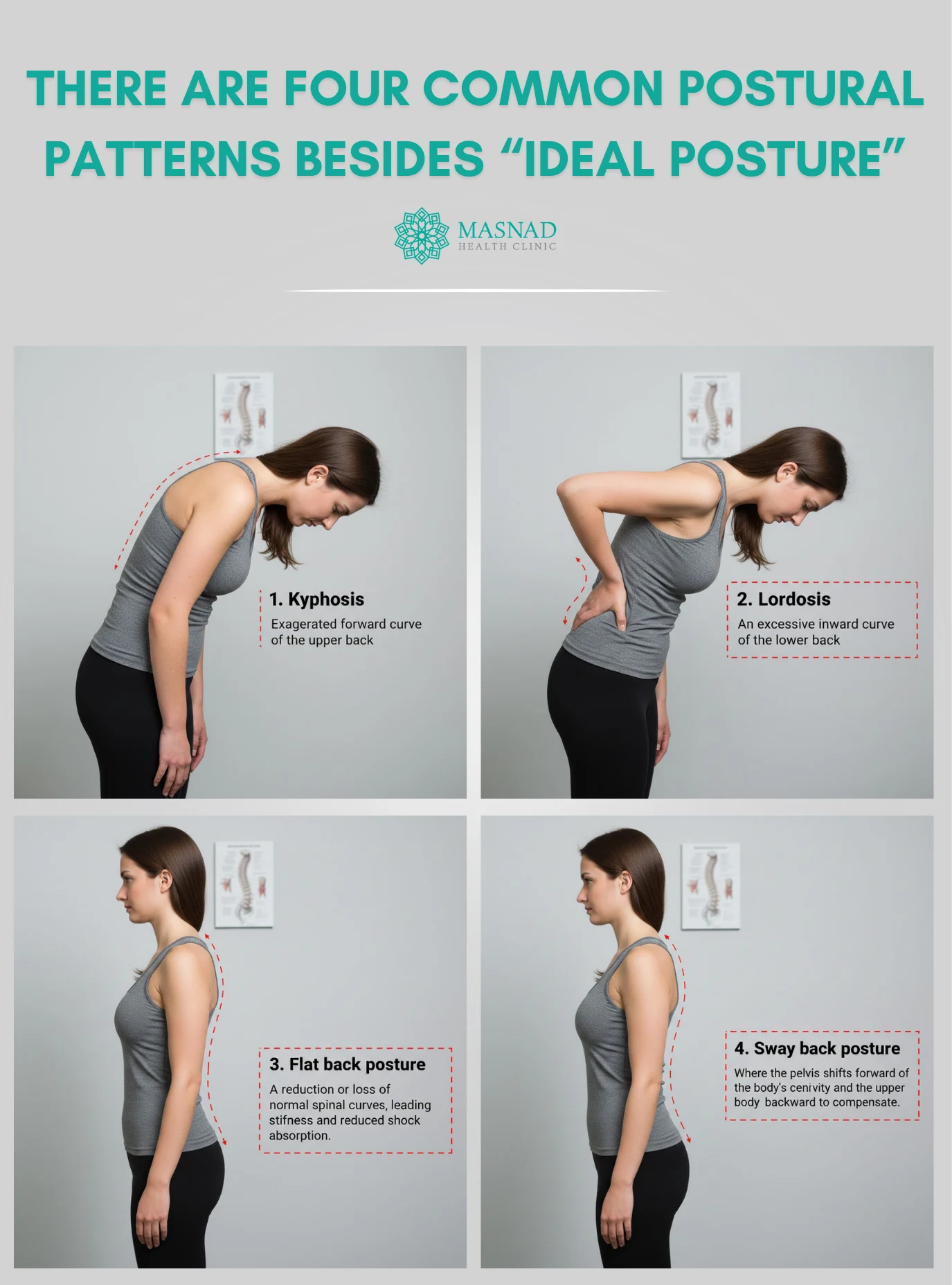
Most people don’t sit or stand in ideal posture all the time. Instead, physiotherapists commonly observe four postural variations:
An exaggerated forward curve of the upper back, often seen with rounded shoulders and a forward head position.
An excessive inward curve of the lower back, sometimes accompanied by an anterior pelvic tilt.
A reduction or loss of the normal spinal curves, leading to stiffness and reduced shock absorption.
Where the pelvis shifts forward of the body’s centre of gravity and the upper body leans backward to compensate.
Each of these postural patterns is usually associated with predictable muscle tightness, weakness, and joint stress, which over time can contribute to pain, fatigue, headaches, or injury.
A physiotherapist can assess your posture, identify contributing factors, and guide you with mobility, strengthening, and movement strategies tailored to your body.
Posture impacts much more than spinal health. Research and clinical experience show links between posture and:
Poor posture can also place increased strain on muscles and ligaments, making everyday activities feel harder than they should.
Even “perfect” posture becomes a problem if it’s held for too long. The spine is designed to move, not stay fixed in one position.
Prolonged sitting or standing-especially without movement breaks-can cause stiffness, muscle fatigue, and discomfort regardless of posture quality. Regular movement helps:
A simple rule: the best posture is your next posture. Change positions often, stretch regularly, and avoid staying rigid.
Interestingly, posture may be connected to personality traits. A study by Guimond et al. (2014) found that:
It’s unclear whether posture influences personality, personality influences posture, or whether another factor-such as pain or stress-affects both. However, this highlights that posture is influenced by psychological and emotional factors, not just physical ones.
You may benefit from a posture assessment if you experience:
Physiotherapy focuses on more than just “standing up straight.” Treatment may include:
Improving posture is about building awareness, strength, and movement confidence, not forcing your body into an uncomfortable position.
At Masnad Health Clinic, our physiotherapists take a whole-body approach to posture and pain. We look beyond symptoms to identify underlying movement patterns, muscle imbalances, and lifestyle factors contributing to discomfort.
Our team provides:
If posture-related pain or stiffness is affecting your daily life, professional guidance can make a lasting difference.
Call now to book your physiotherapy appointment: (02) 9793 8840
Many people live with pain, stiffness, or movement restrictions for weeks, months, or even years before seeking professional help.
Many people live with pain, stiffness, or movement restrictions for weeks, months, or even years before seeking professional help.

Are you in pain? Not sure if we can help you?
Book your initial appointment and receive 10% off any service!